Calm in the chaos: Practical, hopeful strategies for managing emotional outbursts in neurodivergent children
Dive into a compassionate, action-packed guide for parents navigating emotional outbursts in neurodivergent children. Discover how to confidently distinguish meltdowns from tantrums, identify triggers, and apply neuroaffirming strategies that soothe big emotions. Through relatable stories and easy-to-use resources, this article empowers families to transform chaotic moments into opportunities for connection, resilience, and hope. It reminds you that calm is possible, and you’re never alone.
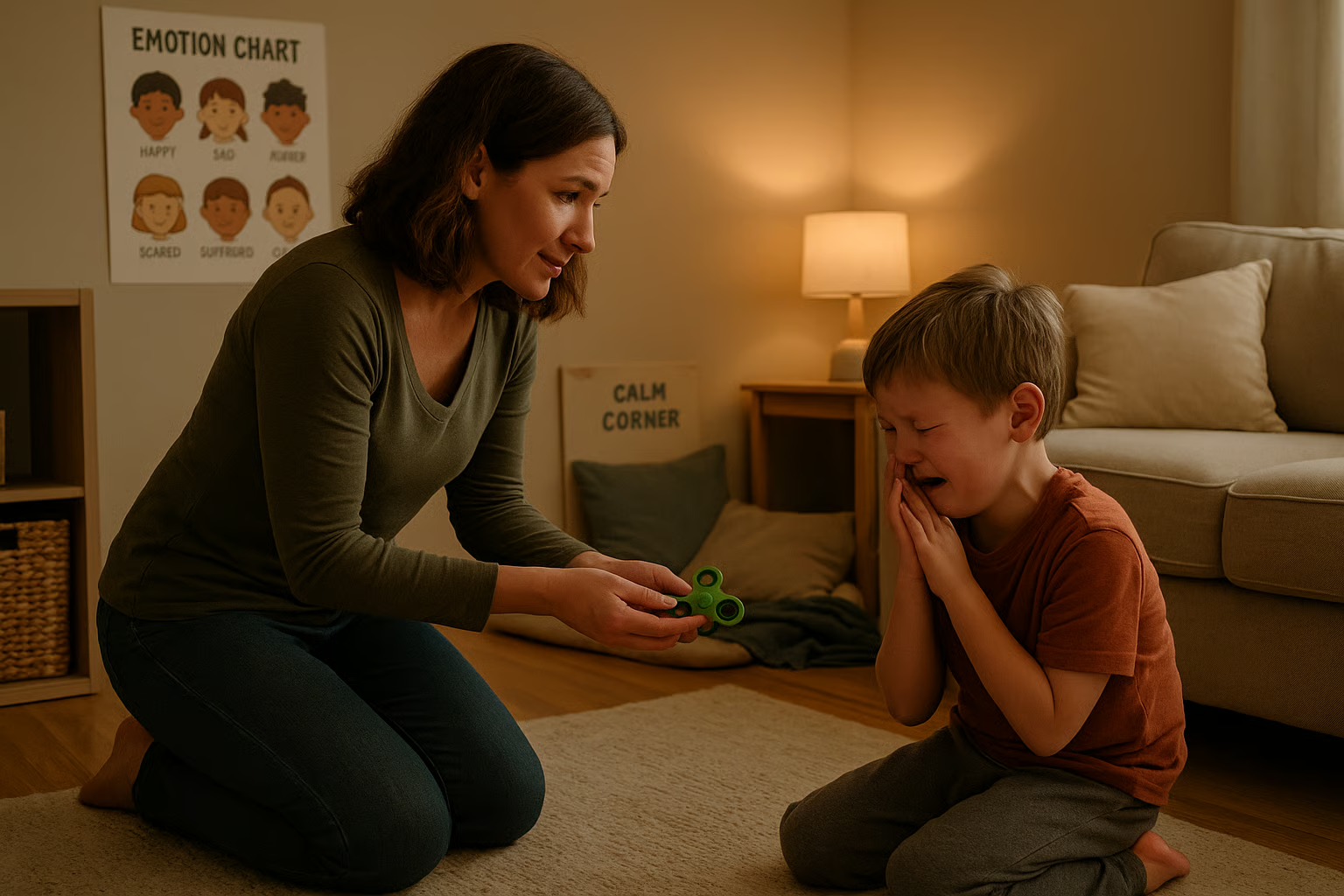
In short
A meltdown is not a tantrum. A tantrum has a goal. A meltdown is your child’s nervous system overwhelmed, and they cannot stop it. So comfort comes first and talking comes later. Lower the noise, lower the demands, and stay close until they settle.
When Big Emotions Take Over
It’s well past midnight, and Carmela Russo is quietly folding laundry at the kitchen table, her mind replaying Aiden’s most recent meltdown. His sobs over the sock seams felt as raw as her own late-night worry: Was I patient enough? Did I do something wrong? Like so many Australian mums navigating single parenthood, work stress, and school updates, Carmela is exhausted, overwhelmed, and searching for hope after a night of big emotions.
If this sounds familiar, you’re not alone. Many parents of neurodivergent children, particularly those balancing jobs, therapies, and siblings, wrestle with emotional outbursts and meltdowns that can leave the whole family drained. These intense moments aren’t a reflection of poor parenting or a child’s “deficit.” Neurodiversity simply means that emotional regulation looks different in our children, and that’s something to be respected and understood, not fixed.
This article is your practical, non-judgemental guide to supporting neurodivergent children during tough emotional moments. You’ll find clear, neuroaffirming strategies to handle meltdowns and tantrums, tips for recognising the difference, and printable quick-reference tools you can trust. Above all, you’ll find reassurance: you are already doing so much, and with the right support, calmer days are possible.
Meltdowns vs. Tantrums: Understanding the Difference
For many parents of neurodivergent children, telling the difference between a meltdown and a tantrum can be both confusing and emotionally loaded. Yet, recognising the distinction is a practical and powerful step toward more compassionate, effective support, for both your child and yourself.
What Sets Meltdowns Apart from Tantrums?
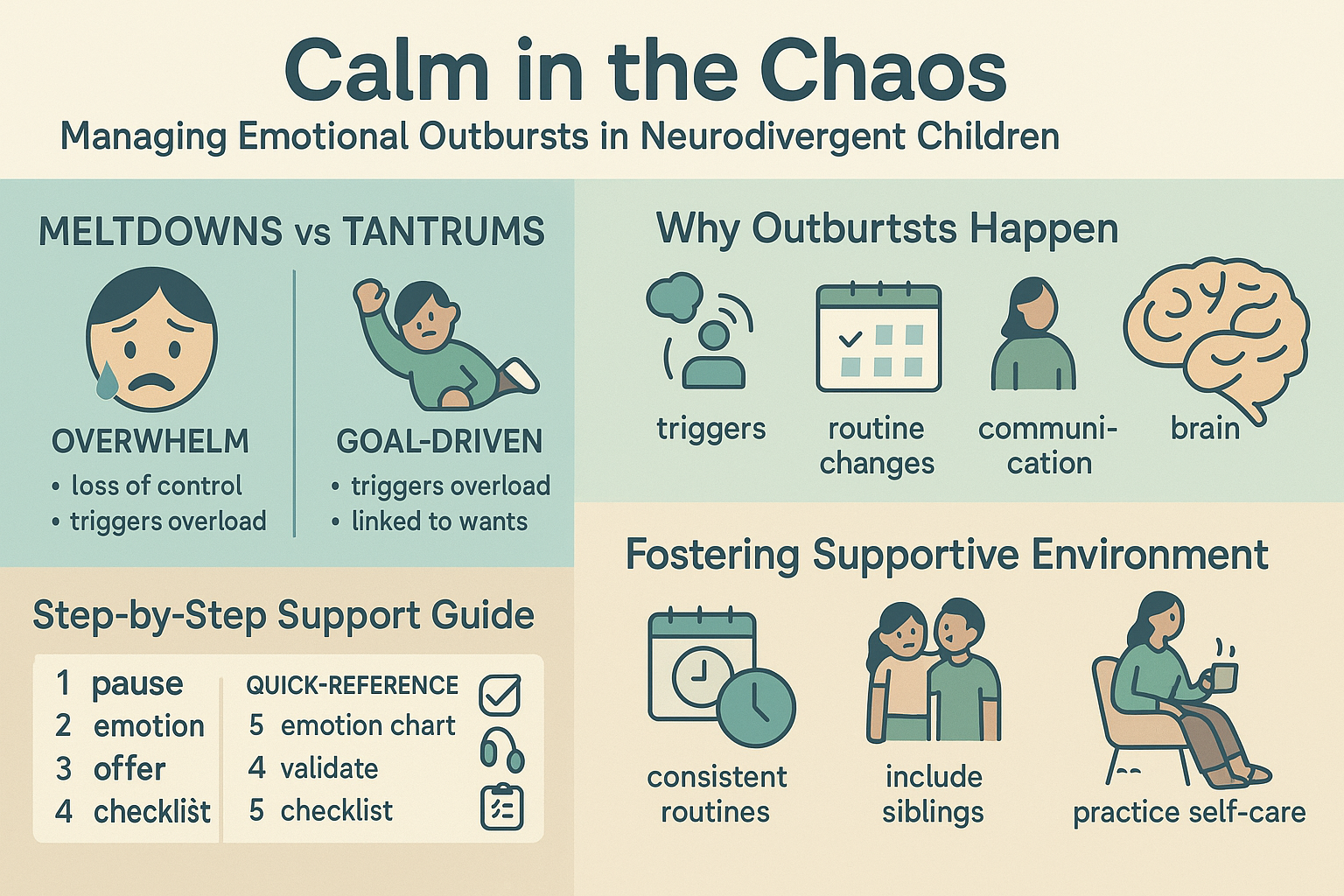
Tantrums are goal-driven. A neurodivergent child (or any child) might have a tantrum to try to get something they want, like an extra snack or a few more minutes of screen time. During a tantrum, the child often maintains some control over their actions and may stop suddenly if their goal is met.
Meltdowns are not about getting a reaction or reward. Instead, they are a response to overwhelm, sensory input, emotional overload, or unexpected changes. In a meltdown, control is lost completely, and the child cannot simply “snap out of it.” For autistic and ADHD children, meltdowns can be more frequent and intense due to unique sensory or emotional processing.
Why Knowing the Difference Matters
Mislabeling a meltdown as a tantrum can unintentionally send the message that your child’s distress is manipulative or deliberate. This may impact their sense of safety and leave parents feeling frustrated or guilty. Understanding helps you:
Respond with empathy instead of discipline.
Provide the right support (a quiet space, comfort, or sensory tools).
Foster emotional regulation skills over time.
Tip: When in doubt, look for signs of overwhelm (covering ears, shutting down, tears or panic). If your child cannot pause the behaviour when reminded, it’s likely a meltdown, not a tantrum.
Quick-Reference: Spot the Signs
Meltdowns (Overwhelm)
Loss of control, cannot stop on command
Signs of distress, covering ears, rocking, nonverbal cues
Triggered by overload (noise, change, fatigue)
Tantrums (Goal-Driven)
Stops if goal is met or adult responds
Child monitors adult’s reaction
Linked to wanting something specific
Validation for All
Both meltdowns and tantrums are expressions of real needs. Every emotional outburst is a chance to show your neurodivergent child they are safe with you, even when things feel chaotic. Your calm presence matters, and getting it “right” isn’t about being perfect, it’s about understanding and support.
Pip remembers the appointments, the notes and the small wins, so you don't have to.
7 days free on iPhone and Android.
Why Outbursts Happen: Triggers and the Brain
Emotional outbursts in neurodivergent children, like meltdowns or intense tantrums, are not a sign of poor parenting, but a call for support. Understanding what sparks these moments can ease self-doubt and help carers respond with confidence and compassion.
Common Triggers for Meltdowns
Outbursts often arise from:
Sensory overload: Everyday sounds, lights, or touch can feel overwhelming for an autistic or ADHD child.
Changes in routine: Unexpected events or transitions, like a cancelled playdate or a swapped teacher, may feel distressing.
Communication barriers: Struggling to express needs, or feeling misunderstood, can quickly escalate emotions.
The Brain During an Outburst
Neurodivergent brains process stress intensely. When a meltdown begins, the ‘thinking’ part of the brain (the ‘upstairs’ brain) goes ‘offline,’ letting the emotional ‘downstairs’ brain take over. This means logical conversation isn’t possible; what Aiden needs first is calm, not correction.
Knowing the triggers empowers you to meet your child with understanding rather than judgement. Every outburst is a need for connection, not discipline.
Quick-Reference
Pause. Check for triggers (sensory, routine, communication needs).
Offer safety and reassurance, words can wait.
Remember: Outbursts are not personal or intentional.
Step-by-Step: Supporting Your Child in the Moment
When an emotional outburst or meltdown happens, it can feel overwhelming for both you and your neurodivergent child. In these moments, having a clear, gentle routine can make all the difference, just like Carmela, who keeps a “Stay Cool” fridge checklist handy for herself and for Aiden’s support network.
Step 1: Pause and Breathe
Take a slow, deep breath. Remind yourself: “I am safe, Aiden is safe. My calm helps him find calm.”Step 2: Use Visual Supports
Point to your emotion chart and gently ask, “Can you show me how you’re feeling?”Step 3: Offer Calming Tools
A favourite fidget or chewable
Noise-reducing headphones
Deep breaths together (“Let’s breathe in slowly… and out.”)
A cosy corner or blanket
Step 4: Validate and Reduce Demands
Use short, calm scripts:“I see this is really big for you.”
“I’m here.”
Step 5: After the Outburst
Focus first on safety. Later, when settled, reflect: “What might help next time?
Fostering a Supportive Environment (For Your Child and Yourself)
Building a supportive, neuroaffirming home is possible, even during the toughest moments. Predictable routines are one of the simplest, most effective strategies for reducing emotional outbursts. Keeping mornings, mealtimes, and bedtimes consistent helps children feel safer and more in control.
Including siblings reduces confusion. Involve them in routines like setting up a calm corner or choosing comfort items to promote empathy.
Modelling self-compassion teaches children it’s okay to take breaks or ask for help. If you’re overwhelmed, reach out to support groups, online forums, or allied health professionals.
Quick-Reference: Creating a Supportive Environment
Predictable routines: Use visual schedules for key times of day.
Include siblings: Explain outbursts simply and involve them.
Model self-care: Take pauses and share coping strategies.
Access supports: Find local networks.
You’re Not Alone
Handling emotional outbursts from neurodivergent children is demanding, and it’s understandable to feel overwhelmed. Your compassion and preparation make a real difference. For help, try the Understanding Zoe app for tailored strategies. You’re never alone on this journey.
Join the Understanding Zoe Community
If you want to be supported in your journey parenting a neurodivergent child, we would love to welcome you as part of the Understanding Zoe community.
Getting started is simple:
Head to our beta sign-up page here.
Complete your account setup.
Start exploring and sharing your feedback with thumbs up and down!
By signing up now, you’ll gain early access to tools that save time, reduce stress, and make a real difference. Plus, you’ll join a growing movement of changemakers building a more neuroinclusive world.
We’re so grateful for everyone who chooses to walk this journey with us, and we can’t wait to welcome you into the Understanding Zoe community.
Further reading
Pip is not a doctor or therapist. It helps you organise and prepare, not diagnose or treat.
In a crisis call 000. Lifeline 13 11 14. Kids Helpline 1800 55 1800. 13YARN 13 92 76.
Ready to put it all in one calm place?
Tell Pip one thing today. It remembers the rest.
Stored in Australia, encrypted. Cancel before day 8 and you won't be charged.
Related articles

Rejection sensitivity in kids with ADHD: A parent’s guide to building confidence and connection
Explore the misunderstood world of rejection sensitivity in kids with ADHD through heartfelt stories and practical advice. This guide unpacks why everyday setbacks hit so hard, the unique challenges for culturally diverse families, and step-by-step neuroaffirming strategies to foster resilience and confidence. Whether you're navigating stigma or searching for support, discover how compassion and understanding can transform your family’s journey.
Read more
ADHD Mornings: Why they feel impossible & what helps
ADHD mornings aren't about laziness, they're about executive dysfunction, transitions, and sensory overload. This article explores why mornings feel impossible for ADHD brains and shares practical, compassionate strategies from clinical psychologist Johanna Badenhorst. Learn how to reduce demands, prepare strategically, use regulating music, prioritise ruthlessly, and lead with self-compassion. Discover that good enough is good enough and you're doing better than you think.
Read more
Wilderness within ADHD: Understanding your child's nervous system
This article explores Kaya Lyons' concept of 'The Wilderness Within' and how understanding your child's nervous system transforms the way you respond to ADHD behaviours. Through polyvagal theory, you'll learn why 'wild' traits are signals, not flaws, and discover practical strategies like 30 seconds of presence, early cue recognition, and curiosity-based parenting to support both your child's and your own nervous system regulation.
Read more