How to create a calm environment for ADHD kids
Creating a calm environment at home can help children with ADHD feel more regulated, focused, and confident. The article offers practical strategies like using soothing colours, minimising distractions, and setting up clear activity zones (e.g., study zone, calm-down corner). It also highlights the importance of visual schedules, sensory-friendly lighting and seating, open storage, and routines that support emotional regulation and smoother transitions. The focus is on building a supportive spac
In short
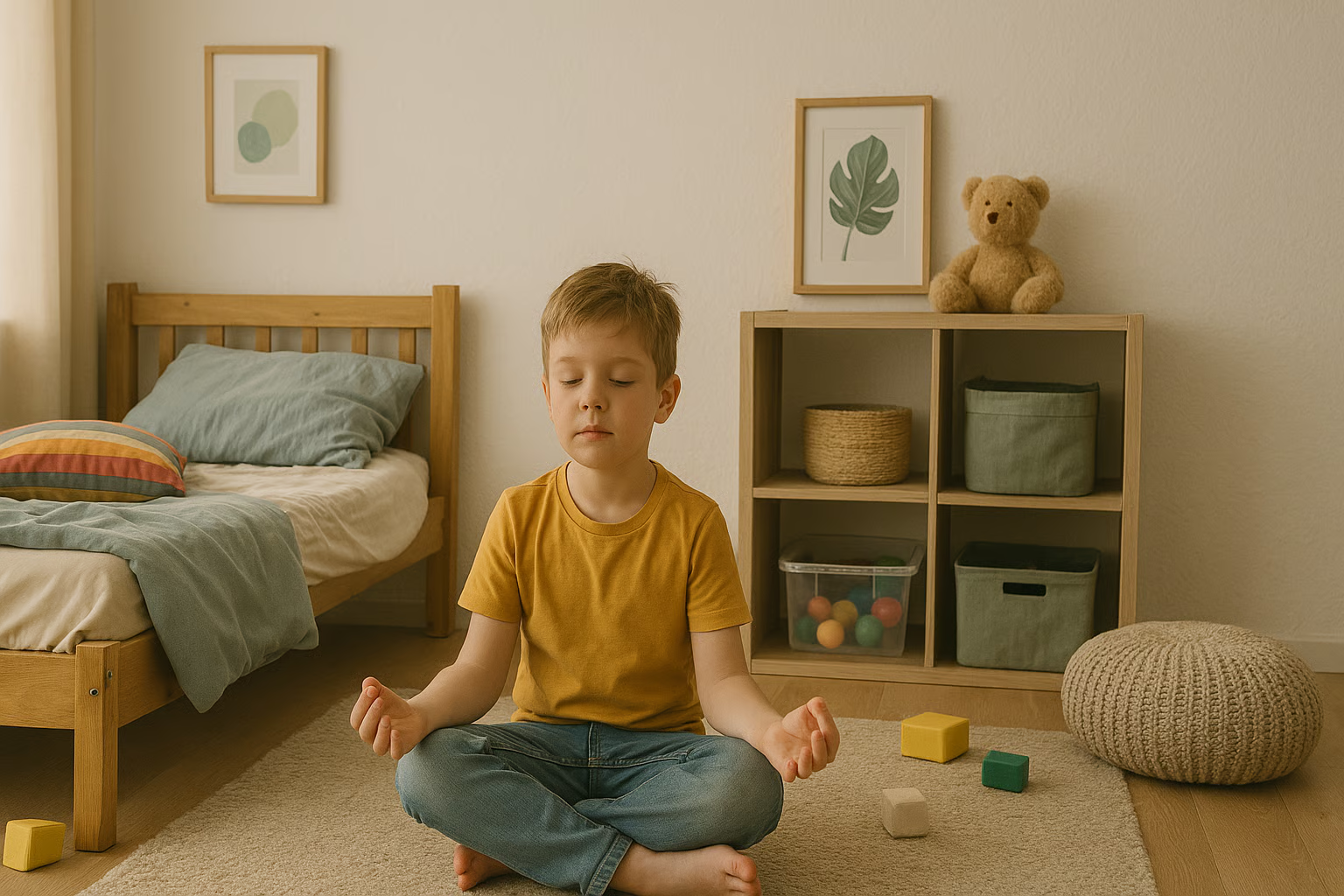
A calm space helps an ADHD child feel steadier. Many ADHD children take in more sensory information than others. Noise, clutter and bright light can overwhelm them fast. Small changes help most. Soften the sound. Cut the visual clutter. Give them one quiet corner to go to.
Explore practical strategies for setting up a calming space at home that caters to the needs of children with ADHD, including sensory-friendly elements and organisation tips.
Why Environment Matters for Children with ADHD
Children with ADHD often experience the world differently. Their brains may be more sensitive to sensory input, and they can become easily overwhelmed or distracted by their surroundings.
"It's like having different colours of paint swirling together in their brain—beautiful, but chaotic at the same time."
Research shows that when children with ADHD have a calm, organised environment, they can:
Experience less anxiety and frustration
Find it easier to focus on tasks
Better regulate their emotions
Sleep more soundly
Build confidence in managing daily routines
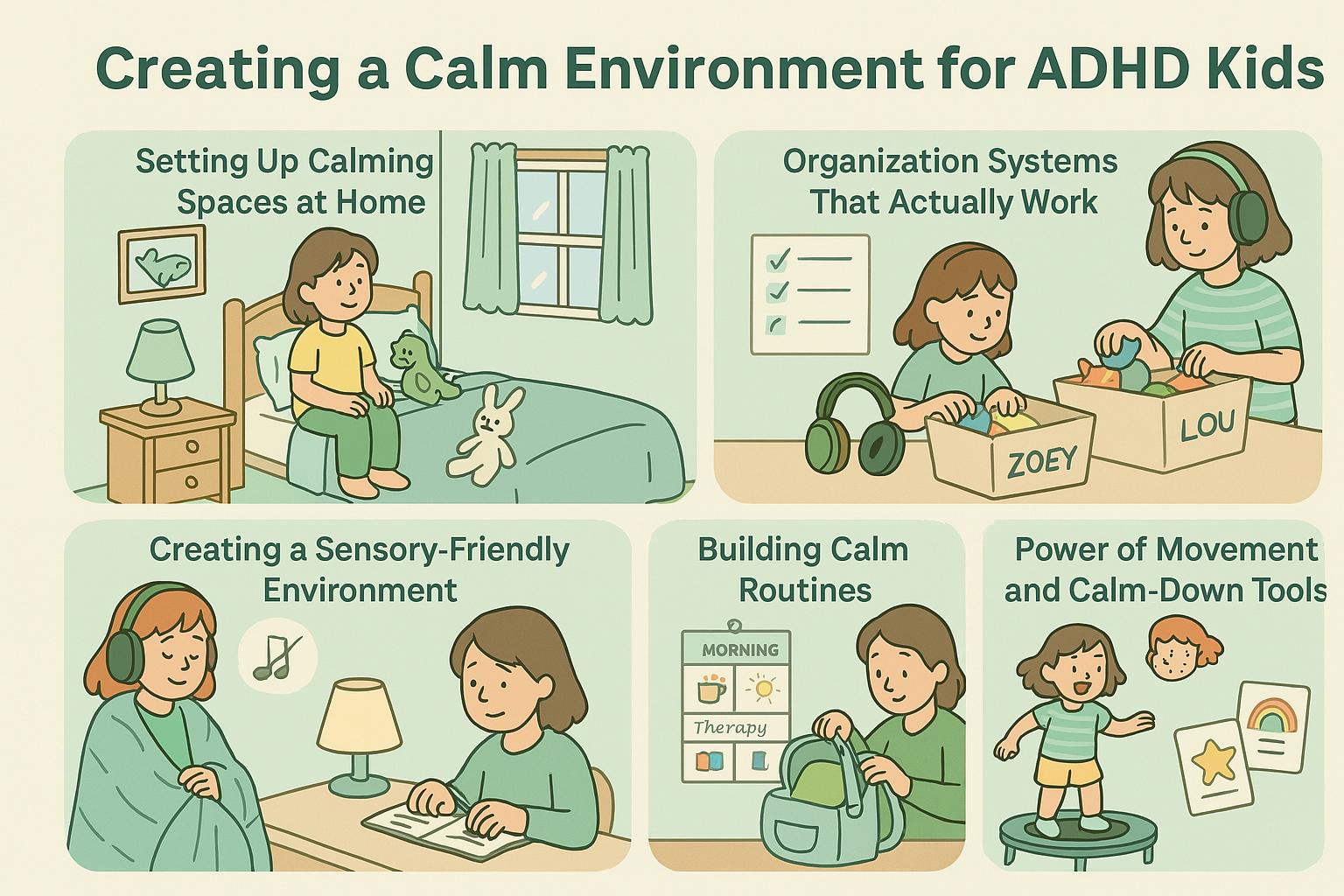
Setting Up Calming Spaces at Home
Colours and Visual Elements
Choose soothing colours: Opt for calming blue, warm earth tones, or muted greens and browns.
Reduce visual clutter: Use simple, intentional wall art.
Create visual boundaries: Use “concentration cues” like lines around a workspace.
Reducing Distractions
Limit bedroom toys: Keep a few favourites visible, store the rest to rotate.
Dedicated homework space: Set up a quiet desk away from distractions.
Open storage with boundaries: Use clear bins or labeled shelves.
Electronic Management
Create tech-free zones: Especially in bedrooms.
Set up charging stations: Keep devices in a shared space.
Use timers: Visual timers work better than verbal cues.
Organisation Systems That Actually Work
The “Out of Sight, Out of Mind” Solution
Use open or clear storage to keep things visible.
Post visual reminders where they’ll be seen.
Label everything clearly.
Establishing Zones
Study zone: Quiet and clutter-free.
Active zone: Space for movement and play.
Calm-down corner: Cozy area with sensory tools.
Launch pad: By the door for backpacks, shoes, coats.
Pip remembers the appointments, the notes and the small wins, so you don't have to.
7 days free on iPhone and Android.
Creating a Sensory-Friendly Environment
Lighting
Maximize natural light.
Use warm-toned lamps instead of fluorescents.
Install dimmer switches for flexibility.
Sound Management
Use white noise machines for sleep or focus.
Add rugs and curtains to soften noise.
Offer noise-canceling headphones when needed.
Texture and Comfort
Offer various seating (floor cushions, therapy balls).
Provide weighted blankets or lap pads.
Keep calming fidget tools available.
Building Calm Routines
Morning and Evening Rituals
Use visual schedules for daily routines.
Prep the night before to reduce stress.
Create a consistent wind-down routine.
Transitions Between Activities
Give advance warnings using timers.
Use transition objects for younger kids.
Include short movement breaks.
The Power of Movement and Calm-Down Tools
Movement Solutions
Add indoor options like a mini-trampoline or balance board.
Use active seating like wobble stools or therapy balls.
Create a “movement menu” of short activities.
Creating a Calm Kit
Choose a container (box or bag).
Include sensory tools (putty, soft fabric).
Add visual supports (breathing cards).
Insert physical activity ideas (e.g. wall push-ups).
Personalise it with your child.
Make laminated cards with ideas your child has to help them calm down. Suggest quiet time in a room—just like a turtle learns to go into his shell when scared or threatened.
Supporting Your Child’s Success
Tips for Caregivers:
Observe how your child uses spaces before making changes.
Involve your child in the setup.
Start small, one area at a time.
Be flexible and adjust systems as needed.
Celebrate small improvements!
Conclusion: A Balanced Approach
Creating a calm environment isn’t about perfection. It’s about what works for your child. As designer Katie Bowen says:
Forget the idea of being perfectly organised. You don’t need to have your stuff put away neatly, but you can optimise your home for your brain so you can continue being a creative, innovative ADHDer.
By designing your home with your child’s needs in mind, you’re giving them tools for calm, focus, and success.
Join the Understanding Zoe Community
If you want to be supported in your journey parenting a neurodivergent child, we would love to welcome you as part of the Understanding Zoe community.
Getting started is simple:
Head to our beta sign-up page here.
Complete your account setup.
Start exploring and sharing your feedback with thumbs up and down!
By signing up now, you’ll gain early access to tools that save time, reduce stress, and make a real difference. Plus, you’ll join a growing movement of changemakers building a more neuroinclusive world.
We’re so grateful for everyone who chooses to walk this journey with us, and we can’t wait to welcome you into the Understanding Zoe community.
Further reading
Pip is not a doctor or therapist. It helps you organise and prepare, not diagnose or treat.
In a crisis call 000. Lifeline 13 11 14. Kids Helpline 1800 55 1800. 13YARN 13 92 76.
Ready to put it all in one calm place?
Tell Pip one thing today. It remembers the rest.
Stored in Australia, encrypted. Cancel before day 8 and you won't be charged.
Related articles
Is an ADHD assessment worth it at 40? An honest Australian answer
An adult ADHD assessment in Australia costs about $1,387 and takes about 10 weeks. Learn what a diagnosis gives you, what it does not, and when to wait.
Read more
Where is the village? Building neurodivergent community
Neurodivergent families experience isolation at twice the rate of neurotypical families, not because they can't cope, but because most spaces were never designed for them. In this episode, Laetitia Andrac (co-founder of Understanding Zoe) explores what real community looks like for neurodivergent people and families. She shares practical strategies for creating sensory-friendly, inclusive gatherings where everyone genuinely feels welcome, and explains how to build your village deliberately, right where you are.
Read more
Rejection sensitivity in kids with ADHD: A parent’s guide to building confidence and connection
Explore the misunderstood world of rejection sensitivity in kids with ADHD through heartfelt stories and practical advice. This guide unpacks why everyday setbacks hit so hard, the unique challenges for culturally diverse families, and step-by-step neuroaffirming strategies to foster resilience and confidence. Whether you're navigating stigma or searching for support, discover how compassion and understanding can transform your family’s journey.
Read more