Play is learning: How curiosity helps neurodivergent kids thrive
What if play was never a break from learning, but the learning itself? In this episode, Angie and Kaycee Larney from Curious Me share why messy, chaotic, special-interest play is exactly what neurodivergent kids need. Learn how to shift from "be careful" to curiosity, honour your child's process, and trust that today's car-lining might be tomorrow's life skill.
In short
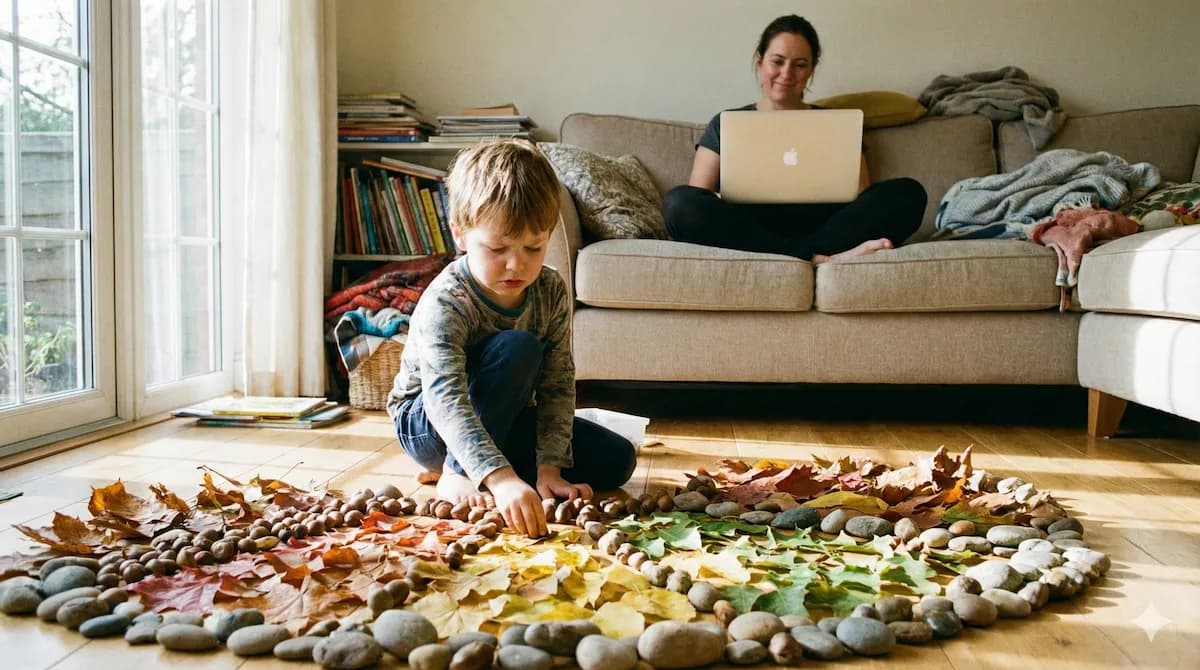
Play is the learning, not a break from it. Play is what your child chooses, leads and does for its own sake. Lining up cars counts. So does rough and tumble. Before you say stop or be careful, ask one question. Is this truly dangerous, or only uncomfortable for you?
What if play was never just a break from learning, but the learning itself?
For many parents of neurodivergent children, watching your child line up cars for the hundredth time or tumble endlessly off the couch can spark a familiar worry: shouldn't they be doing something more? Something structured? Something that looks more like what we've been told play is supposed to be?
In Episode 18 of the Neurodivergent Pulse podcast, sisters Angie and Kaycee Larney from Curious Me, an award-winning organisation dedicated to inclusive outdoor play, offer a perspective that might change everything. Through their work with children and families, they've discovered that the messiest, most chaotic, most unconventional play isn't something to redirect. It's exactly what children need.
This episode is your permission slip to reimagine play, trust your child's process, and let go of outdated adult agendas.
What is play, really?
One of the hardest things about understanding play, Angie explains, is that there's no universal definition. Different sectors and frameworks define it differently. But at Curious Me, they follow the playwork principles, which define play through three essential elements:
Freely chosen: the child decides to engage
Self-directed: the child leads the activity
Intrinsically motivated: the child plays for the sake of playing, not for an external reward
If those three elements are present, it's play. And that, Angie notes, doesn't always look the way adults want it to.
It's very messy. It's very raw. It's often chaotic. It doesn't look pretty and it can be confronting. It can be traumatic. We seem to have attached play to words like joy and fun. And it doesn't always look like that.
This reframe is powerful for neurodivergent families. When your child's play looks different, when it's intense, repetitive, or focused on a single special interest, it's easy to wonder if something is wrong. But if the child has chosen it, is directing it, and is motivated from within, they're playing. Full stop.
When play becomes therapy
Angie shares a story that illustrates just how profound play can be for children processing difficult experiences.
A young girl came to their play space week after week with balloons. These balloons were her babies. Each week, Angie would make baby carriers from scraps and materials. Each week, the girl would be pregnant, give birth, and then someone would come and take the baby away. This scenario played out repeatedly, growing more complex over time. First one baby, then three. Then an auntie in prison. Then babies taken by cousins.
Over about ten weeks, this child slowly revealed through play what had been happening in her life. Her biological parent had been incarcerated, and she was one of eight or nine siblings, all removed and placed in different care arrangements.
"So often as adults, we would stop that," Angie reflects. "No, the baby doesn't get taken away. The baby stays with the mum and the dad. Well, that doesn't always happen in life."
By allowing the play to unfold without redirection, by being curious rather than corrective, Angie created space for this child to process experiences that might otherwise have remained buried.
A lot of children don't have supports like psychologists and therapists. So when they are playing, this is their therapy as well.
Play isn't just learning. It's how children make sense of the world around them in every sense, from sequencing and mastering skills to processing grief, trauma, and change.
Rethinking risk: From 'be careful' to 'what do you notice?'
For parents of sensory-seeking children, safety can feel like a constant battle. The jumping, the climbing, the rough-and-tumble that makes your heart race. How do you support self-directed play when you're worried about your child getting hurt?
Angie, who came from a background in workplace health and safety, has a framework that might help. She asks herself: what level of injury am I willing to accept?
"For me, I accept a broken bone. A broken bone can be fixed," she explains. "I am not okay with catastrophic life-altering injuries. So we're talking brain, spinal, those things. Those are the kind of things that I'm going to try to mitigate."
This isn't about being reckless. It's about moving from blanket prohibition to thoughtful risk assessment. Angie points out that we put children in cars every day, a statistically more dangerous activity than most playground climbing, because it's socially acceptable.
Instead of scaring children with "be careful" (which teaches nothing about how to actually be careful), the sisters advocate teaching children to assess and mitigate their own risks:
Look around. Who's near you?
Are you jumping onto concrete or a softer surface?
Do you know how to land? Can you bend your knees?
What might happen if this doesn't go as planned?
"Every time we say those things, we're actually scaring them and we're not teaching them to mitigate the risk around them," Angie says. The goal is raising children who can assess danger for themselves, not children who freeze when no adult is there to tell them what's safe.
Pip remembers the appointments, the notes and the small wins, so you don't have to.
7 days free.
Special interests aren't fixations, they're learning
There's a common misunderstanding that play needs to be "functional" or varied to count. That a child lining up cars all day isn't really playing, or at least isn't playing properly.
Angie pushes back firmly: "Play is not one-size-fits-all. It is unique to every child and every person. If they want to sit there and line up cars all day, that is okay."
Why? Because that child might be mastering something. They might be noticing subtle differences between each car. They might be sequencing, patterning, or simply regulating.
"Those are the children who actually notice some of the most interesting deep things around us that we always are so quick to rush and miss," Angie observes.
She cautions against pushing children away from special interests simply to meet social norms. If a child is content and regulated in their play, and the parent isn't struggling with it, why redirect? The discomfort often belongs to us as adults, not to the child.
Angie herself has a special interest in play theory. Laetitia, our host, collected vintage perfume bottles as a child, carefully organising and reorganising them. As Angie points out at the end of their conversation, that "socially unacceptable" childhood skill translated directly into the highly organised approach Laetitia now brings to her work in AI and data.
"We're not prepared to think beyond what they're doing right now as to what that might translate to later on in life," Angie reflects. The two-year-old can't explain why they line up cars. But that doesn't mean the skill isn't building something important.
One shift to try this week
When asked for one small change parents or educators could make, Angie's advice was clear and practical: catch yourself.
The next time "no," "stop," or "be careful" is about to come out of your mouth (or just after it does), pause. Ask yourself:
Is this actually dangerous, or just uncomfortable for me?
Is this operationally disruptive (making a mess I'll have to clean), or genuinely risky?
Does stopping this serve my child, or does it serve me?
Kaycee adds: "Make sure that when you walk into whatever space, you have the child at the full front of your mind. Ask yourself: is this convenient for us as the grown-ups, or is it actually the right thing by the little person in your life?"
Does this serve the child or does it serve yourself?
It's not about becoming permissive or abandoning all structure. It's about examining our automatic responses and making space for children to lead when it's safe to do so.
Honouring your own needs as a parent
Supporting your child's play doesn't mean abandoning your own boundaries.
Angie is open about her own needs. Kaycee is more comfortable with mess; Angie prefers tidiness. Rather than suppress this or feel guilty, Angie communicates it directly to her children: "This is what feels good for your body, but this is what my body needs."
The family uses "windows of tolerance" language. When things get too loud or chaotic, Angie might say, "Mum's windows are starting to close. The noise is getting too loud for me." And her eldest child has started using the same language: "My windows are starting to close, Mummy. I can feel myself starting to get overwhelmed."
For neurodivergent parents, this is particularly important. If loud noises trigger you, if mess dysregulates you, those are real needs. You can support your child's play while also honouring your own sensory experiences. This might mean redirecting play outside when things get too noisy, wearing noise-reducing earbuds, or designating spaces where chaos is welcome and spaces where it isn't.
Understanding Zoe's Pip coach can help you navigate these moments, offering neuroaffirming strategies for supporting your child's development while also recognising your own capacity and needs. Because sustainable support starts with supported parents.
Your permission slip
If there's one takeaway from this conversation, it's this: you can trust your child's play.
The lining up of cars. The repetitive scenarios. The rough-and-tumble that makes you nervous. The special interests that don't look like what other kids are doing. These aren't problems to solve. They're your child making sense of their world, building skills we might not recognise, and doing exactly what their body and brain need to do.
As Angie puts it, childhood play skills translate into adult strengths in ways we can't always predict. The child who organises toys obsessively might become an adult who thrives in systems and data. The child who can't stop talking about trains might become an engineer. The child who plays out difficult scenarios over and over might be building emotional resilience we'll only understand years later.
Your job isn't to make play look a certain way. It's to create safety, stay curious, and get out of the way.
To learn more about Angie and Kaycee's work, visit Curious Me or follow them on Instagram.
Reflection prompt: Think about a moment recently when you wanted to stop or redirect your child's play. Was it because of genuine danger, or because of your own discomfort? What might happen if you let that play continue?
Pip is not a doctor or therapist. It helps you organise and prepare, not diagnose or treat.
In a crisis call 000. Lifeline 13 11 14. Kids Helpline 1800 55 1800. 13YARN 13 92 76.

Ready to put it all in one calm place?
Tell Pip one thing today. It remembers the rest.
Stored in Australia, encrypted. Cancel before day 8 and you won't be charged.
Related articles
How to create neuroaffirming classrooms
What does it take for neurodivergent children to feel truly safe at school? Educator Millie Carr shares practical strategies for creating neuroaffirming classrooms on our podcast. From Universal Design for Learning to teaching equity over equality, discover how teachers and parents can work together to build inclusive spaces where every brain type belongs. With 96% of teachers feeling unprepared to support neurodivergent students, this conversation offers hope and a path forward.
Read more
Unschooling neurodivergent kids: Trust over curriculum
Unschooling offers neurodivergent families an alternative to traditional schooling by prioritising child-led learning, nervous system safety, and curiosity over curriculum. In this article based on Episode 24 of Neurodivergent Pulse, Melissa Crockett-Joyoue (founder of Weave ND) explains why regulation is essential for learning, how special interests become powerful learning pathways, and why parents must do their own healing work.
Read more
The hidden cost of AuDHD in academia
Neurodivergent students often perform well academically while experiencing severe burnout and exhaustion that parents rarely see. Jocelyn Green, an AuDHD student and advocate, explains why neurodivergent brains work twice as hard just to keep pace, why success stories can be harmful when they hide the cost, and what accommodations genuinely help. This episode challenges the myth that good grades equal wellbeing and invites parents to recognise the invisible toll of masking, the reality of autistic burnout, and the grace their child needs most.
Read more