Why school food policies are failing some children, and what we can do about it
Every morning, Australian parents pack a lunchbox and brace for what the school might say about it. For families of children with feeding differences, selective eaters, neurodivergent kids, and children with sensory or medical needs, school food policies built for the average child can turn eating into a daily barrier. This piece names something that rarely gets named: how one-size-fits-all rules, lunchbox comments and "good food, bad food" messaging quietly undermine the feeding relationship, and why that matters when neurodivergent people are so overrepresented in eating disorder statistics. It also covers what good looks like, a classroom where food is treated as neutral, and what parents can actually do, including the reasonable adjustments schools are legally required to make under the Disability Discrimination Act. Your child has a right to eat at school without shame. Advocating for that isn't being difficult.
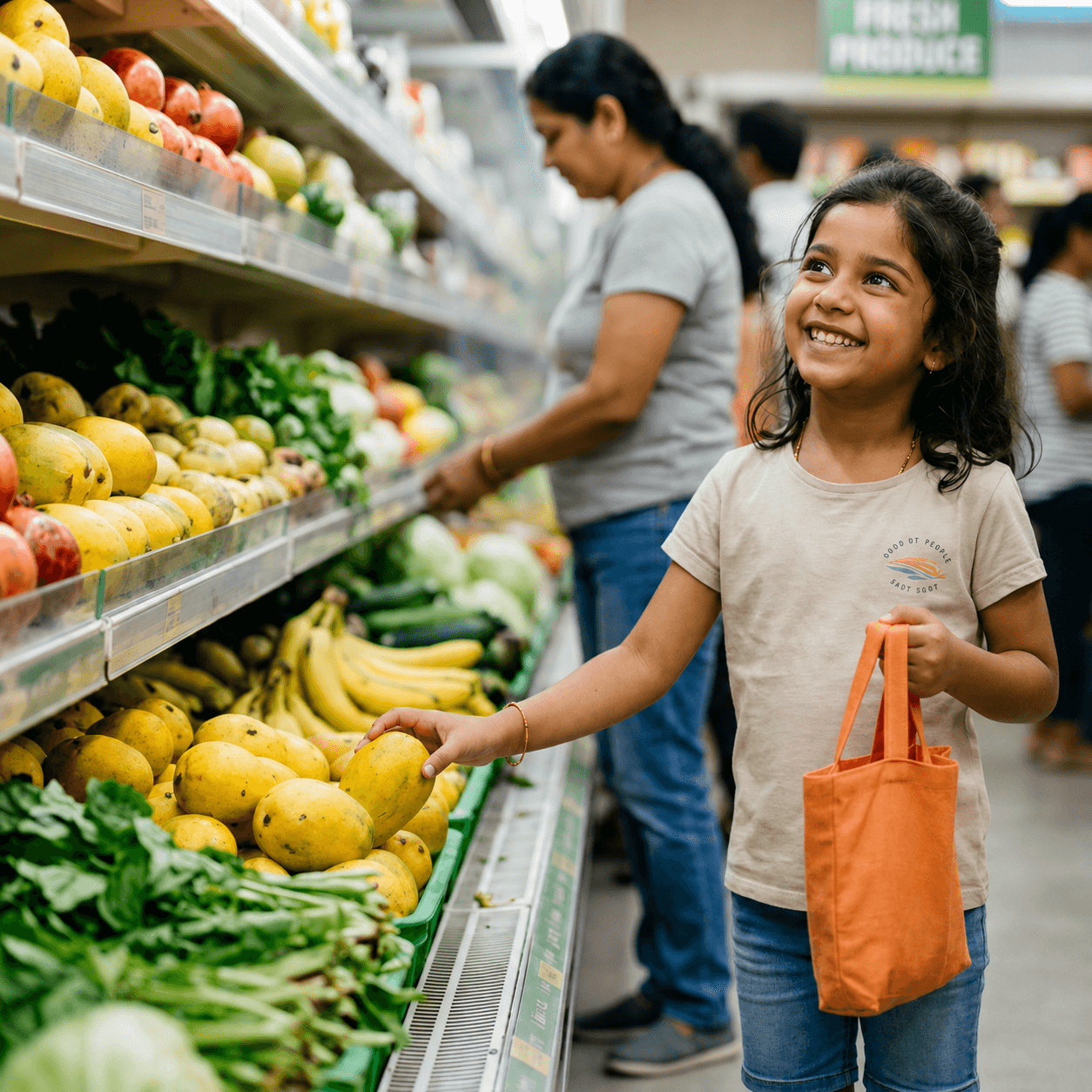
In short
School food rules are written for the average child. They can quietly shut out children with feeding differences. Your child has a right to reasonable adjustments at school. You do not need a diagnosis to ask. Say what your child needs, and ask the school to work with you.
Why school food policies are failing some children, and what we can do about it.
Every morning, parents across Australia pack a lunchbox. They think about what their child will eat, what will hold up in the heat, what can be opened quickly in six minutes at recess, and what will not come home untouched. For many families, this is already a daily negotiation. For families of children with feeding differences, it is a daily exercise in hope, strategy and quiet dread.
Then the school sends something home about the lunchbox.
Maybe it is a note. Maybe it is a sticker on the container. Maybe the child comes home and reports, matter of factly, that their food was not allowed. Or that someone said something. Or that they just did not eat because they did not want to stand out.
This is the reality for a significant number of Australian families. It is one that rarely gets named for what it is
The problem with one size fits all food policies
School food policies are not created with bad intentions. They are based on population level nutrition guidelines designed to improve children’s health and reduce obesity related illness across the general population. In that context, encouraging fruit and vegetables, limiting processed foods and promoting water over sugary drinks makes sense.
The problem is that these guidelines were never designed to account for every child. When they are translated into rigid classroom rules, they create a food environment that works well for neurotypical children with a broad food repertoire, adequate family resources, and no medical or sensory complications. For everyone else, they can create daily barriers to eating at school.
This is what is sometimes called a neuronormative food policy. It is built around the eating experience of the majority and treats everything outside of that as something to be corrected. Children with sensory sensitivities, selective eaters, neurodivergent children, children with medical needs, and children from families with limited food
access are disproportionately affected. Not because the policy is cruel, but because it was never written with them in mind.
What the school day actually looks like for these children
To understand why this matters, it helps to think about what the school day actually looks like for a child who struggles to eat at school.
Breakfast is often early. By the time the child arrives at school, there may already be a significant gap since their last meal. The in-class fruit and vegetable break, known variously as fruit break, Crunch n Sip, or brain food, is the first opportunity to eat during learning time. For many children, this break is limited to fruit and vegetables.
If those are not foods the child can eat at school, whether because of texture, smell, temperature, anxiety, or a policy that excludes alternatives, they go without.
Recess is for playing. Food happens if there is time and it can be managed on the move. Lunch arrives when many children are already tired, overstimulated, and past the point of being interested in eating. Throughout all of this, children are expected to concentrate, regulate their emotions, manage social demands, and learn.
When children are not adequately fuelled, this shows up in classrooms as fatigue, irritability, low frustration tolerance, and difficulty persisting with tasks. It is often misread as a behaviour problem or a motivation issue. In many cases, it is simply a child trying to function on insufficient fuel.
Pip remembers the appointments, the notes and the small wins, so you don't have to.
7 days free on iPhone and Android.
The feeding relationship and why it matters
There is something else at stake here that goes beyond nutrition and academic performance. It is something quieter and harder to measure, but significantly more important in the long term.
The feeding relationship is the connection between a caregiver and a child that develops through food. It is built over years of small moments, learning what a child can tolerate, what helps them feel safe, what works on a hard day. For families of children with feeding differences, this relationship is often hard won. It does not come easily and it does not survive repeated interference without cost.
When a school questions, corrects or turns away a child’s food, the child receives a message. Not about nutrition. About the person who fed them. A child who watches an adult in a position of authority signal that their parent got it wrong carries that home. It sits at the dinner table. It shapes how safe they feel eating in front of others, how willing they are to try new things, and how much they trust the adults who care for them.
For neurodivergent children who are already navigating a world that was not designed for them, these experiences accumulate. Research consistently shows that neurodivergent people are significantly overrepresented in eating disorder statistics. Eating disorders carry the highest mortality rate of any mental health condition in Australia. The relationship between shame around food, loss of autonomy, and the development of disordered eating is not theoretical. It is well documented.
Let's be honest, a fruit break policy does not 'cause' an eating disorder but it is not neutral either. An environment where food is judged, controlled, and used as a measure of worth is a genuine risk factor. Schools have both the opportunity and the responsibility to reduce this risk.
What good looks like
A food environment that supports all children does not require schools to abandon health promotion. It requires them to expand their definition of what healthy looks like, and to recognise that rigid rules applied uniformly do not serve every child equally.
A non-judgemental food culture in a classroom means food is treated as neutral. There is no praise for healthy choices and no commentary on what children bring. There is no commenting on other people’s food, from adults or peers. Children decide how much they eat and in what order. Differences are expected and accepted. Food is not used as a reward or withheld as a consequence.
This is not a radical position. Shame has been largely abandoned as a teaching tool in modern education because the evidence is clear: it does not change behaviour. It damages children. Food policy and nutrition education seems to be the exception. That exception is costing some children more than anyone is acknowledging.
A classroom where food is neutral builds safety and belonging. Safety and belonging are what children need to learn. When eating is simple and unremarkable, children can focus on everything else. When it is loaded with judgment, comparison and correction, they cannot.
What parents can do
Parents of children with feeding differences are often already carrying significant guilt and stress around food. They are navigating the daily reality of a child who eats a limited range of foods, managing the opinions of relatives and social media, and trying to pack a lunchbox that will actually get eaten. Adding the weight of school judgment on top of that is, frankly, too much.
Parents have more ground to stand on than many realise.
In Australia, all educational settings are required under the Disability Discrimination Act 1992 and the Disability Standards for Education 2005 to make reasonable adjustments for disabled children, including neurodivergent children. This obligation applies to participation in all aspects of the school day, including eating. A reasonable adjustment does not require a formal diagnosis. It requires a clear explanation of the child’s needs and a willingness from the school to find a workable solution.
Reasonable adjustments around food might include an exemption from the school food policy for a specific child, an agreement that the child’s lunchbox will not be commented on or corrected, flexibility around where or when a child eats, or a quieter eating space for a child who finds the lunch environment overwhelming.
Advocating for these adjustments can feel daunting. There is something about walking into a school as a parent and questioning a policy that triggers the same anxiety as being called to the principal’s office, even when you are the adult and you are completely in the right. This conversation does not have to be confrontational. It can be calm, specific and focused on what the child needs, not on what the school is doing wrong.
The bigger picture
School food culture is one part of a much larger picture. Children are growing up in a world saturated with diet culture, a belief system that assigns moral value to food
and bodies and teaches children that what they eat says something about who they are. Most adults have absorbed these messages for so long they barely notice them anymore. Children notice everything.
When schools reinforce diet culture through food policies, lunchbox comments, reward systems, and nutrition education that labels foods as good or bad, they are not operating in a vacuum. They are adding institutional weight to messages children are already receiving from every direction. For children who are already vulnerable, neurodivergent children, children with feeding differences, and children experiencing food insecurity, that weight lands harder and stays longer.
Every adult in a child’s life plays a role in either reinforcing or challenging those messages. Schools are one of the most powerful environments in a child’s life. They hold communities together, they shape culture, and they reach children during some of the most formative years of their development. A school food culture that is free from judgment, that treats food as neutral, and that protects every child’s right to eat without shame is not just a nice idea. It is a meaningful and achievable protective factor.
A final word
Feeding your child at school should not be this complicated. For many families, it is. Not because they are doing anything wrong, but because the system was not designed with their child in mind.
The good news is that the system can change. It changes one conversation at a time, one reasonable adjustment at a time, one school that decides to do things differently. Parents who advocate for their child’s right to eat at school without shame or judgment are not being difficult. They are protecting something that matters: the feeding relationship, their child’s trust in their own body, and their child’s ability to show up at school and learn.
That is worth advocating for.
Feeding Your Child at School: A School Food Advocacy Kit for Australian Parents and Caregivers is available here
Further reading
Pip is not a doctor or therapist. It helps you organise and prepare, not diagnose or treat.
In a crisis call 000. Lifeline 13 11 14. Kids Helpline 1800 55 1800. 13YARN 13 92 76.
Ready to put it all in one calm place?
Tell Pip one thing today. It remembers the rest.
Stored in Australia, encrypted. Cancel before day 8 and you won't be charged.
Related articles
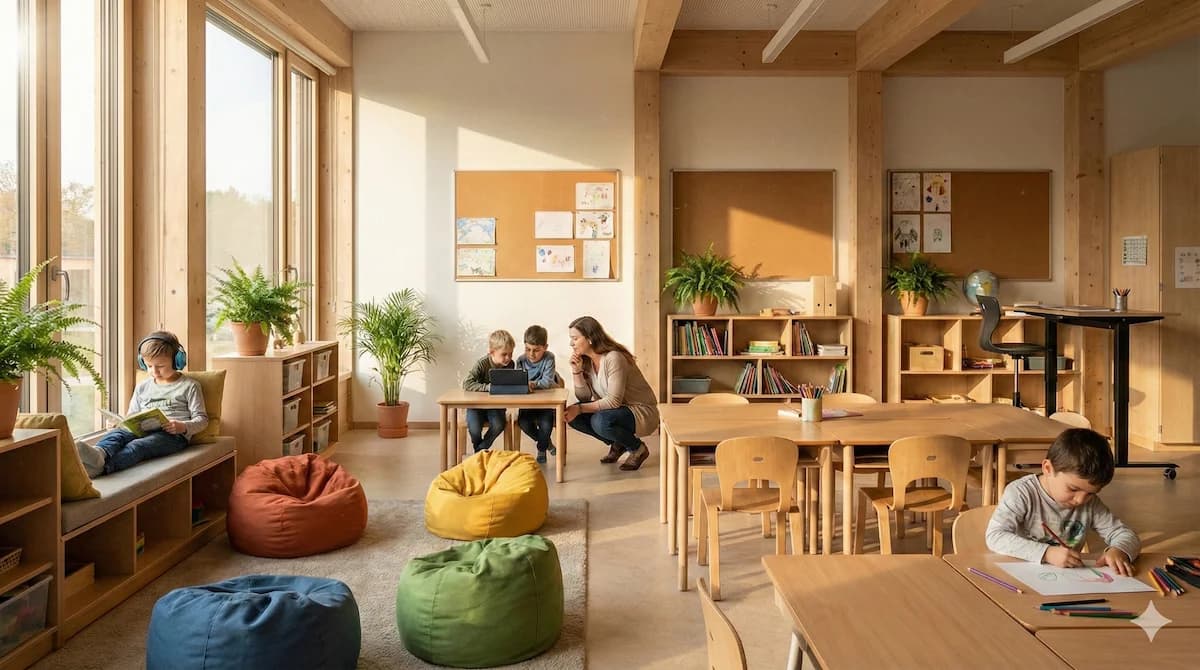
How to create neuroaffirming classrooms
What does it take for neurodivergent children to feel truly safe at school? Educator Millie Carr shares practical strategies for creating neuroaffirming classrooms on our podcast. From Universal Design for Learning to teaching equity over equality, discover how teachers and parents can work together to build inclusive spaces where every brain type belongs. With 96% of teachers feeling unprepared to support neurodivergent students, this conversation offers hope and a path forward.
Read more
Interoception and feeding differences: Understanding what's really happening beneath the surface
Why do some children only notice hunger when they're "hangry"? Occupational therapist Kelly Mahler explains interoception, our body's ability to sense internal signals, and its deep connection to feeding differences. In this episode of the Neurodivergent Pulse podcast, learn why "picky eater" labels miss the mark and how curiosity-based approaches can transform mealtimes.
Read more
Play is learning: How curiosity helps neurodivergent kids thrive
What if play was never a break from learning, but the learning itself? In this episode, Angie and Kaycee Larney from Curious Me share why messy, chaotic, special-interest play is exactly what neurodivergent kids need. Learn how to shift from "be careful" to curiosity, honour your child's process, and trust that today's car-lining might be tomorrow's life skill.
Read more