Art of belonging: ADHD, creativity & regulation
This article explores ADHD through a transformational lens, featuring Madeleine Jaine Lobsey, founder of Wondiverse. Rather than viewing ADHD as a deficit, this episode reframes it as a regulation challenge and source of innovation. Key topics include: why ADHD is fundamentally about nervous system regulation, how creativity and play support self-regulation, the grief and empowerment of late diagnosis, why divergent thinking drives innovation, and how offering choice and control creates safety.
In short
ADHD is fundamentally about regulation, not laziness Creativity and play are essential regulation tools, not frivolous activities Late diagnosis brings grief and empowerment. Both are valid Divergent thinking is a strength that drives innovation and problem-solving Offering choice and control helps neurodivergent people feel safe and regulated True belonging means creating spaces where people can be themselves, without masking
This article is based on Episode 23 of the Neurodivergent Pulse podcast. It features Madeleine Jaine Lobsey in conversation with host Laetitia Andrac. Listen to the full conversation on Spotify or your favourite podcast platform.
What if ADHD was not about deficit, but about innovation?
For too long, ADHD has been framed through a lens of lack. Lack of focus. Lack of control. Lack of ability to keep up. But what if we flipped that narrative? What if ADHD was a different operating system? One built for creativity, connection and divergent thinking.
That is the reframe at the heart of this conversation with Madeleine Jaine Lobsey. She is a transformational leader and creative strategist. She is the Autistic and ADHD founder of Wondiverse. She also hosts the Neurodelight podcast.
Madeleine's late diagnosis at 49 unlocked a new understanding of herself. It also unlocked a new way of leading. Her work spans community design, leadership development and neurodivergent advocacy. She helps people and organisations see ADHD differently. It is not something to manage. It is a strength to harness.
This article unpacks the key insights from the conversation. Why ADHD is fundamentally about regulation. How creativity and play create safe spaces. The grief and empowerment of late diagnosis. And why divergent thinking drives innovation.
You may be a parent, an educator, a therapist, or someone navigating ADHD yourself. This is your invitation to see ADHD differently. It is an invitation to create spaces where neurodivergent people belong.
ADHD is about regulation, not laziness
One damaging myth says ADHD is about laziness. Another says it is about a lack of willpower. Another says people are just not trying hard enough. But ADHD is fundamentally about regulation. It is how our nervous systems respond to stimulation, transitions and demands.
"I think one of the really common misconceptions with ADHD is those things like you're either hyperfocused or you're lazy or you're super energetic and people look at it that way where actually what's fundamental is regulation and an inability to regulate," Madeleine says.
She uses the analogy of car pistons to illustrate this. A neurotypical person's systems move up and down in a regulated rhythm. For a neurodivergent person that motion may be too quick. It may stop altogether, or feel jarring. That affects the rest of the system.
This reframe is critical. Understand ADHD as a regulation challenge and something shifts. We stop blaming the person. We start looking at the environment. What supports are in place? What is causing dysregulation? How can we create conditions that help the nervous system feel safe?
For parents, this means reading behaviour differently. What looks like defiance is often dysregulation. For ADHD adults, it means giving yourself permission to need different strategies. That covers managing ADHD transitions and daily routines.
Regulation is not about forcing yourself to fit a neurotypical mould. It is about understanding your nervous system. Then you create rhythms, routines and environments that work for you.
Regulation tools: Creativity and play
Madeleine talks about her work at Wondiverse. One theme comes up again and again: play.
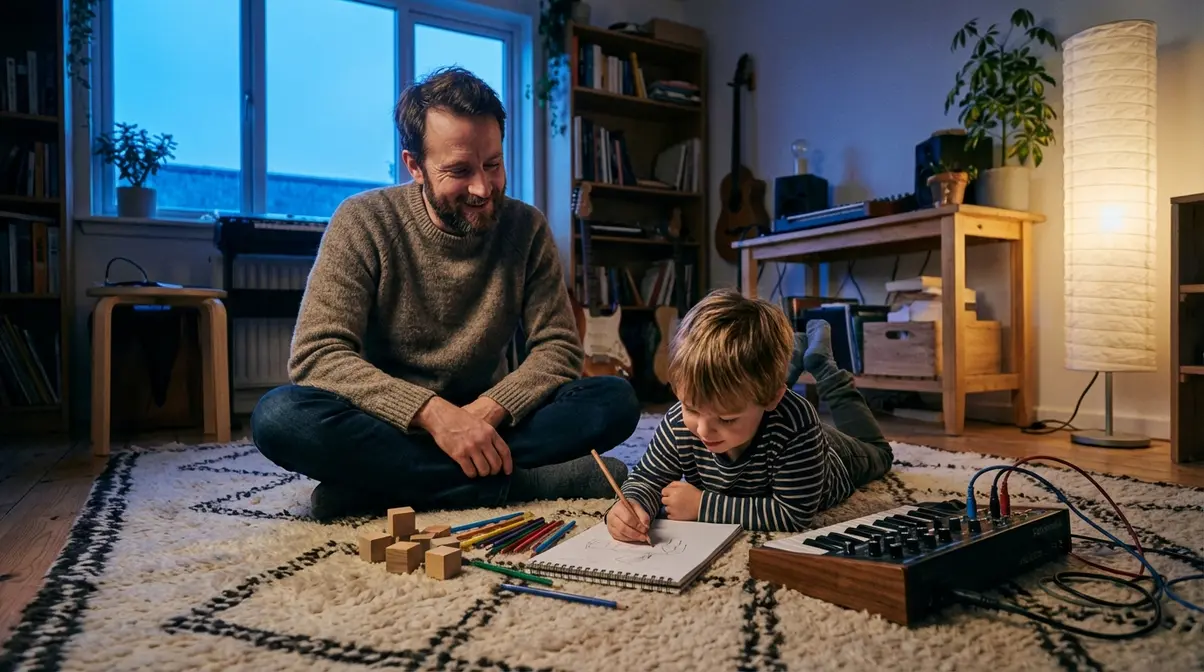
Not play as a break from real work, but play as a vital regulation tool. Play creates safety. It invites curiosity. It lets people explore, experiment and express themselves. There is no pressure to get it right.
"What we find with creative activity or play-based activity is it's a real opportunity for regulation and regulating in a way that works for you," Madeleine explains. "There's not like tight parameters to it. It's got a loose scope that you can be inside of to regulate yourself."
This is especially true for neurodivergent children and adults. They often spend huge energy masking, performing and trying to fit in. Play offers a reprieve from that pressure. It is a space with no wrong answers and no judgement. Just exploration.
Madeleine did not recognise her own ADHD at first. She associated it only with physical hyperactivity. Later she realised her childhood dancing was a form of regulation. It supported her executive functioning.
For parents, this might mean letting go of structured activities. Let your child lead. For adults, it might mean permission to be creative. The results need not be productive or perfect.
Creativity and play are not frivolous. They are essential for regulation, connection and joy. Explore the power of play for neurodivergent children to learn more.
The grief and empowerment of late diagnosis
Madeleine was diagnosed with ADHD and autism at 49. For many people, late diagnosis brings a mix of emotions. Relief, validation, grief, and sometimes anger.
Madeleine was initially hesitant about getting a diagnosis. Then she spent time with other neurodivergent adults. They showed her the value and power of having one. She could see what they had, and she wanted it too.
ADHD in women often gets hidden behind labels. Eccentric, creative, dramatic, or just kind. Women learn to mask and survive, but this comes at a cost. "As I went on in my life, there was a greater and greater cost to me. And I began to notice I just did not have the energy to keep going the way that I was going."
But alongside the grief is empowerment. "I feel like you also get your hands on the levers and dials of your life," Madeleine shares. "You can start to see what works for you, can start to see what you need to be really empowered."
Understanding your neurodivergence gives you language for your experiences. It helps you make sense of patterns that never quite fit. It allows you to stop blaming yourself and start advocating for what you need.
You may be navigating a late diagnosis, or supporting someone who is. It is okay to feel all the feelings. Grief and empowerment can coexist. Understanding your neurodivergence is a gift. That holds even if it comes later than you wish.
Many ADHD people also experience rejection sensitivity. It adds another layer to the late diagnosis experience. Understanding Zoe's research on neurodivergent families shows something related. Over three in five parents raising neurodivergent children are neurodivergent themselves. They bring deep empathy and lived understanding to their caregiving.
Pip remembers the appointments, the notes and the small wins, so you don't have to.
7 days free on iPhone and Android.
Why divergent thinking drives innovation
Madeleine's perspective on divergent thinking is one of the most exciting parts. Divergent thinkers see connections others miss. They approach problems from unexpected angles.
Madeleine shares wisdom from an elder in the neurodivergent community that transformed her perspective: "Even from an evolutionary perspective, the way that neurodivergent people think is the predominant source of innovation for humanity. Most innovation comes from divergent thinking and it comes from systems thinking and associative thinking."
But workplaces and schools are often designed for convergent thinking. That means linear, predictable, step-by-step processes. Neurodivergent people thrive in environments that allow flexibility, creativity and exploration. That is especially true for ADHD people.
When we create space for divergent thinking, we unlock innovation. We solve problems in new ways. We design systems that work for more people, not just the neurotypical majority. One in five people are neurodivergent globally (Understanding Zoe's research). Workplaces and schools need to make space for divergent thinking. Otherwise they will not stay relevant or innovative.
For parents, this means celebrating your child's unique way of thinking. Celebrate it even when it does not fit the school mould. For workplaces, it means rethinking how you structure tasks, meetings and expectations. Make room for neurodivergent strengths.
Divergent thinking is not a deficit. It is a competitive advantage.
Choice and control as foundations for co-regulation
One of the most practical insights is about choice and control. Both matter in co-regulation.
"In any environment where there are choices in participating, not participating, in the way that you can participate and then you get to have the say about your participation, not participating or what you're going to participate in, there is an instant sense of safety and an instant almost instant sense of regulation," Madeleine explains.
This matters especially for neurodivergent children. So many decisions get made for them. What they wear. What they eat. Where they go. How they spend their time. So much of their day is dictated by adults.
Offering choice does not mean letting your child do whatever they want. It means giving them agency within boundaries. Do you want to wear the blue shirt or the red shirt? Do you want to do homework before or after dinner? Do you want to take a break now or in five minutes?
Madeleine shared a practical example from her own home. She struggles with bright light, while her husband loves it. Their solution? Creating zones in the house with different lighting levels. "He can be at the kitchen island bench under really bright light and I can be only a couple of metres away sitting on a chair in the dark and we're participating together but in a way that works for us."
These small moments of choice help children feel seen, respected, and in control. And when they feel in control, they are more regulated.
For adults, this might mean structuring your day in a way that works for you. A rigid schedule leaves you depleted. Energy management for neurodivergent people helps you make choices that support regulation.
Co-regulation is not about controlling behaviour. It is about creating safety, connection and trust.
Building spaces where neurodivergent people belong
At the heart of Madeleine's work is a simple belief. Everyone deserves to belong.
Not belong by fitting in. Not belong by masking. But belong as they are.
When you allow people to be, magic happens.
That is what Wondiverse is about. It creates spaces where neurodivergent people can show up fully. Madeleine described a sound-based event at the Brisbane Powerhouse. One room had a silent disco with festival DJs. Another had silent art making with visual cues. In another, people wrote lyrics for musicians to turn into songs on the spot.
"So there were all these different opportunities to participate and not participate and it was for all people and all ages," Madeleine shares. "So we had 25-year-olds like raving with the DJs and then families on the other side of the same dance floor dancing to Taylor Swift."
The feedback from families is powerful: "We want to come to things like this but when we come we last 10, 15 minutes before it's too much for us. I've been here for 3 hours and my kid doesn't want to leave."
And perhaps most movingly: "When other people get how great your kid is, there's nothing like it."
This is not just about physical spaces. It is about culture. It is about language. It is about how we design programmes and set expectations. It is about how we respond when someone struggles.
For parents, this might mean rethinking your home environment. Make it more supportive of your child's needs. For educators, it might mean shifting from compliance-based classrooms to connection-based ones. For workplaces, it might mean offering flexibility, accommodations, and genuine inclusion.
Belonging is not something neurodivergent people need to earn. It is something they deserve, simply by being human.
Frequently asked questions
How can I support my ADHD child at home?
Start by understanding that ADHD is about regulation, not behaviour. Create predictable routines, offer choices within boundaries, and make space for play and creativity. Focus on connection over correction. Your child's nervous system needs different support from a neurotypical child's. For practical strategies, explore creating ADHD-friendly environments at home.
What is divergent thinking, and why does it matter?
Divergent thinking generates multiple solutions to a problem. It sees connections others miss. It approaches challenges from unexpected angles. It is a hallmark of ADHD and a key driver of innovation. Create environments that value divergent thinking. You unlock creativity, problem-solving and new possibilities.
How do I know if my child is dysregulated or just being difficult?
Dysregulation often looks like meltdowns, refusal or shutdowns. But the key difference is that dysregulation is a nervous system response, not a choice. Look for patterns: Is your child overwhelmed by sensory input? Are they struggling with transitions? Have they had a lot of demands placed on them? When you see behaviour as communication, you can respond with support rather than punishment.
What does co-regulation look like in practice?
Co-regulation helps your child, or yourself, return to a calm state. You offer safety, connection and support. It might look like sitting quietly with your child during a meltdown. It might be offering a sensory tool. It might be validating their feelings, or simply being present. It is not about fixing or controlling. It is about creating safety so the nervous system can settle.
How can I advocate for my neurodivergent child at school?
Start by building a collaborative relationship with your child's teacher. Share what you know about your child's strengths and needs. Ask questions about how the classroom is structured and what accommodations are available. Use language that focuses on support, not deficits. And remember, you are the expert on your child. Trust your instincts. Advocate fiercely when needed.
Final thoughts: when you allow people to be, magic happens
Madeleine's work is a powerful reminder that neurodivergence is not something to fix. It is something to honour, celebrate and harness.
Stop trying to force neurodivergent people into neurotypical moulds. Create environments that support their ways of being. You unlock potential. We foster innovation. We build communities where everyone belongs.
For parents, this means letting go of one idea. Your child does not need to keep up with their peers. For educators, it means rethinking how you structure learning. For workplaces, it means valuing divergent thinking and creating flexibility.
And for neurodivergent people, it means permission to be exactly who you are. Without apology. Without shame. Without needing to prove your worth.
Because when you allow people to be, magic happens. And that is where true belonging begins. You may be navigating the ups and downs of family life. Embracing the reality of neurodivergent family life matters.
Connect with Madeleine Jaine Lobsey
Madeleine Jaine Lobsey is a transformational leader and creative strategist. She is the Autistic and ADHD founder of Wondiverse. She is also the host of the Neurodelight podcast. Her work creates spaces where neurodivergent people can work and play together. It is grounded in joy, belonging and transformation.
Website: wondiverse.com.au
Instagram: @wondiverse
Pip is not a doctor or therapist. It helps you organise and prepare, not diagnose or treat.
In a crisis call 000. Lifeline 13 11 14. Kids Helpline 1800 55 1800. 13YARN 13 92 76.

Ready to put it all in one calm place?
Tell Pip one thing today. It remembers the rest.
Stored in Australia, encrypted. Cancel before day 8 and you won't be charged.
Related articles
Is an ADHD assessment worth it at 40? An honest Australian answer
An adult ADHD assessment in Australia costs about $1,387 and takes about 10 weeks. Learn what a diagnosis gives you, what it does not, and when to wait.
Read more
Rejection sensitivity in kids with ADHD: A parent’s guide to building confidence and connection
Explore the misunderstood world of rejection sensitivity in kids with ADHD through heartfelt stories and practical advice. This guide unpacks why everyday setbacks hit so hard, the unique challenges for culturally diverse families, and step-by-step neuroaffirming strategies to foster resilience and confidence. Whether you're navigating stigma or searching for support, discover how compassion and understanding can transform your family’s journey.
Read more
Play is learning: How curiosity helps neurodivergent kids thrive
What if play was never a break from learning, but the learning itself? In this episode, Angie and Kaycee Larney from Curious Me share why messy, chaotic, special-interest play is exactly what neurodivergent kids need. Learn how to shift from "be careful" to curiosity, honour your child's process, and trust that today's car-lining might be tomorrow's life skill.
Read more