Rest is not giving up: AuDHD and chronic illness
Living well with AuDHD and chronic illness isn't about pushing through until you crash. Saffron Canny-Smith shares how accepting the word 'disabled' unlocked her self-advocacy, why proactive rest is how you keep going, and what genuine belonging looks like when your body has changed. This conversation explores practical strategies for managing overlapping conditions, naming access needs without waiting to be asked, and building relationships with people who actually accommodate you.
In short
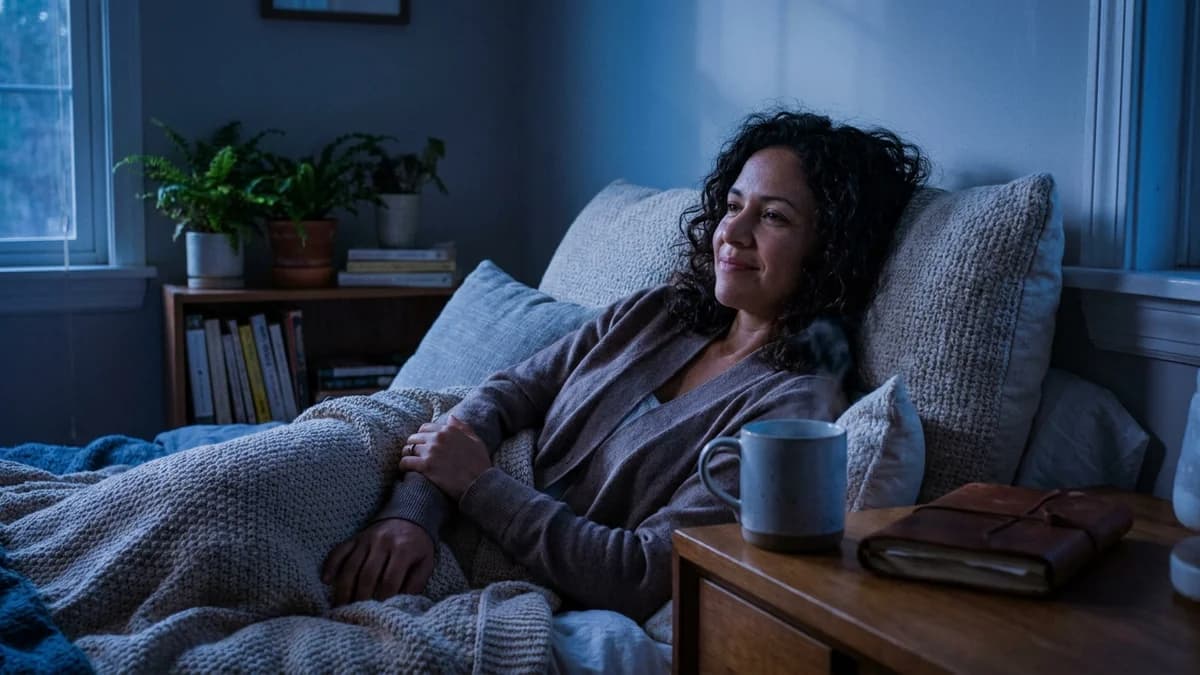
Living with AuDHD and chronic illness is not about pushing through until you crash. It is about choosing rest before your body forces it, and claiming the identity and access needs that are already yours. Saffron Canny-Smith shares how accepting the word "disabled" unlocked her self-advocacy, and why there is no threshold you need to cross before your needs count. As she puts it: "There's no level of disabled or special sticker you need to be able to say, 'These are my access needs.'" You deserve people who accommodate you, and you do not have to settle for less.
When Saffron was a teenager, sick with ME/CFS and hiding it from everyone around her, she made herself a promise. If she ever became ill again, she would not pretend to be fine. She would rest when she needed to. She would ask for help. She would advocate for herself. Everything she does now, the writing from bed, the audition emails listing access needs nobody asked for, the Instagram posts naming the hard stuff plainly, is her keeping that promise.
It took years of pushing through, crashing, and losing people she thought were friends to get there. What she has found on the other side is a life that actually fits her, and a message worth sharing with anyone who is still waiting for permission to stop pretending.
In Episode 40 of the Neurodivergent Pulse podcast, host Laetitia Andrac is joined by Saffron Canny-Smith, a late-diagnosed AuDHD woman, disability advocate, writer and content creator living with multiple chronic illnesses including ME/CFS. Together they explore what it looks like to honour your body, claim your identity and build a life that fits all of who you are. Saffy speaks with the kind of plainness that only comes from years of hard-won experience.
The promise that changed everything
Saffy's openness about her experience did not come from nowhere. It came from a decision she made as a sick teenager, and from the courage to honour it when illness returned years later. Diagnosed with ADHD first, then autism around the same time ME/CFS came back after three years of remission, she found herself thrown into the deep end of multiple identities at once. If you are navigating late AuDHD identification yourself, Samantha Johnson's conversation explores why this discovery so often arrives in a rush, and what it takes to make sense of it.
Her response was to read everything she could, and then to share what she was learning online. What she found was a community she had not known existed. But underneath the content creation was something more personal: a reckoning with the version of herself who had spent her school years pretending to be fine.
I made a promise to myself that if I ever became sick again, I was not allowed to hide it and pretend to be fine. I had to rest if I needed to and ask for help and advocate for myself.
That promise is the thread running through everything Saffy shares, on her @neurosparklysaffy Instagram, in her writing, and in conversations like this one. It is not performance. It is accountability to a younger self who deserved better.
What does it feel like to live with AuDHD and chronic illness?
Living with AuDHD and chronic illness means navigating three conditions that do not take turns. They are all present at once, and they interact in ways that can be genuinely difficult to untangle. Saffy is honest about this: the ADHD drives a constant search for stimulation, but overdoing it triggers a body-forced crash that is far less pleasant than any chosen rest. This push-crash pattern is at the heart of AuDHD burnout, and it is one of the hardest cycles to interrupt. The exhaustion is not a personal failing. Understanding Zoe's research on neurodivergent families found that 64% of parents raising neurodivergent children often feel exhausted, compared with 42% of parents raising neurotypical children, and the gap is even wider when it comes to overwhelm. The energy accounting framework can help families shift from reactive crisis management to planning rest before the body demands it.
The autism piece adds another layer. Chronic illness flare-ups intensify sensory sensitivities, which can snowball into meltdowns, which then increase fatigue, which makes sensory sensitivities worse again. It is a cycle that feeds itself, and interrupting it early matters.
"If it's dinner time and I only feel like I can eat bread and butter, then so be it," she says. "I just don't push it, and if I'm wearing clothing and it suddenly all feels horrible and itchy, just change clothes." Leaning into sensory needs rather than fighting them is one of the ways she interrupts that cycle before it takes hold. As she puts it, "leaning into that has been something where I'm able to kind of help both those parts of myself and not let it get into that dreadful cycle."
She has also found workarounds that let her brain stay engaged while her body rests. Some of the things that work for her:
- Reading in bed, which gives her ADHD brain something to hold onto without physical exertion
- Writing and creating content from a lying-down position, including recording podcast interviews from bed
- Planning rest windows around appointments, so any gap between commitments is used for recovery rather than activity
- Changing clothes immediately when a texture becomes unbearable, rather than pushing through the sensory discomfort
- Eating whatever feels manageable during a flare, without guilt about nutrition or variety
- Colouring with a friend, which meets the need for connection and gentle stimulation without demanding physical energy
None of this came easily or quickly. Saffy is honest that she only learned these strategies by spending years doing the opposite first.
Why proactive rest isn't giving up: it's how you keep going
Proactive rest, rest you choose before your body demands it, is one of the most significant shifts Saffy has made. As a teenager, the cycle was brutal: push through at school, pretend to be fine, then crash so completely at home that she could not read a book or follow a film. This mirrors what Jocelyn Green describes as the hidden cost of masking and pushing through, where success on the outside conceals exhaustion that nobody sees. Research puts a number to this invisible labour: parents of neurodivergent children spend roughly 10.5 hours every week on emotional regulation, advocacy, and administration alone, on top of 30 hours on specific caregiving tasks. The rest Saffy got as a teenager was not restorative. It was just collapse.
Now, she structures her days and weeks around rest as a non-negotiable. "I force myself to have an afternoon nap or rest every day. I'm not a napper, so mostly it's just lying down pretending to be asleep for an hour or so. But it has the same effect. It's just that quality rest." On days she skips it, thinking she does not need it, her body reliably proves her wrong by evening.
The shift in perspective that made this possible is simple:
Life is way more enjoyable when you accommodate your illness and just accept that you can hate it, but it's there, and there are things you can do.
That is not resignation. It is a practical recognition that fighting reality costs more energy than working with it, and that the energy saved is what makes everything else possible.
Pip remembers the appointments, the notes and the small wins, so you don't have to.
7 days free on iPhone and Android.
How accepting the word 'disabled' changed everything
Accepting the word "disabled" was what made self-advocacy possible for Saffy. It sounds simple, but for many people, including her, it required working through years of internalised ableism first. Chronic illness occupies a strange grey area in public understanding, and Saffy had to reason her way to the word deliberately: does my chronic illness disable me in my daily life? Obviously yes. So the word fits. For more on why disability visibility matters beyond tokenism, Simone Eyles makes the case that being seen as disabled in everyday media and culture is part of what makes claiming that identity feel possible.
"By accepting I'm disabled, I have a chronic illness, I have been able to become more aware of accessibility and access needs, and I've also realised that I'm allowed to have access needs," she explains. That realisation, that access needs are a right being claimed rather than a favour being asked, changed how she moved through the world. The sense of being unseen that Saffy describes is common: nearly nine in ten parents of neurodivergent children say their experience feels misunderstood or invisible, which tells you something important about how rarely these needs are genuinely acknowledged.
She also names something uncomfortable but real: in many public situations, saying "I'm disabled" without specifying a diagnosis is taken more seriously than naming the diagnosis itself. "If you just say, 'I'm disabled,' and you don't disclose what, they're more likely to take you seriously." She is clear that this is wrong. It is also useful to know.
There's no level of disabled or special sticker you need to be able to say, "These are my access needs."
Come back to that line whenever the voice of internalised ableism starts asking whether you are really disabled enough to ask.
What actually counts as an access need?
Neurodivergent access needs extend well beyond mobility aids and wheelchair ramps, and Saffy's approach to naming them is practical and proactive. She does not wait to be asked. When she received an audition invitation with no access needs section, she included them anyway in her response, simply listing what she required alongside confirming her attendance.
"Access needs can also be things like I need frequent breaks, like five minutes an hour at least. I need an extra chair to put my legs up on. I need a space that's quiet that I can go to if necessary." These are not unusual or excessive requests. They are the conditions under which she can actually participate.
Access needs look different for everyone. Some examples from Saffy's own life and conversation:
- Frequent short breaks, such as five minutes per hour, to manage fatigue and sensory load
- An extra chair to elevate legs when sitting for extended periods
- Access to a quiet space to decompress if needed
- Mobility aids, listed alongside the less visible needs rather than instead of them
- Low-demand catch-ups with friends, like sitting in bed together rather than going out
- Wearing sunglasses or noise-cancelling headphones in public spaces without being asked to remove them
- Advance notice of venue accessibility so energy can be planned accordingly
The confidence to state these things builds with practice. Each time you name a need and the world does not end, it becomes slightly easier to do it again.
For parents and carers reading this alongside a neurodivergent young person: if you are looking for a way to capture what you know about your child's needs in one place, so that advocating for them takes less energy on the hard days, Understanding Zoe is built for exactly that. It turns scattered observations, reports and patterns into clear next steps you can share with schools, clinicians and anyone else who needs to understand.
The grief of a changing body and lost community
Practical strategies only tell part of the story. The emotional cost of acquired disability is real, and Saffy does not wrap it in false silver linings. Sport was central to her identity for years: speed skating, cycling, dance, three hours of training a day. Losing the capacity to skate was not just losing an activity. It was losing a body she had loved, a sense of routine, and a community she thought was hers.
"You suddenly feel like you've just lost a huge chunk of yourself," she says. The grief that comes with that kind of loss sits alongside the grief of late diagnosis, and they compound each other.
What made it harder was discovering which friendships were real. After five months away from skating, one person messaged to ask how she was doing.
I thought at skating that I had so many friends, and they were friends, but once things got hard, they decided it was too hard for them too.
She is not bitter about it, but she is honest. Her message to anyone in a sporting community who notices someone disappearing is direct: "If you love someone, check in with them. Find a way to keep your relationship going that's not connected to that sport." It does not have to be a grand gesture. A single message saying "I haven't seen you, I'm thinking of you" is enough to show someone they have not been forgotten.
What genuine belonging looks like
Genuine support often looks like someone doing something they were not asked to do. The most striking example Saffy shares is from her school years, when doctors had spent three years acknowledging she was probably ill with ME/CFS but refusing to formally diagnose it. She had not asked anyone for help researching. She was too tired.
"One of my friends came up to me at school, and she'd actually been, unbeknown to me, but doing research in her spare time, and she came up to me and she said, 'Look, I think you have this thing called ME/CFS.'" No doctor had done that. Her friend had simply noticed that someone she cared about was struggling, and decided to do something about it on her own time.
That is what belonging looks like: friends who check venue accessibility before suggesting plans, who arrive with coffee and pastries and sit in bed with you, who carry your mobility aids to the car without being asked, who do a quick search to understand what your diagnosis actually means for your daily life. For more on what genuine belonging looks like in community, Belongside Families explores how peer connection transforms isolation into something sustainable.
That search for genuine community matters more than it might seem. More than three in five parents raising neurodivergent children also identify as neurodivergent themselves (see the full research report), which means many people are navigating their own identity and access needs at the same time as advocating for someone else. For anyone supporting someone who is grieving lost capacity or identity, Saffy's advice is to lead with listening rather than fixing: sometimes your loved one just needs to vent and complain and cry, and to have someone there.
Saffy's closing message is one of the most direct things in the episode, and it deserves to land without softening:
There are amazing people out there, and you deserve them, and you will get them one day. So don't settle, 'cause it really shows.
You are allowed to rest. You are allowed to name your needs. You are allowed to claim your identity and expect the people around you to accommodate it. None of that is too much to ask, and you do not have to keep settling for people who treat it like it is.
If you are a carer or parent who found something useful here, try Understanding Zoe free for seven days and see how it can help you turn what you know about your child into action, even on the days when your own energy is running low.
Frequently asked questions
How do you live well with AuDHD?
Living well with AuDHD means working with your nervous system rather than against it. For many people, this involves choosing proactive rest before the body forces a crash, naming access needs without waiting to be asked, and finding community that genuinely accommodates you. Saffron Canny-Smith's experience shows that honouring your limits is not giving up; it is what makes everything else sustainable. The strategies look different for everyone, but the foundation is the same: stop pretending to be fine.
Does chronic illness link to ADHD and autism?
Research and lived experience both point to a meaningful overlap between neurodivergence and chronic illness, including conditions like ME/CFS, fibromyalgia and dysautonomia. AuDHD and chronic illness frequently co-occur, though the reasons are still being studied. What is clear is that the combination creates compounding challenges: ADHD's drive for stimulation can trigger crashes, while autism-related sensory sensitivities intensify during flares. Recognising this interaction, rather than treating each condition separately, is often the first step toward managing them more effectively.
How do you advocate for yourself when you have a chronic illness?
Effective AuDHD self-advocacy starts with accepting that your needs are legitimate and do not require a particular diagnosis or severity level to count. In practice, this means naming your access needs proactively, even when nobody asks, and using clear, direct language about what you require to participate. Saffy's approach is to list her needs alongside confirming attendance, without waiting for an access needs section to appear. The confidence to do this builds with practice: each time you name a need and the world does not end, it becomes easier to do it again.
What counts as an access need?
Neurodivergent access needs extend well beyond wheelchair ramps and mobility aids. Frequent short breaks, a quiet space to decompress, an extra chair to elevate your legs, advance notice of venue accessibility, permission to wear sunglasses or noise-cancelling headphones: all of these are legitimate access needs. As Saffron Canny-Smith puts it, there is no level of disabled or special sticker required before your needs count. If something affects your ability to participate, it qualifies.
Connect with Saffy
- Instagram: @neurosparklysaffy, where Saffy is most active and shares honest reflections on neurodivergence, disability and chronic illness
- YouTube: long-form videos that deep dive into her experiences and thoughts
- Blog: neurosparklysaffy.com, for her writing on identity, accessibility and self-advocacy
- Merch store: including her "Autism causes vaccines" design, which she describes as a fun little thing that catches people as their brain processes it
Pip is not a doctor or therapist. It helps you organise and prepare, not diagnose or treat.
In a crisis call 000. Lifeline 13 11 14. Kids Helpline 1800 55 1800. 13YARN 13 92 76.

Ready to put it all in one calm place?
Tell Pip one thing today. It remembers the rest.
Stored in Australia, encrypted. Cancel before day 8 and you won't be charged.
Related articles
Is an ADHD assessment worth it at 40? An honest Australian answer
An adult ADHD assessment in Australia costs about $1,387 and takes about 10 weeks. Learn what a diagnosis gives you, what it does not, and when to wait.
Read more
Rejection sensitivity in kids with ADHD: A parent’s guide to building confidence and connection
Explore the misunderstood world of rejection sensitivity in kids with ADHD through heartfelt stories and practical advice. This guide unpacks why everyday setbacks hit so hard, the unique challenges for culturally diverse families, and step-by-step neuroaffirming strategies to foster resilience and confidence. Whether you're navigating stigma or searching for support, discover how compassion and understanding can transform your family’s journey.
Read more
Calm in the chaos: Practical, hopeful strategies for managing emotional outbursts in neurodivergent children
Dive into a compassionate, action-packed guide for parents navigating emotional outbursts in neurodivergent children. Discover how to confidently distinguish meltdowns from tantrums, identify triggers, and apply neuroaffirming strategies that soothe big emotions. Through relatable stories and easy-to-use resources, this article empowers families to transform chaotic moments into opportunities for connection, resilience, and hope. It reminds you that calm is possible, and you’re never alone.
Read more