Neurodivergent parent overwhelm: From crisis to clarity
Neurodivergent parents raising neurodivergent children face a dual load that rarely gets named or supported. In this episode, Michael Coles, a 51-year-old autistic ADHDer and neurodiversity advocate, shares how capturing overwhelming moments transforms them from crises into patterns and plans. Learn how tools that reduce cognitive load, connect fragmented information, and affirm parental self-care can shift families from reactive overwhelm into proactive clarity. Michael's honest conversation reveals that supporting yourself is foundational to supporting your child.

In short
Michael Coles is an Autistic ADHDer and host of the Deep Dive Podcast. He shares what changes when you capture overwhelming moments instead of just surviving them. Those moments become patterns, and patterns become plans. Supporting yourself is not separate from supporting your child. It is foundational.
You are at a theme park. It is the school holidays. One moment everything is fine. Then it is not. Your child is gone. There are people everywhere. You need to find a lifeguard. You need to pick a direction and run. And your brain, your wonderfully monotropic brain, can only do one thing at a time. So it starts to shut down.
You may recognise that moment, or a version of it. Then you already know what it costs. The world expects a neurodivergent parent to handle everything at once. The question is not whether these moments will happen. They will. The question is: what do you do with them after?
In Episode 31 of the Neurodivergent Pulse podcast, host Laetitia Andrac speaks with Michael Coles. Michael is a neurodiversity advocate, public speaker and host of the Deep Dive Podcast. They talk about parenting neurodivergent children as a neurodivergent parent yourself. Michael brings 51 years of lived Autistic and ADHD experience. He also works as a Programme Facilitator at Empower Autism. He is honest about what changes with the right tool. A tool that helps you connect the dots. Not just for your children, but for yourself too.
When your autistic traits clash with your child's
This is a dual load. It rarely gets named, let alone supported. Understanding Zoe's latest findings put a number on it. Neurodivergent parents of neurodivergent children average 37 hours a week. That is on support and advocacy alone. Emotional and cognitive load is highest in this group. Michael is clear from the outset. There is no tidy baseline to work from: "I must put a preface basically saying that week to week is still different for us because you can't predict what it's actually gonna look like."
His two children are distinct in their sensitivities and anxieties. They each interact with the world differently. What regulates one may not touch the other. What works on Monday may fall apart by Wednesday. Tracey Jewel's story is a grounding companion piece. She writes about embracing the unpredictability of neurodivergent family life. Under all of that sits Michael's own Autistic and ADHD brain. It brings its own rhythms and its own limits. It brings its own moments of friction too.
Sometimes our autistic traits clash, and I'm trying to sort of work out how I can do this properly.
That sentence holds what many neurodivergent parents carry quietly. They rarely say it out loud. Your child is dysregulated. Your own nervous system is already stretched. The clash is not a failure of parenting. It is two neurodivergent people navigating the world together. In real time, with no script.
What a monotropic brain actually needs in a crisis
Overwhelm in the neurodivergent parent's life is not always a slow build. Sometimes it arrives all at once. The body responds before the mind catches up. Michael describes one such moment. His honesty makes you feel less alone.
"My daughter basically, like, absconded at a theme park," he shares, recalling the school holidays. "And I, with my sort of monotropic brain, I can only sort of do one thing at a time. I was trying to sort of, like, you know, just trying to get a lifeguard or trying to sort of, like, you know, then look for a child. And it was very... And there was a lot of things going on at the same time. And with me, I think sort of my brain was sort of, like, going in too many directions and it was causing me to shut down."
This is what overwhelm looks like for a monotropic brain. It is not a dramatic collapse. It is a brain reaching the edge of what it can hold. Then it starts to fragment. Kaya Lyons' work on polyvagal theory is a powerful companion framework. She looks at what overwhelm signals in the neurodivergent nervous system.
For neurodivergent parents, this kind of moment is not rare. Research covered 1,091 Australian families. Of parents raising neurodivergent children, 64% often feel exhausted. Another 64% feel overwhelmed. For parents raising neurotypical children the figures are 42% and 32%. An unpredictable situation meets a brain that processes the world differently. The result is predictable. The shame often comes later, in the quiet after. But Michael's framing points somewhere more useful: what if this moment could become information?
How to turn a parenting shutdown into a plan
The shift from reactive to proactive starts with capturing what happened. Not just surviving it. Before Understanding Zoe, Michael's reports and clinical notes lived on a hard drive. Some lived only in his head. There was no single place to bring them together. There was no way to connect what professionals observed with what happened at home.
Now he describes "capturing those experiences that we actually have as parents". The point is simple: "if there's a similar situation again, I know to plan for it and I know to basically sort of, like, you know, I could sort of, like, we could have a plan." The theme park moment is no longer just something to recover from. It becomes something to learn from.
What can be captured in the app includes:
- Assessment reports and clinical documents uploaded directly into one place
- Emails from teachers, OTs, speech pathologists, and psychologists
- Real-time observations about what triggered a difficult moment
- Notes on what helped and what didn't in a specific situation
- Patterns across routines, such as morning and evening, where things sometimes work and sometimes don't
- Lived experiences that previously only existed in the parent's head
The AI then connects those pieces. It surfaces patterns that are hard to see. You are in the middle of managing them. A monotropic brain is already stretched by daily demands. Having that synthesis happen outside your head is not a luxury. It is a genuine reduction in cognitive load.
Pip remembers the appointments, the notes and the small wins, so you don't have to.
7 days free on iPhone and Android.
Supporting yourself is not separate from supporting your child
Self-support is not selfish for neurodivergent parents. It is foundational. Michael speaks to this directly. He uses Understanding Zoe for his children and for himself. He is an Autistic ADHDer with his own challenges alongside theirs.
I'm not the perfect parent.
Those five words carry more weight than any polished parenting advice. He says them with quiet openness. In doing so he offers something many parents need. Permission to be human. He says the app helps him "sometimes manage the frustration". It reminds him to "take a step back and sometimes realise that basically sort of what I'm doing may not be helping." That pause is a moment of self-awareness. It is one of the most powerful parenting tools available.
There is also a broader recognition worth naming. Michael names it plainly. "If your children are autistic, it's most likely that you're autistic and you're probably not diagnosed yet." This is borne out by the data. Our research on neurodivergent families backs this up. Over three in five parents raising neurodivergent children are neurodivergent themselves. That is through formal assessment or self-identification.
Many parents find their own neurodivergence through their children's diagnoses. That often happens decades into adulthood. A tool that supports adult self-understanding opens a rare door. Professional systems seldom offer it. This is where neurodivergent parent burnout often begins. It starts in the gap between support available and support needed.
How to stop being the only one who holds your child's history
Information fragmentation is exhausting for any family raising neurodivergent children. For a parent with executive function challenges it carries extra weight. Research shows that 93% feel misunderstood or invisible. That is parents raising neurodivergent children. The figure is not only about social isolation. It reflects being the sole carrier of your child's story. Reports from the OT sit in one place. Notes from the speech pathologist sit in another. So do the teacher's observations and the parent's own lived experience. They rarely come together. Michael is direct about why this matters. "Communication between clinicians, the schools and also the families is actually really, really important."
He has invited his children's clinicians onto the app. Some embraced it readily. Others were slower to engage. Laetitia shares a similar experience. Their speech pathologist and OT jumped in quickly. The psychologist and paediatrician have been harder to bring on board. The adoption curve is real, but the direction of travel matters. Put session notes, emails and observations in one place. The parent stops being the sole carrier of institutional memory. Finding peer support for neurodivergent families eases that load further. It offers connection alongside practical tools.
Michael points to another practical shift. You re-explain your child's needs in every new setting. Instead, you can build a document that does it for you. He describes being able to "put a document together, basically with the strengths, weaknesses, the challenges and all that type of thing and the accommodations that you need to put in." That document travels with the child. The parent does not start from scratch every time.
What neurodivergent parenting actually needs in the hard moments
The most important thing a tool like this provides is not a feature. It is presence. You need something to reach for in the moments that matter most. Professionals are unavailable. The school is closed. Everything has just gone sideways. Having a tool then changes the experience of neurodivergent parenting. Laetitia explores what in-the-moment support looks like for neurodivergent parents. She does it in a deeply personal solo episode.
Michael wants "more of this sort of like the tools we could actually sort of use in sort of situations where it's very challenging". As he puts it, "sometimes you can have moments where everything's going pretty well, but then sort of like one moment, it can sort of like bring everything down." The app does not prevent those moments. But you are not starting from zero when they arrive.
Laetitia asks what he would say to someone on the fence. Michael's answer is unhesitating:
It will change how you actually interact with your children and interact with the world.
That is not a sales pitch. It is a statement from someone who has lived the before and the after. You can try Understanding Zoe free for 7 days. See what shifts with a tool that works with your neurodivergent brain. Not against it.
Being a neurodivergent parent is not something to fix
Michael's conversation with Laetitia is a reminder. The dual load is not a problem to be solved. You parent neurodivergent children while navigating your own neurodivergence. It is an experience to be supported. The unpredictability, the clashing traits, the moments of shutdown: these are not evidence of failure. They are the texture of a life. That life deserves better tools and better conversations. It deserves more honest voices like Michael's.
One captured moment at a time, things shift. Families move from constant reactive overwhelm towards clarity. And that shift, small as it might seem on any given Tuesday, is worth everything.
Frequently asked questions
What do neurodivergent parents actually struggle with?
Neurodivergent parents carry a dual load. They manage their own neurological differences while supporting their children's. Executive function challenges do not pause when parenting demands arrive. Neither do sensory sensitivities or emotional regulation needs. Add in information fragmentation across clinicians, schools, and reports, and the cognitive load becomes significant. One struggle rarely gets named. A parent's own dysregulation and their child's can collide in real time. There is no script for it. Understanding Zoe was built to address this gap. Listen to the story behind the mission.
Can an autistic parent raise an autistic child well?
Absolutely. An Autistic parent raising an Autistic child brings genuine strengths. They have a lived understanding of sensory overwhelm. They bring real empathy for meltdowns. They know from the inside what support feels like. The challenges are real too. Autistic traits can clash between parent and child. Michael Coles describes this in the episode. Awareness of those moments matters. So does having tools to capture and learn from them. That is what makes the difference over time.
What is neurodivergent parent burnout?
Neurodivergent parent burnout is a cumulative exhaustion. You manage your own neurological needs. You also meet the intensive support demands of neurodivergent children. It differs from general parenting burnout. The parent's own nervous system is also under strain. That often happens without adequate support. Shutdown moments, like the theme park experience Michael describes, are often early signals. Recognising these as information rather than failure is a meaningful first step.
What does parenting neurodivergent children as a neurodivergent adult actually look like?
It looks different week to week, as Michael puts it plainly in this episode. Each child has distinct sensitivities. What regulates one may not touch the other. The parent's own rhythms and limits are part of the picture too. You navigate unpredictability without a reliable baseline. You often do it while undiagnosed or under-supported yourself. Tools that reduce cognitive load and help surface patterns can make a meaningful difference. You can explore how Understanding Zoe supports the whole family.
Connect with Michael
- Website and podcast: deepdiveau.net
- YouTube: The Deep Dive AU
- Instagram: @thedeepdiveau
- TikTok: @thedeepdiveau
- Facebook: The Deep Dive on Facebook
- LinkedIn: The Deep Dive Podcast on LinkedIn
Pip is not a doctor or therapist. It helps you organise and prepare, not diagnose or treat.
In a crisis call 000. Lifeline 13 11 14. Kids Helpline 1800 55 1800. 13YARN 13 92 76.

Ready to put it all in one calm place?
Tell Pip one thing today. It remembers the rest.
Stored in Australia, encrypted. Cancel before day 8 and you won't be charged.
Related articles
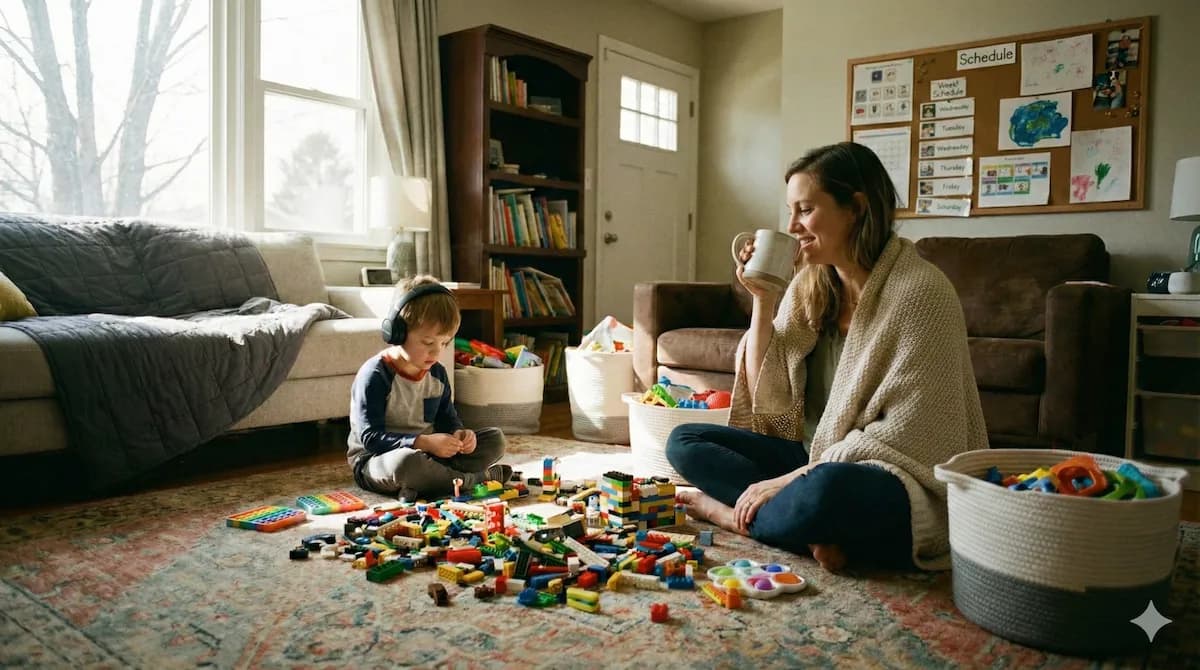
Raising neurodivergent children: How to embrace the chaos
What if your child didn't need fixing, and neither did you? Tracey Jewel shares her journey as an AuDHD mum, exploring radical acceptance and the power of micro moments when raising neurodivergent children. Discover why embracing the chaos isn't giving up, how to reconnect with your own self-care tools, and finding joy in the day-to-day reality of who your child actually is.
Read more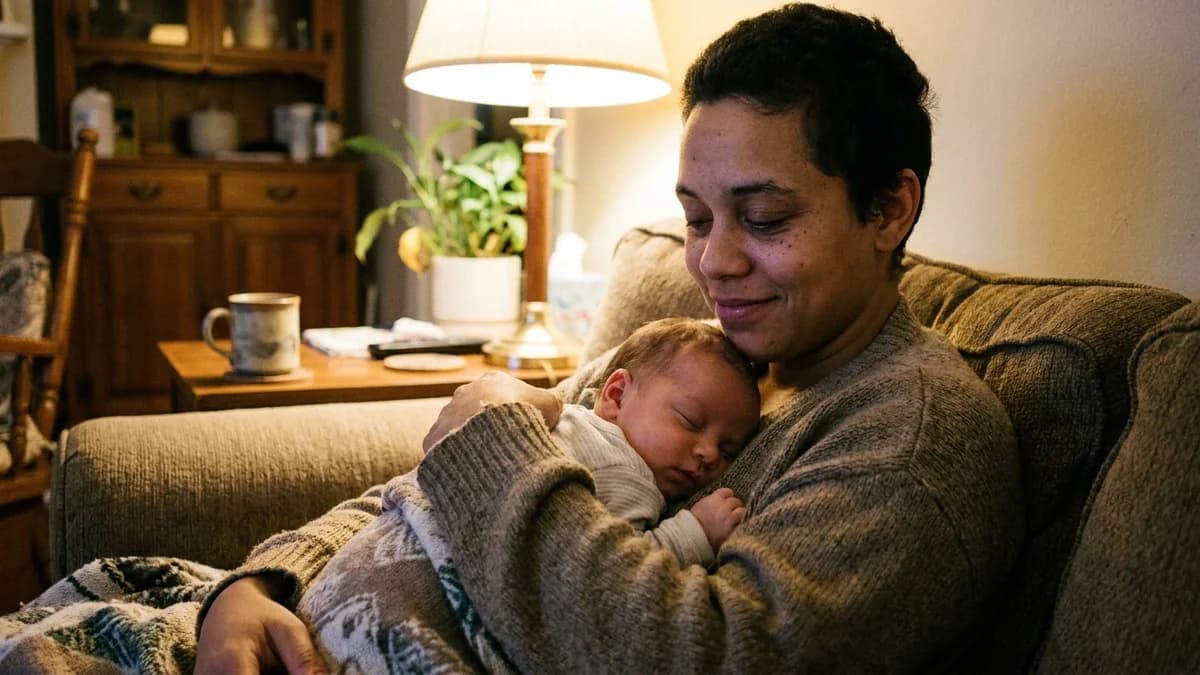
Late realised AuDHD motherhood: overstimulation to understanding
For many women, motherhood is when AuDHD finally becomes visible. Samantha Johnson, a late-identified AuDHD mother and lived experience educator, explores why the combination of executive function demands, sensory load, and postpartum hormone shifts makes masking unsustainable. Learn how each developmental stage compounds the load, why parenting gets harder (not easier) for neurodivergent mothers, and practical strategies for managing overwhelm without pushing harder.
Read more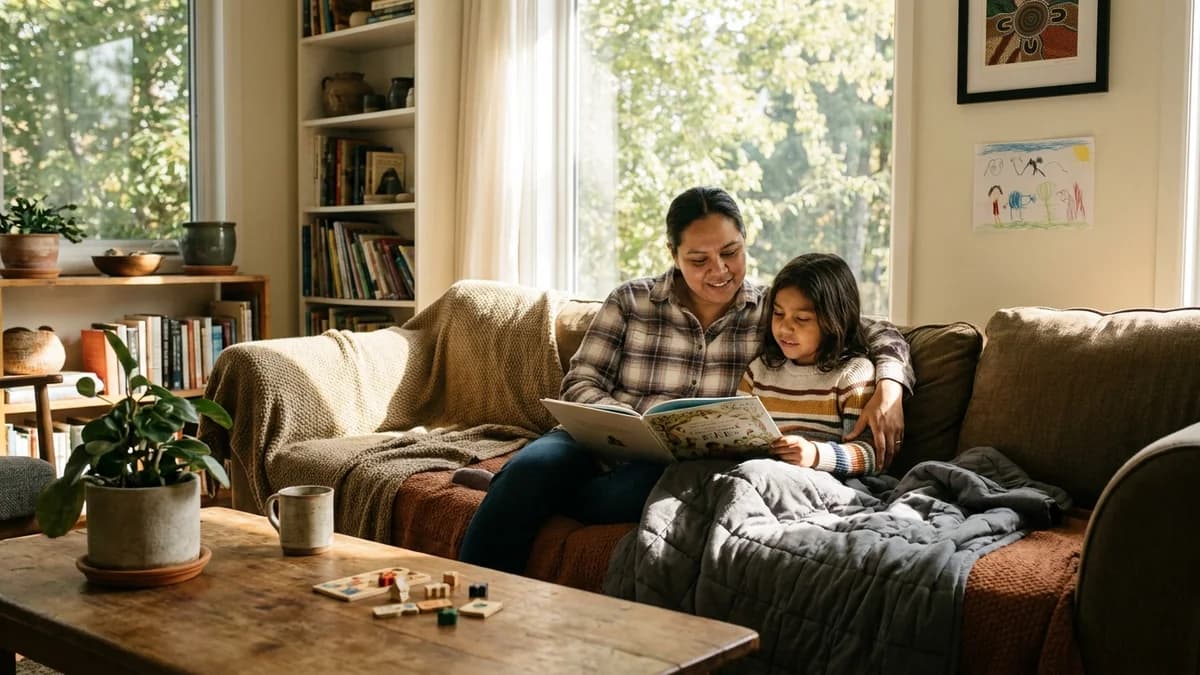
Your needs belong in the family too: neurodivergent parenting
Neurodivergent parents are whole people with their own nervous systems, capacity limits, and needs that matter just as much as their children's. This conversation with disability advocate Hollie-Ann Newman challenges the myth that parental regulation must be perfect, explores what sustainable neurodivergent parenting actually looks like when you embrace your own needs rather than constantly compensating for them, and offers a practical framework: awareness, accommodation, repair, and support. For the 60% of neurodivergent parents raising neurodivergent children, the path forward is not better self-care habits but honest acknowledgment that your needs belong in the family too.
Read more