You guide to online safety for neurodivergent kids
Online spaces have been a lifeline for autistic and neurodivergent communities for decades. Rather than viewing screens as dangerous, this article explores why curiosity-based approaches to online safety work better than restriction. Drawing on lived experience and research, we explore what screen time actually meets for neurodivergent children, how to talk about online safety without damage to trust, and why families thrive when supported by community rather than burdened alone.

In short
Neurodivergent child online safety is less about restriction and more about curiosity, and the research backs this up. Shadia Hancock, autistic speech pathologist and founder of Autism Actually, traces the autism rights movement back to 1990s online forums, reminding us that these spaces have been a lifeline for autistic community long before the current panic about screen time. Their core message: curiosity creates more safety than rules. Rather than policing screen time, ask what need it is meeting. And remember, as Shadia puts it, "it's not just you" navigating this. It is something the whole community is learning together.
Everyone seems to have an opinion about your child and screens. The paediatrician mentions time limits. The school newsletter warns about online dangers. A friend shares an article about "brain rot." And meanwhile, your child is happiest when they are online, connecting with people who actually get them, in a world that finally makes sense.
You are not doing it wrong. You are navigating something genuinely complex, without a map, in a culture that keeps handing you a list of rules instead of a compass. A better approach to neurodivergent child online safety starts with curiosity rather than control.
In Episode 34 of the Neurodivergent Pulse podcast, host Laetitia Andrac is joined by Shadia Hancock, autistic and ADHD speech pathologist, advocate, educator, and founder of Autism Actually, for a conversation that gently dismantles the fear-based narrative around neurodivergent children and online life. Drawing on both lived experience and professional expertise, Shadia offers a neuroaffirming framework for understanding what online spaces actually mean for autistic and neurodivergent young people, and how families can build genuine safety through curiosity and connection rather than restriction.
Why online spaces have always been a lifeline for autistic people
Long before the current conversation about screen time and online dangers, online spaces were already serving as a lifeline for autistic people. Shadia grounds this in history: "When you think about even the history of the autism rights movement, you know, a lot of that started on online forums in the nineteen nineties because, um, autistic people finally had a space where they could be heard and listened to." That is not a small thing. For a community that has so often been talked about rather than listened to, the ability to find each other and be heard was transformative.
The accessibility dimension is just as significant. As Shadia explains, "For some, you know, um, oral communication or, you know, in-person communication is just simply not accessible, and it gave them a way to connect with each other." Written communication offers processing time and reduces sensory load. It removes many of the barriers that make in-person socialising so exhausting. Online friendships are not a lesser version of connection. For many autistic people, they are where real connection is possible at all.
Understanding this history shifts the entire frame. When we see online spaces as a long-standing form of accessibility and community for neurodivergent people, the question stops being "how do we get them offline?" and becomes "how do we support them to navigate these spaces well?"
Is screen time actually good for autistic children?
The current cultural narrative around screen time and autism is dominated by risk. Shadia acknowledges this shift directly: conversations today centre on brain rot, fixations, and online addiction, framing that positions the internet as something to be managed and feared rather than understood.
But Shadia offers a reframe that puts this moment in perspective:
I'm sort of of the opinion of viewing it not as inherently good or bad, but like other sort of forms of technology, it's a tool there that we need to then learn to use, you know, in an informed manner.
This is not a new pattern. Shadia points out that "when you consider that historically when, you know, books were introduced... there was sort of a worry that kids were spending a lot of time reading and not, you know, playing as much and things like that. Um, whereas nowadays you don't really hear the same concern." Every generation has its technology panic. The medium changes; the anxiety does not.
There are genuine challenges online, and Shadia does not dismiss them. Navigating digital spaces is something everyone, neurotypical adults included, is still figuring out. But a binary good-or-bad framing closes down the very conversations that actually build safety.
What need is your child's screen time actually meeting?
When a child reaches for their device after school, it can be easy to read it as avoidance or excess. Shadia invites a different question: what need is this meeting right now?
Delving into something really predictable and in, in your control after having to deal with lots of things that aren't in your control in the day is also a form of trying to self-regulate.
A child who has spent six hours masking, managing sensory input, navigating unpredictable social dynamics, and holding it together in an environment not designed for them is not being lazy when they retreat to a game. They are regulating. The energy accounting framework for neurodivergent children helps explain exactly why the school day costs so much, and why after-school device time is often essential recovery. The predictability and control that online environments offer is not a bug. It is precisely the point.
This invisible load extends to the whole family. According to Understanding Zoe's research on neurodivergent families, parents of neurodivergent children spend an average of 10.5 hours every week on emotional regulation, advocacy, and administration alone, on top of around 30 hours total on caregiving. When the whole household is running on stretched reserves, understanding what your child's screen time is actually doing for them becomes even more important.
There are many reasons a neurodivergent child might gravitate to online spaces, and most of them make complete sense through a neuroaffirming lens:
- Regulation: Familiar, predictable online environments offer a way to decompress after the sensory and social demands of the day.
- Connection: Online friendships can be where genuine belonging happens, especially for children who find in-person socialising exhausting or inaccessible.
- Accessibility: Written communication gives processing time, removes the pressure of real-time conversation, and suits many autistic communication styles.
- Autonomy: Online spaces are often one of the few areas where a child has genuine control over their environment and choices.
- Shared interests: Niche communities online offer connection around the things a child actually cares about, which can be rare in school settings.
Shadia also notes that some people "find it easier to have that time to process online communication" where, unlike face-to-face conversation, there is space to read, think, and reply at their own pace. This is not a workaround for a deficit. It is a communication style that works.
Pip remembers the appointments, the notes and the small wins, so you don't have to.
7 days free.
Why curiosity is more protective than rules for neurodivergent children online
Restriction-based approaches to online safety often backfire, particularly for neurodivergent children. Shadia is direct about this, noting that for children with a persistent drive for autonomy, imposing limits without explanation can increase conflict at home rather than reduce it. The harder question is not what rules to set, but why.
Shadia is clear on approaches: "I don't think there's necessarily any right or wrong approaches beyond, you know, punishment. I would say that's a pretty hard fast no." Punishment damages trust and rarely teaches what we hope it teaches. What does work is explanation, involvement, and genuine dialogue.
The reasoning goes beyond the immediate moment. This connects to broader research on building genuine connection with neurodivergent young people, where curiosity and consistency matter far more than compliance. As Shadia puts it, "We will become adults one day, and we're not always gonna have necessarily people around us to guide our decisions." If children only follow rules because they are told to, they never develop the internal capacity to self-monitor. The goal is not compliance today; it is self-awareness for life.
Shadia references Alfie Kohn's Punished by Rewards here. The research on this has been clear for decades: when children understand the reasoning behind a boundary, they are far more likely to internalise it. When they do not, they simply wait until no one is watching.
How to talk to your neurodivergent child about online safety
Curiosity-based approaches to neurodivergent child online safety are not just a philosophy; they are concrete practices any family can start using today. Shadia's suggestions are grounded, accessible, and designed to build trust rather than erode it.
- Ask what they love: Rather than monitoring from the outside, invite your child to show you their online world. "Even getting them to show you, you know, what they love about the game so much" opens a window into their experience and signals that you are interested, not suspicious.
- Check in with observation, not accusation: Shadia models this directly: "I've noticed that, you know, um, when you've been coming home from school, you seem to be going on your game a lot. Um, you know, is there anything that you wanna talk through?" That framing is non-judgemental and opens a door rather than closing one.
- Explain your reasoning: If you do set a boundary around online use, tell your child why. Not as a lecture, but as a genuine explanation that respects their intelligence and builds their understanding.
- Model your own navigation: Acknowledge that adults are also figuring this out. Normalising imperfection, yours included, takes the pressure off and makes the conversation feel honest.
- Make space for mistakes: Shadia is clear on this: "How much better to do that in a safe environment with a trusted person where you can share that experience with them and debrief and reflect in a non-judgemental space." Mistakes made in safe relationships are learning. Mistakes made in isolation, later, without anyone to talk to, are a much harder path.
None of this requires perfection. It requires presence, openness, and a willingness to stay curious even when you are worried.
Online safety for neurodivergent families: you are not meant to do this alone
Much of the current discourse around online safety places the entire burden on individual families, and Shadia names this directly as a problem. Western parenting culture already isolates families. Adding "you must also solve online safety" to that list is both unrealistic and unkind.
That isolation is real and widespread. Research shows that 93% of parents of neurodivergent children say their experience feels misunderstood or invisible, with more than half saying others simply cannot see or understand what their daily life involves. Carrying that invisibility while also navigating your child's online world is a significant ask.
I think it has to be a community effort.
Shadia encourages families to build networks: other neurodivergent families who are navigating the same questions, neurodiversity-affirming health professionals who can offer support without judgement, and communities where the load is genuinely shared. In fact, 92% of parents of neurodivergent children already use at least one community, tool, or resource to help manage daily care. Many say they have learned more from other parents than from professionals. See the full research report for more on how these networks are being built from the ground up. Our guide to peer support for neurodivergent families explores how to find those spaces and why they matter so much. There are no one-size-fits-all rules here, and anyone who tells you otherwise is not accounting for the child in front of you.
The reassurance Shadia offers is simple and worth holding onto: "It's not just you. Um, it's something that we all have to navigate together." You are not behind. You are not failing. You are learning alongside your child, in real time, the same way every family is.
If you are looking for support that meets you where you are, Understanding Zoe is built for exactly this: a neuroaffirming platform that helps families turn observations, worries, and everyday moments into actionable next steps. You do not have to hold all of this in your head alone. Try it free for 7 days and see what it feels like to have a thinking partner in your corner.
Growing alongside your child
Online safety is not a problem to be solved once and filed away. It is an ongoing conversation that evolves as your child grows, as the platforms change, and as your relationship deepens. Shadia's closing thought captures this beautifully: "You grow with your child."
That framing lifts the pressure of having to get it right from the start. You do not need perfect rules. You need curiosity, honesty, and a willingness to keep talking. Your child's online world is not the enemy of their wellbeing. More often than not, it is where their belonging lives. The most protective thing you can do is stay close enough to be part of it.
If this conversation sparked something for you, explore more of Shadia's work at Autism Actually, and share this episode with someone in your village who needs to hear it.
Frequently asked questions
Is screen time good for autistic children?
For many autistic children, screen time is genuinely beneficial, not something to feel guilty about. Online spaces offer written communication that allows processing time, reduces sensory load, and removes many of the barriers that make in-person socialising exhausting. They also provide predictability, autonomy, and access to communities built around shared interests. The more useful question is not whether screen time is good or bad, but what need it is meeting for your child right now.
Is too much screen time linked to autism?
No. The research on screen time and autism does not show that screen use causes autism. Autism is a neurological difference present from birth. If you have arrived here wondering about that question, this post is written for a different audience: parents of children who are already neurodivergent and are looking for a more affirming, practical way to think about their child's online life.
How can I calm a neurodivergent brain after school?
Many neurodivergent children use screen time after school as a genuine regulation strategy, and this makes complete sense. After hours of masking, managing sensory input, and navigating unpredictable social dynamics, a familiar and predictable online environment gives the nervous system a chance to decompress. Rather than limiting this instinctively, try asking what your child needs in that moment. Connection, quiet, and low-demand activities, including screens, are all valid ways to recover. You might also find it helpful to read about why community support matters for autism parents, because navigating these questions is always easier with others who understand.
What are the best online safety approaches for neurodivergent kids?
The most effective online safety approaches for neurodivergent kids centre on curiosity and connection rather than restriction and monitoring. Ask your child to show you what they love online. Check in with observation rather than accusation. Explain your reasoning when you do set a boundary. Model your own imperfect navigation of digital life. And make space for mistakes in a safe relationship, because errors made with a trusted adult present are learning opportunities. Punishment, by contrast, damages trust without building the self-awareness children actually need. For more on building connection with your neurodivergent child, explore the Understanding Zoe platform.
Connect with Shadia Hancock
- Website: Autism Actually
- Instagram: @autismactuallyau
- Next Level Collaboration: nextlevelcollaboration.com
Pip is not a doctor or therapist. It helps you organise and prepare, not diagnose or treat.
In a crisis call 000. Lifeline 13 11 14. Kids Helpline 1800 55 1800. 13YARN 13 92 76.

Ready to put it all in one calm place?
Tell Pip one thing today. It remembers the rest.
Stored in Australia, encrypted. Cancel before day 8 and you won't be charged.
Related articles
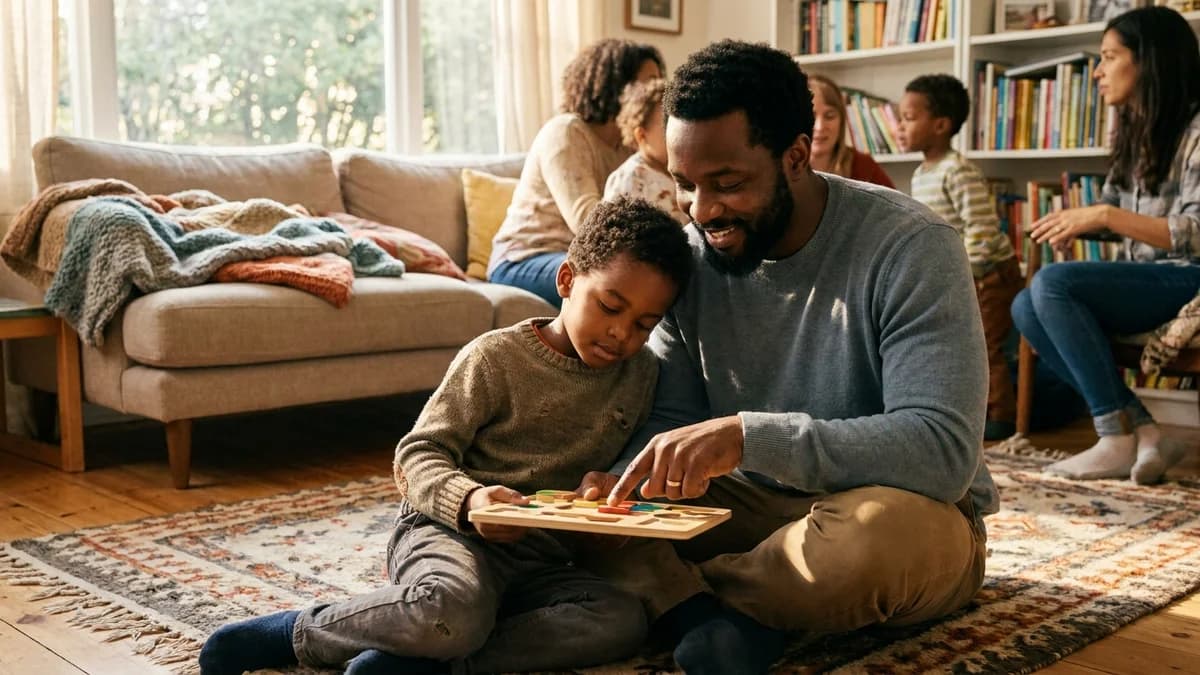
Where is the village? Building neurodivergent community
Neurodivergent families experience isolation at twice the rate of neurotypical families, not because they can't cope, but because most spaces were never designed for them. In this episode, Laetitia Andrac (co-founder of Understanding Zoe) explores what real community looks like for neurodivergent people and families. She shares practical strategies for creating sensory-friendly, inclusive gatherings where everyone genuinely feels welcome, and explains how to build your village deliberately, right where you are.
Read more
Intimacy in neurodivergent families: Beyond the bedroom
Raising neurodivergent children depletes the emotional and physical resources couples need for intimacy. But intimacy extends far beyond sex. Clinical psychologist and sexologist Lil Desille shares how neurodivergent families can create 'pockets' of connection. From understanding the systemic pressures that pull partners apart to practical strategies for rebuilding emotional closeness, this guide shows why prioritising your partnership benefits your entire family.
Read more
Tips for raising a neurodivergent child: mindset over method
After an autism diagnosis, parents often feel they need the right method or technique. Autistic family consultant Maisie Soetantyo argues the opposite: mindset matters far more than method. This article explores why curiosity and radical acceptance are the most practical tools for neurodivergent parenting. Learn how to trust yourself as a parent, protect your child's identity, and create a home where they can simply be themselves.
Read more