PDA parenting in real life: What actually helps
PDA parenting requires a fundamentally different approach than traditional strategies. This article explores what actually helps in overwhelming moments: regulating your own nervous system first, dropping demands completely when needed, using indirect language, embracing play, and modifying environments. Learn why visual schedules and reward charts backfire with PDA children, how to recognize when capacity is low, and why real-time support matters more than delayed intervention.

In short
PDA (Persistent Drive for Autonomy) is a neurological response where everyday demands trigger overwhelming anxiety, not wilful defiance Traditional parenting strategies (visual schedules, reward charts, consequences) often backfire with PDA children because they increase demand pressure The most important first step in a PDA moment is regulating your own nervous system; your calm directly impacts your child's ability to recover Dropping demands completely (not just reducing them) can be the most powerful intervention when a child's nervous system is overwhelmed Indirect language, play, and environmental modifications reduce demand pressure more effectively than direct requests or consequences PDA children's capacity fluctuates daily based on sleep, sensory input, and emotional regulation; what worked yesterday may not work today Real-time, in-the-moment support is crucial because PDA challenges require immediate response, not delayed intervention Compassion for both your child and yourself is the foundation of sustainable PDA parenting
When traditional strategies fall short, here's what real support looks like for families navigating Persistent Drive for Autonomy.
This article is inspired by Episode 29 of Neurodivergent Pulse, where Laetitia shares her lived experience as both a PDA parent and PDA individual, offering honest insights into what support looks like when everything feels like too much.
It's 7:15 AM. You need to leave for school in 30 minutes. Your child is still in pyjamas. The thought of getting dressed has triggered a complete shutdown. You've tried the visual schedule. You've offered choices. You've used the calm voice and the playful approach. Nothing is working.
Sound familiar?
If you're parenting a child with PDA (Persistent Drive for Autonomy), you know this scene intimately. You also know that most parenting advice doesn't account for the unique way PDA children experience the world.
This article isn't about theory. It's about what helps in those hard moments when your nervous system is maxed out, your child's nervous system is in protection mode, and you need support right now, not after you've read another book or attended another workshop.
As both a PDA parent and someone who is PDA myself, I bring a dual perspective to this conversation. Our research shows that over three in five parents raising neurodivergent children also identify as neurodivergent themselves, either formally assessed or self-identified. This shared experience adds depth and authenticity: a view shaped by both caregiving and lived understanding.
Understanding PDA
PDA isn't about being deliberately difficult or oppositional. It's a neurological response where everyday demands trigger an overwhelming anxiety response. Even seemingly simple requests like "time to brush your teeth" or "let's get in the car" can feel threatening.
For PDA children (and adults), demands don't just feel uncomfortable. They feel threatening to their sense of autonomy and safety. The nervous system responds as if it's under attack, activating fight, flight, or freeze responses that look like refusal, avoidance, or shutdown.
What makes PDA particularly challenging is that the demand avoidance isn't selective. It applies to everything. Even activities the child enjoys. Even requests from people they love and trust.
Why traditional strategies often backfire with PDAers
Most parenting strategies assume children can regulate their nervous systems with the right scaffolding. Visual schedules, reward charts, clear consequences, and consistent routines work beautifully for many neurodivergent children.
But for PDA children, these same strategies can increase anxiety rather than reduce it. Here's why:
Visual schedules can feel like a series of non-negotiable demands
Reward systems create pressure to perform, which itself becomes a demand
Choices ("Do you want the red shirt or the blue shirt?") still contain an underlying demand ("You must get dressed")
Consequences increase anxiety and can deepen the shutdown response
Predictable routines can feel controlling rather than comforting
This doesn't mean these strategies are wrong. It means they're not designed for PDA nervous systems.
What real-life PDA parenting looks like
No two mornings are the same in our household. Some days, Zoe wakes up ready to engage. Other days, the thought of getting dressed feels like climbing a mountain. Understanding why mornings feel impossible for neurodivergent families has helped me approach each morning with more flexibility and less expectation.
Here's what I've learned through lived experience:
1. Your nervous system comes first
This might sound counterintuitive, but the most important thing you can do in a PDA moment is regulate your own nervous system first.
When your child is in shutdown or meltdown, your calm (or lack of it) directly impacts their ability to recover. If you're anxious, frustrated, or overwhelmed, your child's nervous system will pick up on that and stay in protection mode.
What this looks like in practice:
Taking three deep breaths before responding
Stepping away for 30 seconds if you need to
Reminding yourself: "This is not defiance. This is a nervous system response."
Releasing the timeline (even if it means being late)
2. Drop the demand completely (yes, really)
Sometimes the most powerful thing you can do is remove the demand entirely. Not reduce it. Not reframe it. Remove it.
This doesn't mean giving up or letting your child "win." It means recognising that in this moment, their nervous system can't handle this demand, and pushing it will only escalate the situation.
What this looks like in practice:
"You know what? We don't have to get dressed right now. Let's just sit together."
Skipping the non-essential (and sometimes even the essential)
Accepting that today might be a pyjama day, a screen day, or a "we're not leaving the house" day
When everything feels like too much, the nervous system goes into protection mode. For PDA children, this can look like refusal, shutdown, or what others might label as "defiance." But it's not defiance; it's survival. Learning strategies for managing emotional outbursts can help both parent and child navigate these intense moments.
3. Use indirect language and declarative statements
Direct requests ("Put your shoes on") trigger the demand avoidance response. Indirect language reduces that pressure.
Instead of: "It's time to get dressed."
Try: "I'm going to get dressed now. I wonder what I should wear."
Instead of: "You need to brush your teeth."
Try: "I notice the toothbrush is here. I'm curious if the toothpaste tastes minty today."
Instead of: "Come to the table for dinner."
Try: "Dinner's ready. I'm sitting down now."
This approach removes the direct demand while still communicating what needs to happen. It gives your child space to choose engagement rather than feeling forced into it.
4. Embrace play and silliness
Play is one of the most powerful tools for reducing demand pressure. When you shift into playful mode, you signal to your child's nervous system that this isn't a threat.
What this looks like in practice:
Turning getting dressed into a game ("I bet this shirt can't fit over your giant dinosaur arms!")
Using stuffed animals or puppets to make requests
Singing instructions instead of speaking them
Being deliberately "wrong" ("Should I put my shoes on my hands?")
Play bypasses the part of the brain that perceives demands as threats. It creates connection and safety, which are the foundations of cooperation.
5. Modify the environment, not the child
Sometimes, the most powerful support isn't what we say or do; it's what we change about the environment itself. Creating a calm environment at home can reduce the number of demands a child encounters throughout the day, preserving energy for what matters most.
What this looks like in practice:
Keeping clothes in the room where your child sleeps (so getting dressed doesn't require a transition)
Having grab-and-go breakfast options that don't require sitting at a table
Reducing sensory overwhelm (dimmer lights, quieter mornings, comfortable clothing)
Building in buffer time so there's no rush
Pip remembers the appointments, the notes and the small wins, so you don't have to.
7 days free on iPhone and Android.
The role of energy and capacity for PDA
Every demand, even small ones, withdraws from your child's energy bank. Understanding your child's energy capacity helps you recognise when they're running on empty, so you can adjust expectations before a crisis hits.
PDA children often start the day with less capacity than neurotypical children. By the time they've navigated waking up, getting out of bed, and facing the morning routine, they may already be in deficit.
This is why what worked yesterday might not work today. Capacity fluctuates based on sleep, sensory input, emotional regulation, and countless other variables.
Signs your child's capacity is low:
Increased rigidity or need for control
Heightened emotional responses
Withdrawal or shutdown
Increased stimming or self-soothing behaviours
Difficulty with transitions
When you notice these signs, it's time to reduce demands, not increase support strategies.
Understanding rejection sensitivity in PDA
For many PDA children, demands can feel like criticism or rejection. This heightened rejection sensitivity means that even gentle requests can trigger a protective response from the nervous system.
When a parent says "Can you please put your shoes on?" a neurotypical child might hear a simple request. A PDA child might hear: "You're not doing what you should be doing. You're disappointing me. You're not good enough."
This isn't conscious. It's a nervous system response rooted in a deep need for autonomy and a fear of losing control.
Understanding this layer of sensitivity helps us approach PDA moments with more compassion and less frustration.
The importance of real-time support
One of the biggest challenges of PDA parenting is that you need support in the moment, not hours or days later.
Traditional support systems (therapy appointments, parenting courses, online forums) are valuable, but they don't help when you're standing in the hallway at 7:30 AM with a child who can't get dressed and a school bus arriving in 10 minutes.
This is why having access to immediate, in-the-moment guidance is so crucial. Whether that's through an app like Understanding Zoe, a trusted support person you can text, or a mental toolkit you've built through practice, real-time support can be the difference between escalation and resolution.
Understanding Zoe's research on neurodivergent families found that nearly all parents of neurodivergent children feel their experience is misunderstood or invisible. The perception of being constantly evaluated by professionals, family, or the public leaves many feeling isolated even in their competence. This sense of invisibility is strongest when dealing with institutions rather than people.
Embracing the wilderness within
There's something powerful about recognising that what looks "wild" or "uncontrolled" is often a nervous system doing exactly what it needs to do to feel safe. Kaya Lyons explores this beautifully in her conversation about the wilderness within, reminding us that regulation isn't about taming; it's about understanding.
PDA children are often described as "strong-willed," "defiant," or "difficult." But what if we reframed that?
What if that fierce need for autonomy is a strength? What if that sensitivity to control is a sign of deep self-awareness? What if that resistance is their nervous system's way of protecting something precious: their sense of self?
When we stop trying to "fix" PDA and start trying to understand it, everything shifts.
What this means for your family
PDA parenting requires a big shift in how we think about support, cooperation, and success.
It means:
Letting go of timelines and traditional expectations
Trusting your child's nervous system signals
Prioritising connection over compliance
Accepting that some days, survival is success
Building a support system that meets you where you are
It also means being gentle with yourself. PDA parenting is exhausting. It requires constant flexibility, creativity, and emotional regulation. You will have days where you lose your patience. Days where you fall back on old strategies that don't work. Days where you feel like you're failing.
You're not alone in feeling this way. Research shows that 64% of parents of neurodivergent children often feel exhausted and 64% feel overwhelmed. This emotional toll is real, and it's shared by families across the neurodivergent community.
You're not failing. You're navigating one of the most complex parenting experiences there is, often with little support and even less understanding from the world around you.
Moving forward with compassion
The most important thing I've learned through my PDA parenting journey, both as a parent and as someone who is PDA myself, is that compassion changes everything.
Compassion for your child, whose nervous system is doing its best to keep them safe.
Compassion for yourself, as you navigate a parenting path that doesn't come with a manual.
Compassion for the moments that don't go as planned, the strategies that don't work, and the days that feel impossible.
PDA parenting isn't about finding the perfect strategy. It's about building a relationship with your child that honours their need for autonomy while providing the safety and support they need to thrive.
And sometimes, the most powerful support you can offer is simply being present in the chaos, trusting that your child's nervous system knows what it needs, and believing that you're doing enough, even when it doesn't feel like it.
Frequently asked questions
How is PDA different from oppositional defiant disorder (ODD)?
While PDA and ODD can look similar on the surface, they have fundamentally different roots. ODD is characterised by a pattern of angry, defiant behaviour toward authority figures. PDA, on the other hand, is driven by an anxiety-based need for autonomy and control. PDA children aren't trying to be oppositional; their nervous system perceives demands as threats to their autonomy, triggering a protective response. The key difference is that PDA is rooted in anxiety and nervous system dysregulation, not wilful defiance. This distinction matters because the approaches that work for ODD (clear boundaries, consistent consequences) often backfire with PDA, increasing anxiety and escalating behaviours.
Can adults have PDA, or is it only a childhood experience?
PDA is a lifelong neurotype, not something children "grow out of." Many adults discover they're PDA later in life, often after their child receives a PDA identification. Adult PDA can look different than childhood PDA; adults often develop sophisticated masking strategies and may appear highly capable in some areas while struggling intensely in others. Adults with PDA may experience demand avoidance around self-care tasks, work responsibilities, social obligations, or even activities they enjoy. Understanding PDA as an adult can be incredibly validating, helping explain lifelong patterns of anxiety, burnout, and difficulty with traditional structures. Many PDA adults find that the same strategies that help PDA children (reducing demands, increasing autonomy, using indirect language) also support their own wellbeing.
What should I do when my child's PDA behaviours are affecting siblings or other family members?
This is one of the most challenging aspects of PDA parenting. When one child's needs seem to dominate family life, siblings can feel resentful, confused, or neglected. The key is open, age-appropriate communication. Help siblings understand that their brother or sister isn't being "difficult" on purpose; their brain works differently, and what looks like refusal is their nervous system trying to stay safe. Validate siblings' feelings ("I know it's frustrating when we have to change plans") while also helping them develop empathy and flexibility. Create special one-on-one time with each child, so siblings don't feel like they're always coming second. It's also important to model self-compassion and boundary-setting. Sometimes you'll need to prioritise the PDA child's needs; other times, you'll need to prioritise a sibling's needs. There's no perfect balance, but transparency and compassion go a long way.
How do I explain PDA to teachers and other caregivers who don't understand it?
Start with education, not defence. Share resources (articles, videos, or books) that explain PDA in accessible language. Focus on what PDA looks like for your specific child, rather than general definitions. For example: "When Zoe seems to be refusing to do her work, what's happening is that her nervous system is perceiving the demand as a threat. The more we push, the more her anxiety increases." Offer specific strategies that work for your child (indirect language, extra processing time, reducing direct eye contact, allowing movement breaks). Frame it as a collaboration: "I know you want to support Zoe. Here's what we've found works at home." If a teacher or caregiver is resistant, consider whether this environment is safe for your child. Sometimes the most important advocacy is recognising when a setting isn't the right fit and finding alternatives.
Is it possible to have PDA without being autistic?
This is a topic of ongoing discussion in the neurodivergent community. Traditionally, PDA has been understood as a profile within the autism spectrum. However, many clinicians and researchers now recognise that PDA traits can appear in people who don't meet full diagnostic criteria for autism. Some individuals have PDA alongside ADHD, anxiety disorders, or other neurodivergent profiles. What matters most isn't the diagnostic label, but understanding your child's (or your own) specific needs and nervous system responses. If PDA strategies help your child thrive, that's what's important, regardless of whether they have a formal autism diagnosis. Focus on what works, not on fitting into a specific diagnostic box.
Finding your path forward
PDA parenting doesn't follow a script. There's no step-by-step guide that works for every child, every day, in every situation.
But there is hope.
When you understand that your child's resistance isn't defiance but a nervous system response, when you learn to regulate your own nervous system first, when you embrace flexibility over rigidity and connection over compliance, everything starts to shift.
You'll still have hard days. Mornings that feel impossible. Moments when you don't know what to do next.
But you'll also have moments of breakthrough. Times when an indirect approach works beautifully. Days when your child surprises you with cooperation because they felt safe enough to choose it.
And you'll have the knowledge that you're not alone. That there are other families navigating this same path, other parents who understand the unique challenges and joys of raising a PDA child.
The journey isn't easy. But it's worth it.
Because at the end of the day, what matters most isn't whether your child got dressed on time or completed their homework. What matters is that they feel seen, understood, and safe.
And that starts with you: trusting yourself, trusting your child, and trusting that the support you need is available, right when you need it most.
Connect with Understanding Zoe
If you're looking for real-time, in-the-moment support for your PDA parenting journey, Understanding Zoe offers AI-powered guidance designed specifically for neurodivergent families. Get personalised strategies, track patterns, and access support exactly when you need it, not hours or days later.
Try Understanding Zoe free for 7 days and experience what it's like to have a knowledgeable, compassionate support system in your pocket, ready to help you navigate the moments that matter most.
Pip is not a doctor or therapist. It helps you organise and prepare, not diagnose or treat.
In a crisis call 000. Lifeline 13 11 14. Kids Helpline 1800 55 1800. 13YARN 13 92 76.

Ready to put it all in one calm place?
Tell Pip one thing today. It remembers the rest.
Stored in Australia, encrypted. Cancel before day 8 and you won't be charged.
Related articles
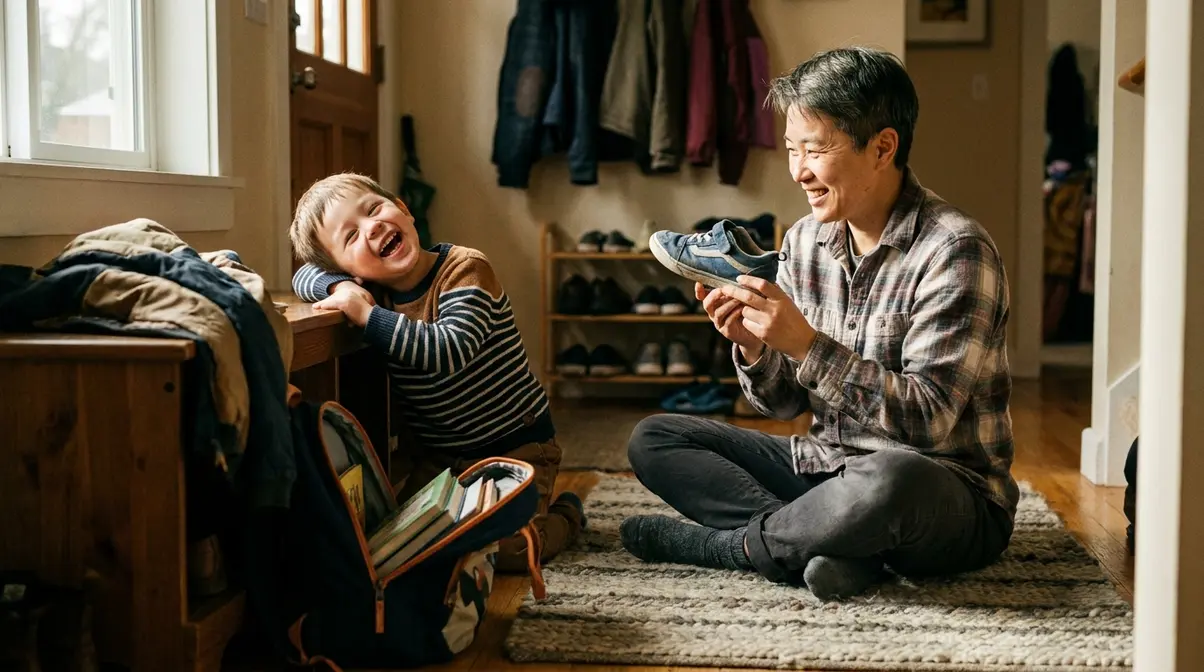
PDA Parenting: What actually helps in the moment
PDA (Persistent Drive for Autonomy) parenting requires a completely different approach than traditional strategies. This article explores what actually helps in real-life moments: understanding your child's nervous system threat response, regulating yourself first, offering genuine autonomy, using play and indirect communication, and knowing when to drop demands entirely. Learn why what worked yesterday might fail today, how your own nervous system impacts your child's capacity.
Read more
PDA in Adulthood: What It's Really Like and What Helps
Most of what's written about PDA is about children. This piece is for adults. Written by two people who live it, Laetitia (parent, PDAer, and founder of Understanding Zoe) and Caitlin (neuroaffirming mental health social worker and PDAer), it covers what demand avoidance actually feels like from the inside, why wanting to do something and being able to start it aren't the same thing, and why the usual advice to just break it into steps or build a routine often backfires. There are honest accounts of the invisible labour of being a PDA adult and parenting a PDA child, plus the shifts that genuinely help: choice over instruction, invitation over expectation, and lowering the demand without lowering the goal. If you recognise yourself here, you're not broken. You may simply be carrying more demands than the people around you can see.
Read more
Pervasive Drive for Autonomy (PDA) is a nervous system response
Pervasive Drive for Autonomy is a nervous system response, not a behaviour problem. In this episode, social worker and educator Sarah Middleton explores why behaviourist frameworks often make things worse for PDA children, and what changes when families and schools shift to curiosity, compassion and genuine autonomy. Discover practical strategies for recognising pressure triggers, creating space for real engagement, and building alignment across family, school and therapy teams.
Read more