Why we built Understanding Zoe: The real story
Laetitia Andrac, co-founder of Understanding Zoe, shares the origin story of the platform that began at a kitchen table. Drowning in reports from multiple therapists and schools, Laetitia combined her 15 years of AI expertise with intimate knowledge of her daughter Zoe's needs to create a tool that consolidates information and helps care teams understand neurodivergent children as individuals. The episode explores how research with thousands of Australian families revealed the invisible load: parents of neurodivergent children carry 33 extra hours of work per week, 93% feel unseen and misunderstood, and the system was never designed to fit. Understanding Zoe exists to make that invisible load visible and help neurodivergent families feel safe, seen and understood.
In short
Neurodivergent parenting carries an invisible load that most systems were never designed to support. Understanding Zoe began at a kitchen table, not in a boardroom, when Laetitia Andrac found herself drowning in reports for her daughter Zoe despite 15 years of professional experience organising complex information. The problem was never parental disorganisation. It was a care system that was never designed to fit together. Research commissioned by the team found that parents of neurodivergent children carry 33 extra hours of work per week, with 93% feeling unseen and misunderstood. The relaunched Understanding Zoe app is the second brain Laetitia wished she had: built to hold your child's full profile, share it with their care village, and help every neurodivergent person feel safe, seen and understood across their whole life.
You are not disorganised. You are not failing your child. You are trying to hold together a system that was never designed to fit.
For so many parents raising neurodivergent children, the load is relentless: reports in different formats, professionals who don't talk to each other, a school that has never seen the full picture of who your child is. The exhaustion is real. Research with thousands of Australian families confirms what so many parents already feel in their bones: 64% of parents raising neurodivergent children often feel exhausted, compared with 42% of parents raising neurotypical children (see our research on neurodivergent families). And for a long time, there was simply no tool built by someone who truly understood that exhaustion from the inside.
In Episode 30 of the Neurodivergent Pulse podcast, host and co-founder Laetitia Andrac steps away from the guest format to share the story she gets asked about most: why Understanding Zoe exists, where it really began, and what it took to build it. Autistic and ADHD herself, with over 15 years of consulting and strategy experience at organisations like Deloitte and Telstra, Laetitia brings both professional expertise and raw personal honesty to this solo episode. It is the story before the research, before the app, and before the business.
How we combined AI and lived experience to create Understanding Zoe
Understanding Zoe was not born in a boardroom. It was born in the specific, exhausting chaos that parents of neurodivergent children know intimately: too much information, in too many places, with no way to make it work together.
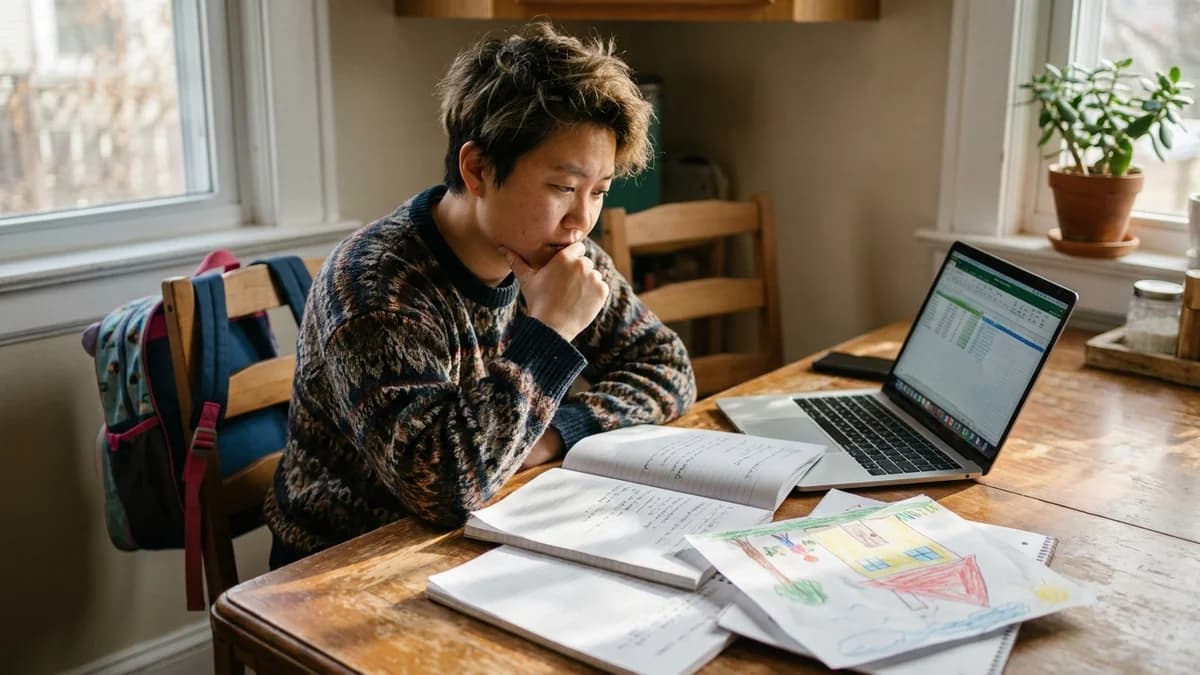
Two and a half years ago, Laetitia describes herself as a mother drowning in paperwork, with countless windows open at all times. Zoe (her daughter) was experiencing school refusal. Reports were arriving from speech therapy, occupational therapy, psychology and school, each written in different language, each sitting in a different place. Some were in folders on her laptop. Some were on her phone. Some were buried in email threads or SMS messages. If you are navigating something similar right now, Laetitia also shares what actually helps in the moment when school refusal hits in a recent solo episode.
I had my daughter who needed support and I had a care team where everyone was doing their own part, but I had no ways to bring it all together and guarantee for Zoe to feel safe, seen, heard, understood, and being a human who can just thrive in this way that was not built for her.
What makes this particularly striking is who Laetitia is professionally. As she puts it: I am someone who spent 15 years and beyond that, actually as a strategy consultant, I worked for Monitor, I worked for a big firm Deloitte and I consulted in many, many different plays, and I know how to organise information, yet I was drowning. If someone with that background could not hold it all together, the problem was never the parent. The problem was the system. The data reflects this: neurodivergent parents raising neurodivergent children carry an average of 37 hours of support and advocacy work each week, compared with 25 hours for neurotypical parents in the same situation. The load is not a reflection of effort or capability. It is a reflection of a system that was never designed to fit.
The moment that changed everything: a teacher's email
The solution Laetitia found was not a new filing system or a better spreadsheet. It was the combination of two things she already had: deep expertise in AI, and intimate knowledge of her daughter's needs.
Having worked with AI since 2014, including as General Manager of Big Data and AI at Telstra, Laetitia began feeding Zoe's reports into AI and asking practical questions. What were the common themes across all these documents? What support strategies had therapists recommended? How could those strategies be translated into something a classroom teacher could actually use when supporting a neurodivergent child at school?
It started on our kitchen table, not in a boardroom, not in a pitch deck, really trying to get our daughter to feel safe to go back to school.
She shared the tool with Zoe's teacher. Within two weeks, a written confirmation arrived: it was helping. More than much of the formal training the teacher had received, because Zoe's teacher now had access to Zoe's individual profile. As Laetitia describes it, the tool just opened up a new way of seeing Zoe and supporting her and realising the demands that were put on Zoe. That email changed everything.
Once you've met one autistic person, you've met one autistic person? Wrong
One of the most important insights underpinning Understanding Zoe is also one of the most frequently overlooked: no two neurodivergent people are the same, and systems that treat them as though they are will keep failing them.
Assuming that autism or ADHD or PDA or dyslexia or dyspraxia or dyscalculia or OCD, ODD or bipolar all look the same is simply wrong. The neurodivergent community has a saying that captures it well, one Laetitia references with warmth: once you've met one autistic, you've met one autistic. The same is true for every profile.
This is why generic strategies for supporting a neurodivergent child at school so often fall short. A checklist built around a diagnosis label cannot account for the specific sensory sensitivities, communication preferences, regulation needs and strengths of the individual child sitting in front of you. What shifted for Zoe's teacher was not a training course about autism in general. It was seeing Zoe's profile specifically, and understanding the particular demands being placed on her particular nervous system. For more on what truly inclusive school environments look like, explore our guide to neuroaffirming classrooms.
When support is built around the individual rather than the label, something changes. For Zoe, it changed everything. For more on how this shift happens in practice, see our guide to building genuine connection with neurodivergent young people.
Pip remembers the appointments, the notes and the small wins, so you don't have to.
7 days free on iPhone and Android.
Becoming a neurodivergent-led social enterprise
Understanding Zoe did not scale overnight, and that was intentional. For a period, Laetitia quietly supported around 10 families on the side while continuing to run her own consultancy, building and refining the tool with real families before making any bigger moves.
The company was incorporated as a social enterprise in October 2024, with co-founder Johan. Laetitia transitioned to the business full-time in early 2025, and Johan joined full-time in April 2025. The choice to structure it as a social enterprise rather than a conventional startup was deliberate. From the beginning, the founders decided this was not going to be a business built around growth metrics and investor timelines. It was going to be built around a mission, one that was, as Laetitia describes it, way bigger than them.
That choice came with its own challenges. Building as a neurodivergent founder, for the neurodivergent community, required ongoing decisions about what she was and was not willing to do, and how to protect her own wellbeing while pursuing something she cared about deeply. She is far from alone in navigating these trade-offs: research shows that 27% of parents of neurodivergent children have turned down promotions or job opportunities because of caregiving demands, more than double the rate seen among parents of neurotypical children. The career costs of caring are real, and they fall disproportionately on neurodivergent families. If you recognise this pattern in your own life, our guide to neurodivergent parent burnout and energy accounting offers a practical framework for staying sustainable.
The invisible load: what the data actually shows
Lived experience told Laetitia and our team that what they were building was needed. But lived experience alone was not enough to drive systemic change in workplaces, schools and policy. They needed data, and the data did not exist yet.
Lived experience doesn't replace data. Lived experience is within the data and we build research, research with us.
So they built it themselves. The Making the Invisible Visible whitepaper, published in late 2025, drew on research with thousands of Australian families. The findings were striking, even to Laetitia, who was not expecting the numbers to be as high as they were:
33 extra hours per week of work to support a neurodivergent child, including 10.5 hours dedicated specifically to advocacy and administration
63% of parents raising neurodivergent children are themselves neurodivergent
93% of parents feel unseen and misunderstood
56% of parents feel unsafe to disclose their own neurodivergence at work
These numbers do not reveal something new to the families living them. They validate what those families already know in their bones. And that validation matters, both for individual wellbeing and for the systemic conversations that need to happen in workplaces, schools and government. If you are one of the 93%, finding community as a neurodivergent family can be one of the most powerful things you do.
Is there an app to organise neurodivergent child reports?
Yes. And parenting a neurodivergent child is exactly what it was designed for. The Understanding Zoe app that launched to the public in late 2024 was always meant to be a starting point: a minimum viable product, a proof of concept, something to test and learn from before building the real version.
The real version is here now. A complete redesign and rebuild, developed over months with direct input from the community, the relaunched app is cleaner, faster and more intuitive. The new features include:
Report generation: create clear, consolidated reports from the information you hold
Pattern and trend identification: surface what is changing over time across observations and notes
Document extraction: pull out key information like medication details, support IDs and reminders from uploaded documents
Conversational observation logging: add observations simply by talking, without needing to fill in forms
Granular care village permissions: choose exactly what each person in your child's support network can see
Support for neurodivergent adults: the app now extends beyond families to support adults who are neurodivergent themselves
Nine in ten parents are open to solutions that simplify the invisible complexity of raising neurodivergent children, with 70% saying they would be very likely or likely to use a tool like Understanding Zoe, according to Understanding Zoe's latest findings. The demand for something that actually fits the way neurodivergent families live has always been there.
We are here to play the long game. We are not here to just be an overnight impactful business. We are here to for decades to come.
The app is the second brain Laetitia wished she had two and a half years ago, designed to hold the information so you don't have to, and make it available to anyone who needs to understand your child, or you, better. Try Understanding Zoe free for 7 days and bring your reports, observations and care village together in one place.
Understanding life, not just one child
The name Understanding Zoe carries more meaning than it might first appear. Zoe means life in Greek, a language Laetitia had a special interest in when she was younger. So the mission was always bigger than one child.
As she reflects, Understanding Zoe is about understanding life and feeling understood through your lifespan. It goes beyond one daughter, one family, one diagnosis. The app now supports neurodivergent adults as well as children, because the need to feel seen, safe and understood does not end at 18.
The proof of that mission is perhaps best expressed not in research statistics or product features, but in Zoe's own words. Asked how Understanding Zoe has helped her at school, she said:
Since they got Understanding Zoe, they've been a little more kind to me and helping me with more stuff.
Her teacher put a quiet area in the classroom, with fidgets, available to every child. A small change. A real one.
That is what making the invisible visible looks like in practice: a child who feels the difference, in her own classroom, in her own words.
Neurodivergent parenting is hard enough without carrying it all alone. Understanding Zoe was built at a kitchen table by a mum who has been exactly where you are. It exists so that you and your child can feel seen, safe and understood, not just today, but across the whole of life. Start your free 7-day trial and let someone else help you hold it all.
Frequently asked questions
What is neurodivergent parenting?
Neurodivergent parenting refers to the experience of raising a child who is neurodivergent, including autistic children, children with ADHD, PDA, dyslexia, dyspraxia and other profiles. It often involves navigating multiple therapy providers, school support plans and a significant amount of advocacy and administration work. Importantly, research shows that 63% of parents raising neurodivergent children are neurodivergent themselves, meaning the parenting experience is shaped by both the child's needs and the parent's own. For one parent's honest account of embracing the chaos of neurodivergent parenting, including what radical acceptance can look like day to day, this article is a good place to start.
What does parental burnout look like in neurodivergent families?
Neurodivergent parent burnout often looks like exhaustion that goes far beyond typical parenting fatigue. Research from the Making the Invisible Visible whitepaper found that parents of neurodivergent children carry 33 extra hours of work per week, including 10.5 hours dedicated to advocacy and administration alone. 93% of these parents report feeling unseen and misunderstood, and 56% feel unsafe disclosing their own neurodivergence at work. The invisible load is real, and it is measurable.
How do you support a neurodivergent child at school?
Supporting a neurodivergent child at school works best when teachers have access to that child's individual profile, not just a general understanding of their diagnosis. Generic training about autism or ADHD rarely translates into meaningful change for a specific child. What makes the difference is helping educators understand the particular sensory sensitivities, communication preferences and regulation needs of the child in front of them. When Zoe's teacher received her individual profile through Understanding Zoe, she created a quiet area with fidgets available to every child in the class.
Is there an app to organise autism therapy reports?
Yes. Understanding Zoe is built specifically to solve the care team coordination problem: reports arriving from speech therapy, occupational therapy, psychology and school, each in different formats, each stored in different places. The app consolidates your child's documents, surfaces patterns across reports, and lets you share a clear, individual profile with anyone in your child's care village. Try Understanding Zoe free for 7 days and bring your child's full picture together in one place.
Connect with Understanding Zoe
Pip is not a doctor or therapist. It helps you organise and prepare, not diagnose or treat.
In a crisis call 000. Lifeline 13 11 14. Kids Helpline 1800 55 1800. 13YARN 13 92 76.

Ready to put it all in one calm place?
Tell Pip one thing today. It remembers the rest.
Stored in Australia, encrypted. Cancel before day 8 and you won't be charged.
Related articles
Breaking down barriers: Overcoming neurodiversity bias
Neurodivergent people and their families meet a system that was not built for them. Assessment waits stretch on. Schools and workplaces still exclude. Behind it sits neurodiversity bias, the snap judgement that reads difference as a problem. Research shows people make that judgement in seconds, from style rather than substance. The Australian numbers point at the system, not the people.
Read more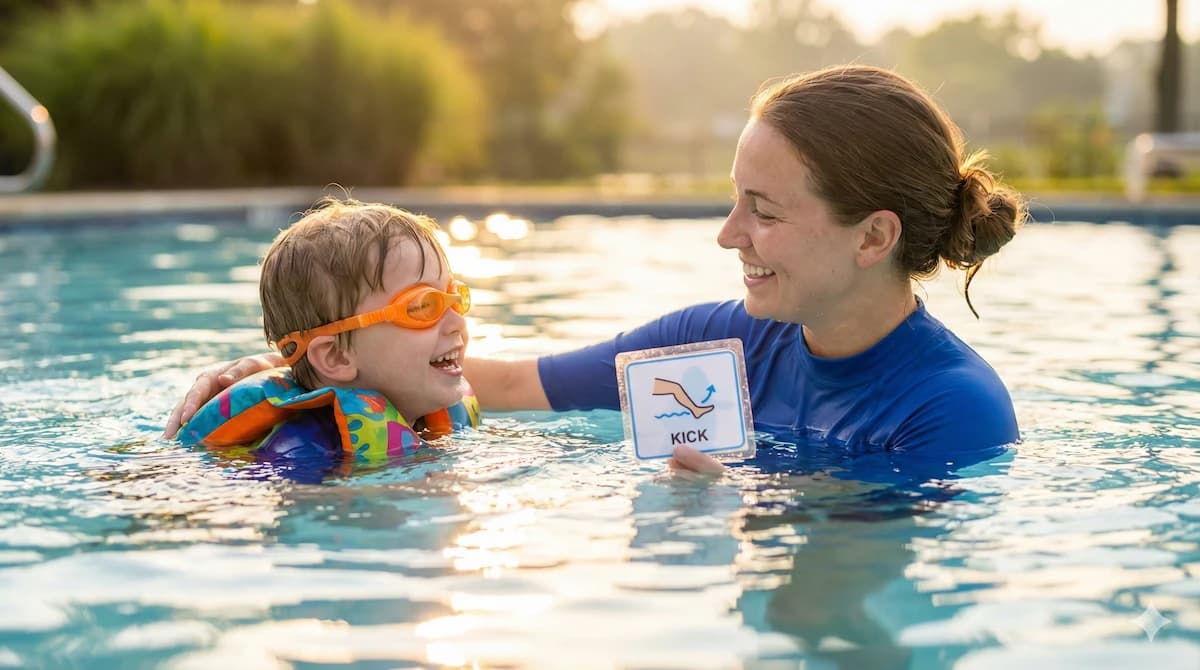
Why affirming swimming lessons save lives: making aquatics safe for all
Autistic children are 160x more likely to drown, yet 91% of families leave aquatic services dissatisfied. Antoinette Spear of Autism Swim shares how to find truly inclusive swimming providers, why inclusion looks different for every child, and why water should be a place of belonging, not fear. Essential listening for parents, educators, and policymakers.
Read more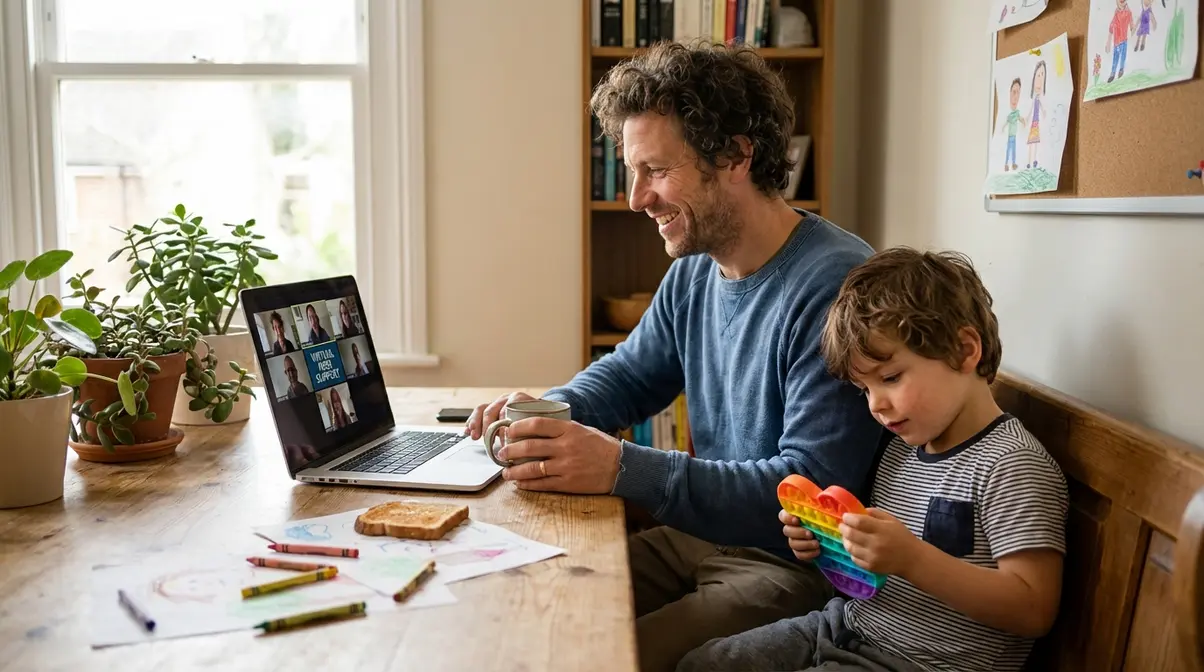
Peer support for neurodivergent families: Finding belonging
Peer support creates essential spaces where neurodivergent families feel truly understood. This article explores how family-led organisations like Belongside Families reduce parental isolation, shame, and burnout through neuroaffirming connection. Learn why lived experience combined with evidence-based practice offers the most effective support, and discover how virtual communities break down geographic barriers for regional families.
Read more