Neuroaffirming practice: Beyond training to real support
Psychologist Adelle Sushames shares what truly neuroaffirming support means beyond training certificates and theoretical frameworks. This episode explores how to shift from deficit-based to strength-based approaches, understand autism as a dynamic spectrum wheel rather than a linear line, recognise who gets missed in diagnosis (particularly girls and women), and use practical communication tools like card decks to help neurodivergent people understand and express their needs.
In short
Neuroaffirming practice goes beyond training: it requires ongoing reflection, lived experience input, and honouring neurodivergent ways of being Outdated resources and deficit-based language cause harm: many traditional materials pathologise difference rather than celebrate it Spoon theory helps explain energy and capacity: neurodivergent people often have limited "spoons" (energy units), and understanding this helps families provide better support Autism is not a linear spectrum: the spectrum wheel model shows autism as dynamic, with different traits presenting differently across contexts Girls, women and adults are often missed in diagnosis: masking, camouflaging and gender bias mean many neurodivergent people don't receive support until adulthood Card decks and visual tools support communication: resources like Adelle's ND Me, Spoon Thieves and Spoon Savers help people identify and express needs Allyship matters: families, professionals and communities all play a role in creating neuroinclusive spaces
This article is based on Episode 25 of the Neurodivergent Pulse podcast, featuring psychologist and resource creator Adelle Sushames. Listen to the full conversation on Spotify, Apple Podcasts, or wherever you listen to podcasts.
What does truly neuroaffirming support look like in practice?
For psychologist Adelle Sushames, the answer became clear after nearly two decades in the field: it's not about training certificates or theoretical frameworks. It's about creating resources and approaches that reflect neurodivergent experiences, honour different ways of being, and support communication without demanding conformity.
In this special Neurodiversity Celebration Week episode of Neurodivergent Pulse, host Laetitia Andrac sits down with Adelle to explore what neuroaffirming practice means, why outdated language and resources cause harm, and how tools like card decks help children, teens, adults and families understand their needs and communicate them to others.
From spoon theory to the autism spectrum wheel, from missed diagnoses to the power of allyship, this conversation offers both validation and practical wisdom for anyone supporting neurodivergent individuals.
Why Adelle built her own resources
Adelle didn't set out to become a resource creator. With 18 years of experience as a psychologist, the last decade focused exclusively on autism and ADHD assessments and support, she had access to plenty of existing materials.
The problem? Most of them didn't work for the neurodivergent people she was supporting.
When she started creating her card decks four or five years ago, neuroaffirming practice in Australia was just beginning to take off. The resources available were often aimed only at children, and many used language that wasn't affirming. As Adelle explains, the available resources "used language that I didn't want to use in my sessions with clients."
The frustration Adelle describes reflects a broader pattern of systemic neurodiversity bias that continues to shape diagnostic tools, educational materials, and therapeutic approaches in ways that harm rather than help.
So she started creating her own.
What began as a personal project to fill gaps in her clinical practice has grown into Neurodivergent Ally, a platform offering neuroaffirming resources including card decks, books, and educational materials used by families, clinicians and educators around the world.
What makes a resource truly neuroaffirming?
The term "neuroaffirming" has become increasingly common, but what does it mean in practice?
For Adelle, it's not about avoiding certain words or completing a training course. It's a fundamental shift in perspective that requires ongoing work.
You have to really at your core believe the neurotype model of different brains and that different brains are natural and that they're meant to be the way that they are. It's not a disorder or a pathology that's going on.
Crucially, this isn't a one-time shift. As Adelle explains, "it's continually remembering and questioning and reflecting because we all have those really traditional ableist beliefs that have been very strongly embedded in us from our childhoods."
This commitment to affirming practice echoes across neuroaffirming approaches in different therapeutic settings, from psychology to equine therapy, where the focus shifts from compliance to connection.
In practical terms, neuroaffirming practice means:
Using identity-first language when preferred by the individual (e.g., "autistic person" rather than "person with autism")
Focusing on strengths and differences rather than deficits and disorders
Centring lived experience in resource development and service delivery
Recognising that support needs vary across contexts and over time
Avoiding goals focused on making people appear more neurotypical
Pip remembers the appointments, the notes and the small wins, so you don't have to.
7 days free on iPhone and Android.
Spoon theory: a framework for understanding energy and capacity
One of Adelle's most popular resources is her Spoon Thieves and Spoon Savers card decks, based on spoon theory.
Originally developed by Christine Miserandino to explain life with chronic illness, spoon theory has been widely adopted by the neurodivergent community as a way to understand and communicate about energy, capacity and overwhelm.
The concept is simple but powerful: imagine you start each day with a limited number of spoons (units of energy). Every activity, interaction or demand uses up spoons. Some activities are "spoon thieves" that drain energy quickly. Others are "spoon savers" that help preserve or restore energy.
Research shows that parents of neurodivergent children spend an average of 33 hours per week on caregiving, with over 10 hours devoted to emotional regulation and advocacy (see our full research report). This constant demand makes understanding and managing energy crucial for the whole family.
This concept of tracking energy gains and losses throughout the day aligns closely with the energy accounting framework explored by psychologist Sandhya Menon, offering families another lens for understanding capacity and regulation.
For neurodivergent people, everyday activities that neurotypical people might not think twice about can be major spoon thieves:
Navigating sensory-overwhelming environments
Masking or camouflaging autistic traits
Processing verbal instructions in noisy settings
Managing transitions and unexpected changes
Social interactions, especially in groups
Understanding spoon theory helps families and professionals recognise why a child might seem fine at school but have a meltdown the moment they get home. They've used all their spoons getting through the day.
The card decks help children, teens and adults identify their personal spoon thieves and spoon savers, making it easier to communicate needs, set boundaries and plan for energy management.
Beyond the linear spectrum: understanding autism as a wheel
Another area where Adelle's work challenges outdated thinking is in how we conceptualise the autism spectrum.
The traditional "linear spectrum" model suggests autism exists on a line from "mild" to "severe," with "high-functioning" at one end and "low-functioning" at the other.
This model is not only inaccurate; it's harmful.
As Adelle explains, the spectrum "is not linear and it never really has been." She describes seeing colour wheel representations that show all the different areas of functioning and how capacity can fluctuate day to day, across a week, or across a month.
Adelle also notes that she doesn't prefer the term "on the spectrum," observing that it's often used by people trying not to cause offence rather than simply saying someone is autistic.
Importantly, Adelle holds space for the full range of autistic experience: "Although something may not be a disorder, it certainly can be disabling for people. So we have to recognise that for some autistic people there is a significant amount of disability and then for others not so much depending on their supports and their needs and that's okay wherever the person sits."
This understanding moves us away from unhelpful labels and toward a more nuanced, person-centred approach to support.
The hidden autistics: why girls, women and adults are missed
Adelle's own autism and ADHD diagnosis came in her early 40s, a common story for many women and gender-diverse people.
This dual perspective adds depth and authenticity to her work. Understanding Zoe's research on neurodivergent families found that over three in five parents raising neurodivergent children also identify as neurodivergent themselves, either through formal assessment or self-identification. Their insights reveal how common late diagnosis is, particularly for women who've spent decades masking to fit in.
Adelle points to recent research showing that gender representation in autism is far more equal than previously thought. "We're now starting to see that actually the gender representation is far more equal. So traditionally we have absolutely missed girls and women from diagnosis and screening."
People who are missed often share certain characteristics:
No co-occurring intellectual disability
No obvious communication difficulties
May be gifted
Have other forms of neurodivergence co-occurring
Have mental health diagnoses that "explain away" their experiences
The consequences of being missed are profound:
People don't have a sense of identity. They don't understand who they are and what their needs are. They think that they are broken in some way or that it's a mental health problem that they just haven't been able to fix even with loads of therapy and medication.
Late diagnosis can be both validating and grief-inducing. Many people experience a mix of relief and sadness about what might have been different with earlier understanding.
Adelle's resources, particularly her ND Me card deck, help newly diagnosed adults explore their identity, understand their needs, and begin the process of unmasking.
Communication tools that work
One of the most powerful aspects of Adelle's work is the creation of practical tools that help neurodivergent people communicate their needs.
Adelle's card decks join a growing movement of communication tools that honour different ways of expressing needs, moving beyond the assumption that spoken language is the only valid form of communication.
Her card decks include:
ND Me: helps neurodivergent individuals explore their identity, strengths and support needs
Spoon Thieves: identifies activities and situations that drain energy
Spoon Savers: identifies strategies and activities that restore energy
Spoons @ School: specifically designed for educational settings
Adelle describes the cards as working through a feedback loop: "The communication is happening, that increases understanding, that brings about more communication, and then we get more understanding."
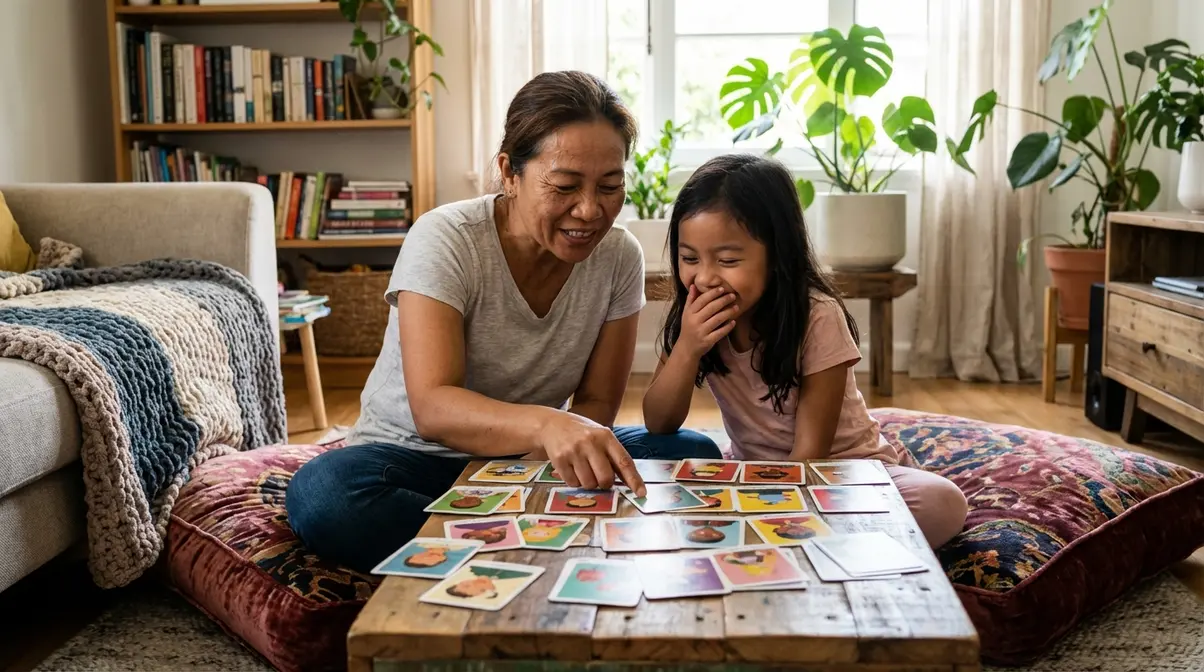
The cards can be used by sorting them into categories: what's always true, never true, or sometimes true for the individual. This helps people develop understanding around their experiences, needs, and how to meet those needs.
Crucially, Adelle emphasises that the cards work best when the person is regulated: "The cards aren't really designed to be used during a meltdown or a shutdown or when somebody's feeling overwhelmed or there's too much sensory input happening... More for when the person is regulated, when they're able to be self-reflective, when they're able to answer questions or be curious about things."
She adds a practical warning: "We don't want to build up a negative association with a resource." Using tools at the wrong time can backfire.
The role of allyship in creating neuroinclusive spaces
The name "Neurodivergent Ally" is intentional. Adelle believes that creating a more neuroinclusive world requires active allyship from families, professionals and communities.
When choosing the name, Adelle wanted it to appeal not only to neurodivergent people but also to those who want to be allies. As she explains, "I am an ally whether I'm diagnosed or not. And I want the cards to be for people who are not just for neurodivergent people themselves but for those that don't identify or haven't been assessed as autistic or ADHD but they want to be an ally and they want to help."
The principles of allyship Adelle describes extend beyond clinical settings into creating neuroinclusive environments in schools, where educators can shift from compliance-based approaches to connection-based support.
For families, allyship might mean:
Learning about your child's neurotype from neurodivergent adults, not just professionals
Advocating for accommodations at school and in the community
Challenging ableist language and assumptions when you encounter them
Prioritising your child's wellbeing over neurotypical expectations
Creating sensory-friendly spaces at home
For professionals, it means:
Centring lived experience in your practice and continuing education
Regularly examining your own biases and assumptions
Using neuroaffirming language and frameworks
Collaborating with neurodivergent people as equals, not just "clients"
Advocating for systemic change in your workplace and profession
Adelle also highlights how allies can provide valuable external perspective. She shares that friends and other parents sometimes notice progress that she, as a parent in the daily routine, might miss. These external observations can be affirming and help recognise growth that happens gradually.
What safety and support can look like
Sometimes the signs of feeling supported show up in unexpected ways.
Adelle shares a powerful example from her clinical work: a long-term client who recently moved into a more supportive living situation started sleeping much more than usual, including napping during the day.
Rather than seeing this as a concern, Adelle recognised it as a sign of safety: "What I think is what's happening is that this person finally feels so supported and so safe that their body is actually catching up on that really reparative, regenerative sleep."
This story illustrates that support doesn't always look the way we expect. When someone finally feels safe, their body may need time to recover from years of hypervigilance and stress.
Moving forward: what families can do today
If you're a parent or caregiver of a neurodivergent child, or if you're a neurodivergent adult seeking support, Adelle's work offers a roadmap for moving from confusion and overwhelm to understanding and empowerment.
For families beginning to explore what neurodivergent children need beyond traditional interventions, Adelle's resources offer a powerful starting point grounded in both clinical expertise and lived experience.
Here are some practical steps you can take:
Learn about spoon theory and help your child identify their spoon thieves and spoon savers
Use visual tools like card decks to support communication about needs and feelings
Shift your language from deficit-based to strengths-based
Connect with neurodivergent adults who can offer insight into your child's experiences
Advocate for accommodations at school, in healthcare settings, and in the community
Prioritise regulation over compliance: a regulated child is more important than a "well-behaved" child
Create sensory-friendly spaces at home where your child can decompress
Validate your child's experiences rather than trying to talk them out of their feelings
For families navigating a new diagnosis, Adelle offers this perspective: "Your child is still the same child that they always were, but now you have a tool that's going to help you to navigate parenting them in the way that they need to be parented and to advocate for them in school and to help them understand as they grow older as well who they are."
She adds that this understanding is "one of the biggest gifts that you can give your child."
The power of representation and lived experience
Adelle's late diagnosis has deeply informed her work. Being able to draw on both professional expertise and lived experience gives her a unique perspective on what neurodivergent people need.
She hears from many older individuals who have been diagnosed in their 60s or 70s, and they describe "what a relief it has provided to them to finally understand who they are and to give themselves permission to access the supports that they need."
This principle of centring lived experience is at the heart of the neurodiversity movement and is increasingly recognised as essential for creating affirming support.
Resources and next steps
If you'd like to explore Adelle's resources or learn more about neuroaffirming practice, here are some places to start:
Neurodivergent Ally website: neurodivergentally.com
Instagram: @neurodivergent_ally
Card decks and resources: Available through the Neurodivergent Ally shop
Free resources: Visit the freebies tab on the website for downloadable resources including an ebook version of Adelle's children's book
Children's book: Strong and Sensitive: A Tiger Tale about Autism and ADHD (for ages 5-12)
You can also listen to the full conversation between Laetitia and Adelle on the Neurodivergent Pulse podcast, available on Spotify, Apple Podcasts, and other podcast platforms.
Final thoughts: allyship as action
As we celebrate Neurodiversity Celebration Week and beyond, Adelle's work reminds us that allyship requires more than awareness. It requires action.
It means examining our own biases, challenging outdated practices, creating inclusive spaces, and centring the voices and experiences of neurodivergent people in everything we do.
As Adelle reflects, society still needs "a complete shift" in how people think about autism and other forms of neurodivergence. While many people are making a difference in their own spaces, "the majority of people in the world are still thinking about autism and other forms of neurodiversity in very outdated, stereotyped, pathologising ways."
Whether you're a parent, professional, or simply someone who wants to be a better ally, the message is clear: start where you are, use what you have, and commit to ongoing learning and growth.
Because every neurodivergent person deserves to be seen, supported, and celebrated for exactly who they are.
Ready to take the next step in supporting your neurodivergent child? Try Understanding Zoe free for 7 days: the neuroaffirming app that turns every report, observation and meltdown into an actionable next step, helping you understand your child's unique needs and build a support plan that works.
Pip is not a doctor or therapist. It helps you organise and prepare, not diagnose or treat.
In a crisis call 000. Lifeline 13 11 14. Kids Helpline 1800 55 1800. 13YARN 13 92 76.

Ready to put it all in one calm place?
Tell Pip one thing today. It remembers the rest.
Stored in Australia, encrypted. Cancel before day 8 and you won't be charged.
Related articles

What does a social worker do? An Australian answer
A social worker helps with your life and the systems around it. Many also provide therapy. What an AMHSW is, Medicare and NDIS funding, and how to find one.
Read more
Where is the village? Building neurodivergent community
Neurodivergent families experience isolation at twice the rate of neurotypical families, not because they can't cope, but because most spaces were never designed for them. In this episode, Laetitia Andrac (co-founder of Understanding Zoe) explores what real community looks like for neurodivergent people and families. She shares practical strategies for creating sensory-friendly, inclusive gatherings where everyone genuinely feels welcome, and explains how to build your village deliberately, right where you are.
Read more
Neuroaffirming music therapy and how it helps with connection and regulation
Music therapy for neurodivergent children isn't about learning to play an instrument. Registered Music Therapist Brianna Dahlstrom explains what genuinely neuroaffirming music therapy looks like: maximising strengths rather than normalising differences, creating safety before pursuing outcomes, and offering a nourishing pathway to nervous system regulation that many neurodivergent people find more accessible than talk-based approaches. Discover how to identify affirming practitioners and why playfulness is essential therapeutic work.
Read more