Neuroaffirming Classrooms: How we move from compliance to connection with Millie Carr
Hosted by
Laetitia Andrac
Host of The Neurodivergent Pulse, CEO and co-founder of Understanding Zoe, and a neurodivergent parent.
With
Millie Carr
The Neurodivergent Pulse is Understanding Zoe's podcast for families raising neurodivergent children in Australia. Hosted by Laetitia Andrac, each episode is an honest conversation about autism, ADHD and everyday family life. In this episode, "Neuroaffirming Classrooms: How we move from compliance to connection with Millie Carr", you'll hear practical, neuroaffirming ideas you can use today.
Key takeaways
- What is a neuroaffirming classroom? It’s not about fixing kids, it’s about creating spaces that embrace and prepare for brain diversity from the start.
- Universal Design for Learning (UDL) is one of the most powerful and practical tools schools can implement to support all learners.
- Parents and teachers working together with curiosity (not confrontation) can shift resistance and lead to meaningful change.
- Equity ≠ Equality. Teaching children the difference between fairness and sameness helps build inclusive, empathetic communities.
Watch this episode
Prefer audio? Listen on Spotify
Loading the player...
Chapters
- Welcome to The Neurodivergent Pulse
- Millie's path to inclusive teaching
- What a neuroaffirming classroom means
- Universal Design for Learning in practice
- Handling resistance from schools
- Helping classmates understand neurodivergence
- One change for neuroaffirming schools
- Signs of hope in education
- Zoe's ideal classroom wishlist
Show notes
In this powerful conversation, we’re joined by neurodivergent educator and founder of Unmasking Education, Millie Carr (our first official guest).
We explore what it really means to create neuroaffirming classrooms, where students are seen, supported, and safe. Millie shares practical ways teachers and parents can collaborate to create inclusive learning environments rooted in respect, equity, and universal design.
We also discuss the challenges teachers face, how to approach resistant schools, and why the words we use matter more than ever.
🌈 Whether you’re a parent, teacher, or part of a child’s care village - this episode offers insight and hope.
✨ Try Understanding Zoe free for 7 days – the neuroaffirming app turning every report, observation and meltdown into an actionable next step.
About the guest
Millie Carr is a neurodivergent educator, inclusive education specialist, and the founder of Unmasking Education. With over a decade of classroom experience and a Master’s in Inclusive Education underway, she blends lived experience as a parent of neurodivergent children with a deep understanding of what schools really need.
Millie is the creator of practical resources, professional learning, and children’s books that help schools move beyond compliance into connection. She’s passionate about creating classrooms where every brain type belongs.
📝 EveryBrain Survey: Take it here
📢 Petition for Inclusive Education: Sign here
📸 Follow Millie on Instagram: @unmaskingeducation
About the host
Laetitia Andrac (Autistic & ADHDer) is an award-winning entrepreneur, international speaker, and podcast host.
She is the bestselling author of Light It: How to Trust Your Intuition and Build a Thriving Business. With over 15 years of experience in consulting, strategy, and innovation, Laetitia has worked with industry leaders like Deloitte and Telstra.
Inspired by my journey as a neurodivergent parent, she co-founded Understanding Zoe, an AI-driven solution dedicated to supporting caregivers of neurodivergent children.
Her passion is creating a more neuroinclusive world, where everyone can thrive—whether in their homes, communities, or workplaces.
Frequently asked questions
What does a neuroaffirming classroom actually look like?
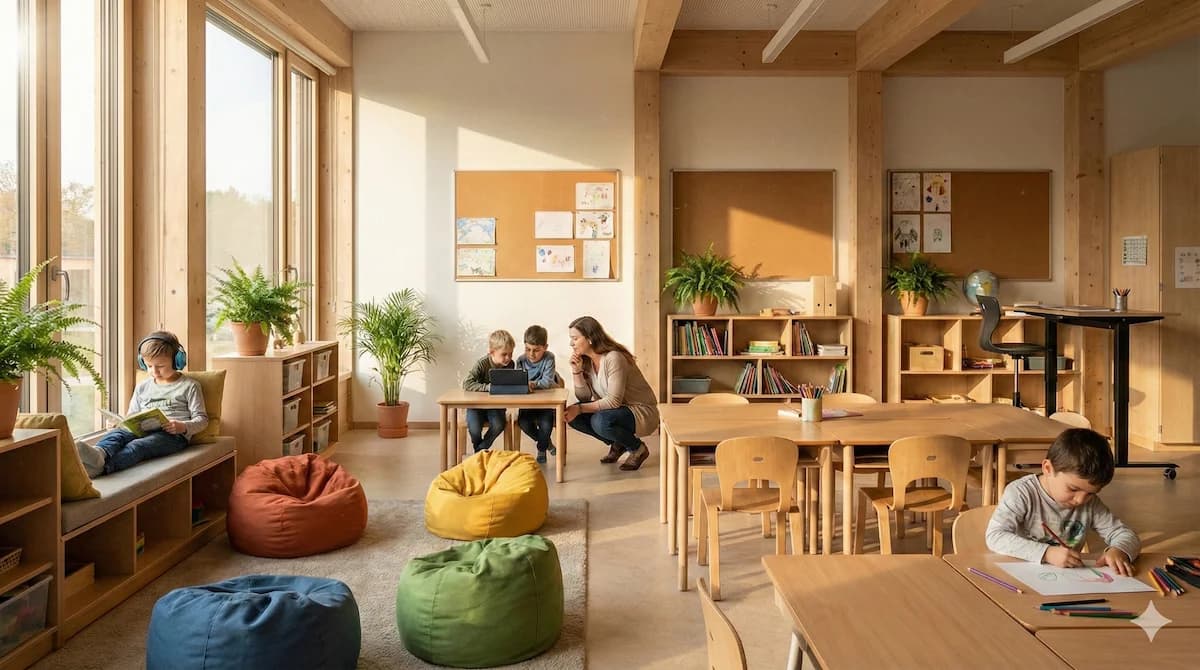
A neuroaffirming classroom is planned for different brains from the start. It does not just make changes after problems happen. Teachers use positive language about difference instead of framing anyone as wrong. Students feel safe and get real choices in how they learn. They also show their knowledge and are checked in with often through the day.
How does Universal Design for Learning help neurodivergent students?
Universal Design for Learning offers students multiple ways to take in information. This might be visuals, video or written text. Students also get multiple ways to show what they know. This could be writing, a song or a video. This removes the barrier of everyone doing the same task the same way. It also gives students ownership over their own learning.
How can parents get a teacher to embrace inclusive practices?
Approach the teacher with curiosity, not confrontation. Ask school leadership to join the meeting for support. Resistance usually comes from fear and not knowing. Many teachers only had one or two university modules on topics like autism. Share small, specific suggestions about your child rather than everything at once. This way, the teacher does not feel overwhelmed or defensive.
How can teachers help classmates understand a neurodivergent peer?
Teachers can talk openly with the class about neurodiversity. They can also explain the difference between equity and equality. Simple questions and prompts help classmates imagine how others feel. Reading neurodiversity affirming books and including difference in class discussions builds understanding over time. Children are not born with bias. A teacher who models inclusion each day can shift the whole classroom's attitude.
What gives Millie Carr hope for inclusive education?
Millie sees real progress compared to when she started teaching. More teachers are dropping outdated practices and trying new approaches. They are also using less negative, deficit based language about students. She believes a shift in language usually comes before a shift in action. Most teachers choose the profession because they genuinely want to support children. There is still a long way to go.
Transcript
Read the transcriptAbout 22 min read
Laetitia: Welcome to The Neurodivergent Pulse, where we explore the often misunderstood world of neurodivergence with experts, parents, teachers, and therapists. Grounded in lived experience, each bite-sized episode gives you something practical to try. I am your host Laetitia Andrac, AI expert, neurodivergent mum and founder of Understanding Zoe. This podcast is recorded on Dharawal country. I acknowledge that sovereignty was never ceded. It always was and always will be Aboriginal land.
Laetitia: Hello Millie. Thank you so much for being on The Neurodivergent Pulse podcast.
Millie: Thank you so much for having me. I'm really excited to be here.
Laetitia: It is going to be a very juicy conversation. Before we get into neuroaffirming classrooms, which is the heart of our conversation, I'd love for you to share a bit more about your journey and what led you to focus on inclusion and neuroaffirming classrooms.
Millie: Yeah. For me, it's been a bit of a, it feels like it's kind of all coming. Everything that I've done the last 16 to 20 years is kind of coming to this point. I am a parent. I have three neurodivergent children myself. I'm a late diagnosed ADHD. And I have been teaching for 16 years. So when I first started teaching I knew my children, like, you know, I was going through the diagnosis process my children and wasn't aware of myself and my teaching practice looked completely different back then to what it does now. And when I started teaching there was a lot of not a lot of awareness about neurodiversity and neuroaffirming practice and what that looks like and, you know, actually there was probably some very harmful practices and things that were happening and some of the things are still happening now.
Millie: So as I've, you know, moved through this space as lived experience with myself with my children in teaching and testing out a lot of the things that I did at, you know, personally with my children then testing them out in the classroom people were like oh my god I didn't know, like, you, it's like, you know, you're testing all this stuff out and I'm able to actually create these really great environments that people that don't have that lived experience were unable to kind of, I guess, have in the classroom. So it just kind of really all has built now to me having a lot of knowledge and background knowledge from, you know, my time teaching but also from lovely allied health people that I've been working with across the years with my children and now I'm just wanting to share it and I see and hear a lot of things that I'm like surely we're not still doing this now. You know, these are things that, you know, were happening 15 years ago and I could understand it back then but I can't understand it anymore. And more people like yourself, like, we have to kind of keep speaking out about neurodiversity, the change in, you know, paradigm and and all of that. So I think that's where it's all kind of come to. And I just feel like I'm compelled to do it. I've got all this experience. I've got to put it somewhere.
Laetitia: And I'm so grateful you do that for all of us. I think the way you explain it in your content is always very clear and it's something that is sharable and helping so many. So for anyone who is new to this term neuroaffirming classroom, can you explain a bit more what it means to you?
Millie: For me, neuroaffirming classrooms is that we're looking at the classroom and we're, you know, preparing for the diversity in the classroom. So, we're not coming in and we're not making adjustments after the fact. We're not going in and we're not saying, you know, there's something wrong with these people. We have to change this for just those people. We're coming in and we're using really affirming positive language about the fact that everyone is different. There is diversity like there is diversity in flowers and other things. There are diversity in human brains and we need to cater to those brains in our classroom. So being neurodiversity affirming is you are making sure that you are accounting and thinking about that from the get-go. So you're not just coming in and you're not making those adjustments. And that being able to account for those different brains and accepting and being affirming of those different brain types and different ways of thinking allows people to feel really safe. I think safety is a really big part of an affirming classroom. And the key thing that students need to feel to be able to feel like affirming and positive.
Laetitia: I love it. And I have really seen the difference personally between a classroom which Zoe attended which was definitely not affirming and another one which was really affirming and prop, like, proposing universal design. So making sure that it was accessible for for everyone. So for anyone who is listening to this and they're like, what could an affirming classroom look like, what are the good example or the good bits that we can look from to be like, oh yeah, actually my teacher or the teacher of my child is doing a great job. Any, or anything that you've seen as great examples?
Millie: Yeah. So you kind of touched on that a little bit then with the universal design for learning. That is one of my number one things that teachers can easily do that allows for, again, bringing those barriers down from the get-go. So universal design for learning is, there's three different kind of sections to it. It's being able to have multiple ways of engaging in content, multiple ways of representing so providing it to the students. You might do visuals, you might have video, you might have technology written, you know, different ways they can access it and also different ways they can respond. Often you'll find in classrooms that haven't thought this way and there's barriers because everyone has to do a written report exactly the same. And obviously not everyone is going to excel and be able to do that in the same way. So that provides a bit of a barrier. Where is if you're providing and asking students to give different ways of representing you can represent your knowledge in a song, you can, you know, do it, you can do a writing if you want to do writing you can do writing, if you would like to make a video in a little group, if you'd like to do it by yourself, just giving those options and choice I think that makes it really affirming.
Millie: So if you're looking at your, you know, child's school and looking for them thinking about those things, thinking about okay there's different brains. How can we make it so that it's not just the same kind of way of doing something all the time and presenting something all the time? And that's my number one. And then within that obviously comes things like making sure there are visuals universally for everybody. Making sure that there is access to variety of seating options and different preferences and that's being thought of in terms of emotional regulation and capacity building, making sure you're taking account of that as a teacher. You're checking in with students multiple times throughout the day. You're building in breaks, building in times for students to have, you know, transitions between and teaching them and co-regulating with them. So if you're seeing a lot of those things, they are some really really good signs that it's a really affirming classroom. And you'll know because the students are usually very very happy and it gives students ownership and agency over their learning too because they're like, "Well, I'm choosing to do this because I know I work better this way." You're not just prescribing something to everybody. So, that's my, they're my kind of like really key things that I look for in a neuroaffirming classroom.
Laetitia: Oh my goodness, this is so good. And I please do share this with the teachers and everyone in your support village. And a question that I received from some of our users of the platform Understanding Zoe is they're like, great, we understand our child better. We'd like our teacher now to embrace this affirming care and understand the child better. But there are some resistance. So what would you recommend to those parents from one hand and also to those teacher who may be also saying that the principal doesn't agree with this or it takes more time. So the two angle which you have from lived experience as a parent yourself and as a teacher and I have read lots of data and I know that teachers, 70% of them are completely overwhelmed and lack time and lack, you know, the time to understand every child's needs. So we want to really be affirming on this podcast and understand both angle and really helping. So on one hand what could you share as piece of wisdom for the parent to really help them embrace that shift with the community with the teacher and on the other side how can teacher really look for support either from the principal or from the education ministry or whatever you have as wisdom to share.
Millie: Yeah, there is, it's really tricky because teachers obviously are very overwhelmed. We already know this. That's a common thing that's happening. But within that, you know, there are legislation and laws that state that students need to be catered to and they need to be, you know, included in the classroom. So it's our job as teachers to do that as well. And when there's resistance often I find resistance comes from fear and not knowing. And I've talked about this previously and there'll be some other reels and things you'll find of mine where I talk about the fact that teacher training, that I did a survey at the start of the year, it was nearly a thousand teachers that responded to this survey and 96% of them said they did not feel that they were able to cater to neurodivergent students in their classroom. They were not taught enough at uni. A lot of teachers commented and said they did one module, so one module or two modules max on maybe autism and that's all they, and it was just basically what is autism, it wasn't, you know, this is how you can support an Autistic person or, you know, the language even is so completely not right.
Millie: So I think the thing that you can do as a parent because you got to not know this, that when you come in you've got a bit more awareness because you've done a lot of research because this is about your student, about your child, it's really personal for you and for them they may have been the first time they've come across someone like your child in their classroom. So they're learning, they don't have any prior, you know, experience like I have, you know, as a parent going in they're not going to have a whole lot there and the resistance comes from not knowing in fear. So when you come to meetings with parents and with teachers and the school community, I always request to get someone to support the teacher. So ask for someone from leadership because they potentially might know a little bit more than the person that's, you know, teaching your child, but come at them in a really curious kind of manner and present the information you know about your child in a way that is like, I'd love you to try this. What do you think? So I know that, you know, my child really loves, you know, Pokémon and if you can somehow incorporate that a little bit into the coming out.
Millie: So sometimes parents, you know, obviously very upset and kind of get, you know, very emotional and that can sometimes make defensiveness happen and then you've got that lack of trust and then it breaks down. It's very hard to rebuild once that's happened. So if we come in as the experts of our child knowing that, you know, giving them some little suggestions, that might potentially break down some of those barriers for them to be like, okay, they're not asking me to do anything too crazy. And like I said with the last question, in terms of universal design for learning, it doesn't actually require a whole lot of extra for them. They're just thinking, they do it for everybody, then everyone's kind of caught under the same umbrella. You know, if it does take a lot of effort. If you got 10 students, you're going that's different, that's different, that's going to take them forever. But if you offer it to everybody.
Millie: So presenting just, like, different reasoning and look, some of the education departments actually know about universal design for learning. This isn't a new thing for them. It is part of the department's processes. In Victoria, that's where I am. We have actually done, you know, professional development. Some teachers may not have done it but there is stuff in the department about it. And there's a lot of resources. So that's something that, you know, you can kind of present to them and ask leadership to go have a look, you know, at the universal design for learning or have a little look at how we can, like, cater to everybody. So my big tips are come with compassion, come with curiosity. Bring a couple of little tips but you don't want to present everything all at once because that can, for a teacher that doesn't know anything, it can be very overwhelming and they can get defensive because it's like, well I know what I'm doing. I know my job. You don't want them to come off like that. You want to come nicely and most teachers want to do the right thing by your child. They want to support them. So if you've got any extra things, they're going to do some learning and, like, upskill and it's going to be great for them. So most teachers are wanting to do that. So if you come at them nice and small, drop little bits and pieces, talk to leadership as well, get them to look at universal design for learning as an option to include, that would be my steps and my advice of where to go.
Laetitia: Amazing. Thank you so much. And we didn't mention the other children in the classroom and I know that from our own lived experience and I'm only speaking from that place. We found an amazing school with accommodating for our daughters with understanding neurodivergence and their own needs. So we're very grateful for that. Yet some of the children in the classroom are not understanding necessarily what others, and which makes our children not feel safe to stim in the classroom or not feel safe to wear their headphone or not feel safe to ask for a certain accommodation or express their needs. What do you have to share if you have anything, to the parents listening, to the teachers listening, to enable this understanding as well from the other children?
Millie: Yeah, you know, I've seen this as well as a teacher in a classroom. I actually had this experience last year with a class, they got a new student in term four and he had, you know, some variety of different needs and accommodations that were put in place for him in the classroom and the students were all talking about, it's not fair, why does he get to sit over there and do this and why does he get to do this and it's not fair. And that word fairness. I came in as a support, I was a supportive coach for that teacher and we did a lot of work with that classroom around what is neurodiversity? What does that look like? It's a difference in brain. Some people do this, some people do that. And also about the word equity over equality. So a lot of the kids are learn, they learn equality. I get, we all get the same. Well, if we all get the exact same thing, we're not all going to be actually catered to and everyone's going to be, there's been many many people left behind.
Millie: So it's about teaching the word equality and creating a classroom environment. I used to do something every morning where I have like little cards where I'd pull a little card out and it would be some a question about, you know, how could you help someone who is feeling a little bit anxious about joining in a group or doing little things, and little prompts to get them to think about what it would be like to be in that child's shoes, to invite difference, to teach about difference. There are so many fabulous neurodiversity affirming books now for children. Like, so many people are, it's fabulous the amount of resources that are out there. Read some books with your class about these things. Include diversity in the pages that you're reading and the things that you're talking about.
Millie: So it doesn't happen overnight. This is the environment that you as a teacher are creating. So teachers need to create that lovely environment and then the students start to go, I've been in other classrooms complete opposite to what I experienced last year where I walked in and they're just like, you know, sitting there going oh I know that he needs to sit there on the wobbly stool or they go oh here's wobbly stool and they go and grab it for them. So it just, the change in how you create that environment. Students and children don't have these biases from birth. You know, it forms as we teach them things. So, yes, they might come with some biases from home, but we need to be the ones as a teacher that's with them six hours a day to build that environment of inclusivity and of difference. And it's like, well, he gets that because that's what they need. And you don't need that because, you know, when you have a fidget spinner that makes you pretty distracted and you don't do your best work and they're like, yeah, I know. So, it's just kind of, they, the kids know these things and they pick up on these things and you've got to, it's constant teaching about it and building that really great community of everyone's different and everyone gets what they need and that's what equity is and not equality. That word I think needs to be taught in primary school from the get-go. Equity, that's not everyone gets what they need. Barriers are removed so everyone can get what they need. Not that everyone gets exactly the same. That's not fair.
Laetitia: That is brilliant. And I am definitely going to share that one with so many humans because it's definitely a big thing, the fairness which everyone is attached to and the fairness comes from equity not necessarily from equality. So definitely beautiful one. So before we wrap up, I always like to ask this kind of opening up question and dreamland question. Because I'm also kind of fascinated by the witchcraft and all of that. So if you had a magic wand and you could change one thing in the education system to make classroom more neuroaffirming, what would it be?
Millie: Oh goodness, this is a big one because I want to be greedy and have more than one. Like, maybe I'll have two. So my first one I already mentioned earlier is universal design for learning. That's something that I think needs to happen in every single school. I'm not sure why, we know about it. Schools know about it. Departments know about it. It's actually in a lot of our resources. Why are we not all doing it? And why is not in our planners? It just needs to be done. When we're considering and planning for things, we go, "Okay, let's consider all the different brain types." Playing four different kind of options so the kids can kind of like go on to different things. That's, you know, for me no-brainer.
Millie: My other one is about the fact that I think we need to, the educators don't know enough about neurodiversity. It's not something that they know really really well and the problem is sometimes when they don't know you can sometimes cause harm when you're not aware. So sometimes teachers innocently will cause some more trauma and some more pain in scenarios when they don't know how to respond in a way. So they might actually cause a meltdown. I've seen educators, sometimes not deliberately, they're trying to calm, but they keep talking and talking and talking. And when your prefrontal cortex is off and you flipped your lid and you're working from that, you know, really like primal space of trying to regulate, students are not going to respond to you asking them what went wrong, how did it, they just, it makes it worse and then they're going to throw something, hit something. And we in this space, if you've got a child in this, we know this because we've had to learn the hard way ourselves. You know, if you kind of talk to them too much, ask them the wrong question, you might have a hole in the wall.
Millie: So the teachers, I think we need, if they know these things and the education, it needs to be front and centre in our teacher training at university, they need, and professional development throughout. If you cannot create an affirming classroom and cater to all the needs and understand regulation and different behaviours, you're going to have issues and that's just going to continue to happen unless the education improves and teachers have that so that they can actually use examples and be able to not, yeah, cause some more harm and cater to everybody. So that's my, they're my little two if I can be sneaky.
Laetitia: I love it and I love that you're sneaky. You know, I'm a PDA, so I don't like when I'm given just one. So, I shouldn't even add us to just one. You can share as much as you want. This is platform where we listen to you, Millie, and we love to hear your insights. And is there anything that gives you hope in all of this? Because I'd like to conclude this on a positive. What have you seen lately? Or what's been something that you're like, "Oh, I have hope for our children. I have hope for more classroom being affirming. I have hope." What gave you hope lately?
Millie: I feel like even though there is still a long way to go, comparatively to when I first started teaching, it's a world of difference in a lot of classrooms and I see such great practice sometimes. And yes, not everyone's getting it all right, but they're giving it a go. A lot of teachers are like, "Yeah, I'm going to try and stop using that, you know, whole body listening poster because I realise that's actually not good." Or I've seen people swapping out some of those little things for more affirming things and yes, they're not getting it 100% correct and that's okay, but I can see people trying and I see the shift in people not just saying, you know, negative deficit based things about students. I see the language shift happening. I think the language shift kind of happens generally first in all these movements and then, you know, action kind of follows. So, that's good that we're hearing that language shift. I think it's positive. There still is a lot of work to go. Don't get me wrong, I know this and I know there's a lot of problems and troubles in the education space, but teachers don't get into the profession, you know, not wanting to support children. That's why they're there and I think they want to and I see little pockets of it and it's really really good.
Laetitia: I love it. Thank you so much, Millie. Before you go, I would love for you to share with anyone who's been loving listening to your insights today how they can connect with you. Where do you hang out? I know I follow you on Instagram and I'm a huge fan of your content, but how can everyone connect with you?
Millie: Instagram is my main source of content. That's kind of, I can't do too many platforms because it just overwhelms me. So Instagram has been my main focus the last year. So I'm Asking Education. You can find me there. I also, you can also email me. Find my website. Again, it says I'm Asking Education dot com dot au. Very easy to kind of get to me. I am more than happy to answer questions. Answer any kind of thoughts you've got. I've seen this. What do you think? I also have some resources up as well. That I'm growing and gradually as I get time, you know, around kids and everything else to make. So yeah, all of that stuff is kind of there and, yeah, I'd encourage anyone to reach out to me if you ever need.
Laetitia: Thank you so much, Millie, for your time today and sharing your insights with our listeners.
Millie: It was a pleasure. Thank you so much for having me on.
Laetitia: Quick pulse from Zoe about neuroaffirming classroom. Zoe, if you could design your own classroom, what would you put in it?
Zoe: A nice teacher, gangs in a quiet area and work obviously because it's a classroom. Fishes, axolotls, and a giant tank with lots of others, sea creatures, and most of all a dog.
Laetitia: Wow, that sounds like a great classroom. So, what do you have currently in your classroom that makes you feel included, understood, and supported?
Zoe: I have a nice friend called Julia, nice.
Laetitia: Thank you, Zoe, for joining us for this quick pulse. That's a wrap for The Neurodivergent Pulse. If this helped, follow the show and leave us a quick review on your favourite platform. You can even share this episode with someone who needs it. You can learn more about our platform at understandingzoe.com.
Subscribe to The Neurodivergent Pulse.
Follow the show so a new episode finds you. It's free.


More episodes
View all
Unschooling Neurodivergent Kids: Trusting curiosity over curriculum with Melissa Crockett-Joyoue
34 min
Play is learning: How curiosity helps neurodivergent kids thrive with Angie Casella & Kaycee Larney
35 min