Rethinking speech goals: Communication that truly supports autistic kids with Adina Levy
Hosted by
Laetitia Andrac
Host of The Neurodivergent Pulse, CEO and co-founder of Understanding Zoe, and a neurodivergent parent.
With
Adina Levy
The Neurodivergent Pulse is Understanding Zoe's podcast for families raising neurodivergent children in Australia. Hosted by Laetitia Andrac, each episode is an honest conversation about autism, ADHD and everyday family life. In this episode, "Rethinking speech goals: Communication that truly supports autistic kids with Adina Levy", you'll hear practical, neuroaffirming ideas you can use today.
Key takeaways
- Why “speech” is a limiting term, and how to shift our focus to communication.
- The harm of compliance-based goals, and how to do better.
- How therapists and parents can reframe expectations in real time.
- Why self-advocacy begins with being heard in your own way.
- What systemic change we need in professional bodies and policy.
- A powerful example of child-led communication support in action.
Watch this episode
Prefer audio? Listen on Spotify
Loading the player...
Chapters
Show notes
How can we support neurodivergent kids to communicate in their own way?
In this vibrant, practical and inspiring episode, Laetitia is joined by Adina Levy, a proud AuDHDer, speech therapist, educator, podcaster, and business coach for neurodivergent folks.
Adina is the founder of Play. Learn. Chat. and Differently Aligned Business Coaching, and she’s on a mission to reframe communication goals in therapy, and in life.
Together, they explore why traditional “speech” goals often do more harm than good, what it means to truly honour autonomy in communication, and how therapists and parents can reframe expectations to support neurodivergent ways of being.
They dive into goal-setting that centres safety, autonomy and respect, not compliance.
And if you’ve ever wondered how affirming support actually looks in real life, you’ll love Adina’s story about her daughter’s self-made AAC tool at school.
✨ Try Understanding Zoe free for 7 days - the neuroaffirming app turning every report, observation and meltdown into an actionable next step.
About the guest
Adina Levy (she/her) is a proud AuDHDer (Autistic ADHDer), Speech Therapist, Professional Educator, Podcaster, Speaker, and Business Coach for neurodivergent folks. She runs Play. Learn. Chat. and Differently Aligned Business Coaching.
Adina is on a mission to shift the perception of the global community, to understand neurodivergence as difference (which is fine). She believes, and lives, that it’s possible to be neurodivergent and thrive, and to live outside of burnout and stress. This takes greater acceptance of neurodivergence from others, supportive environments, and a dash of self-acceptance.
🎧 Exploring Neurodiversity Podcast: https://playlearnchat.com/exploring-neurodiversity-podcast
🎧 Differently Aligned Podcast: https://differentlyaligned.com/podcast/
💻 Website: https://playlearnchat.com/ | https://differentlyaligned.com/
📸 Instagram: https://www.instagram.com/play.learn.chat/ | https://www.instagram.com/differently.aligned
📝 Get Adina’s free guide: How Neurodiversity Affirming is Your Child’s Team? → playlearnchat.com/freebies
About the host
Laetitia Andrac (Autistic & ADHDer) is an award-winning entrepreneur, international speaker, and podcast host.
She is the bestselling author of Light It: How to Trust Your Intuition and Build a Thriving Business. With over 15 years of experience in consulting, strategy, and innovation, Laetitia has worked with industry leaders like Deloitte and Telstra.
Inspired by my journey as a neurodivergent parent, she co-founded Understanding Zoe, an AI-driven solution dedicated to supporting caregivers of neurodivergent children.
Her passion is creating a more neuroinclusive world, where everyone can thrive, whether in their homes, communities, or workplaces.
Frequently asked questions
Why is speech the wrong word for communication therapy?
The word speech puts mouth words above other kinds of communication. Adina Levy explains that speech is only a small part of what therapists do. She calls herself a therapist, not a speech pathologist. True support respects every form of communication, not just spoken words.
What is a compliance goal in speech therapy?
A compliance goal asks a child to do what an adult wants. One example is a child sitting at a table for ten minutes. Adina Levy says we should ask why a goal exists. It might exist just because that is how things were always done. A better goal looks at the real point, not just compliance.
When is a compliance goal okay to keep?
A compliance goal is okay when it is about safety. Adina Levy uses her toddler learning to stop before a road. That goal does not follow the child's own lead. It keeps the child safe, so it is fine to keep. Most other goals deserve more questioning.
How can parents make speech therapy sessions more affirming?
One simple change is letting the child choose how a session runs. Laetitia shares that her daughter's therapist always asks where she wants the session to happen. This small choice shows the child that her voice matters. Adina Levy says sitting at a table was never really the point.
What is a low-tech AAC board?
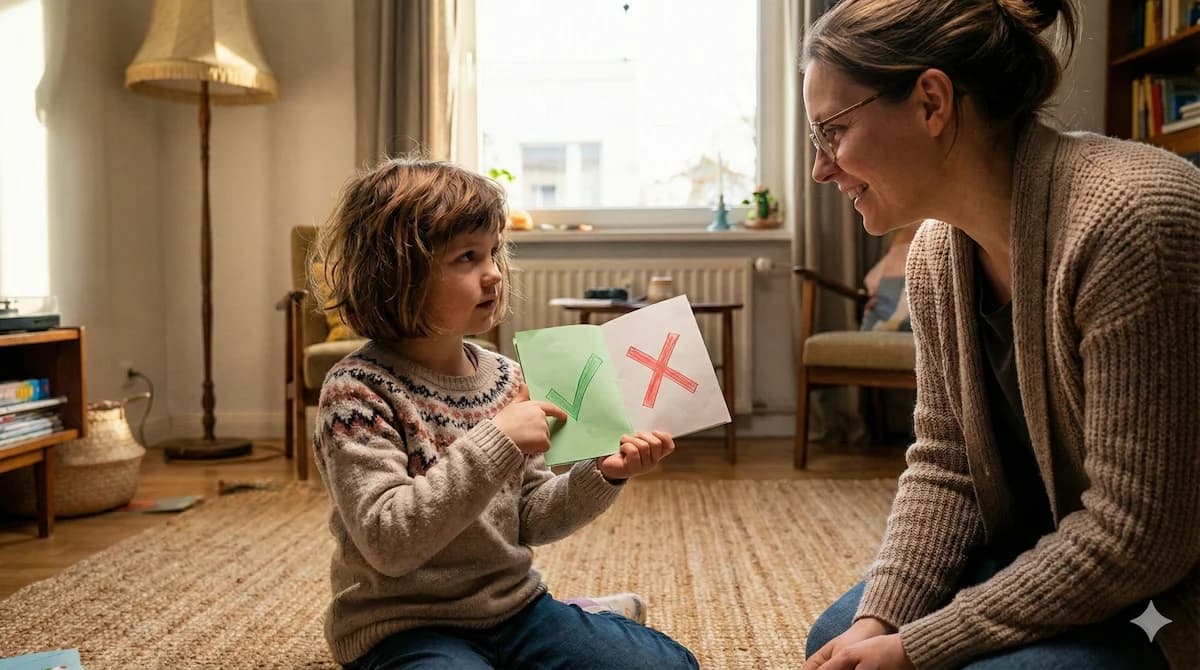
A low-tech AAC board is a simple tool with yes and no options. Adina Levy shares that her daughter made her own board from paper. She drew a tick for yes and a cross for no. This let her share her choice without speaking that day. It is one way to show that all communication is valid.
Transcript
Read the transcriptAbout 31 min read
Laetitia: Welcome to The Neurodivergent Pulse, where we explore the often misunderstood world of neurodivergence with experts, parents, teachers, and therapists. Grounded in lived experience, each bite sized episode gives you something practical to try. I am your host, Laetitia Andrac, AI expert, neurodivergent mum, and founder of Understanding Zoe. This podcast is recorded on Dharawal country. I acknowledge that sovereignty was never ceded. It always was and always will be Aboriginal land. Hello, Adina. Thank you so much for coming on The Neurodivergent Pulse podcast.
Adina: Thank you for having me. I am super excited for our chat today.
Laetitia: I know you're going to give so much inspiration and sparkle to everyone listening to this. We had the chance, as we were talking before we started the podcast, to finally meet in person in Sydney at South by Southwest, which was an absolute delight. But for anyone who has never heard about Adina, in fact, who is Adina? Who are you? A little bit of an introduction about yourself, but also what brought you into this space of building this amazing impact that you're having around speech and reframing everything that's happening in that space.
Adina: I, like many folks who are neurodivergent, I have, it's hard to define myself by one thing. Um, which honestly is why I found myself at South by Southwest conference with you. And for anyone who doesn't know, just go look it up. It's very hard to just define what the conference is, which is why it's so interesting. Um, I am an autistic ADHDer. Some of my hats that I wear, um, I am a speech therapist and predominantly in that world, and that's kind of the hat I'm wearing today, mostly as a professional educator, trainer, podcaster for my business Play Learn Chat. And where I essentially support professionals to understand neurodiversity affirming practices, and, you know, gently and firmly lead people away from some of the harmful, we'll call them old ways, even though they may still happen. Um, and my second kind of professional version of me is as a business coach for Differently Aligned Business Coaching, and I support predominantly neurodivergent business owners to make their businesses fit their lives, and less burnout is kind of should be my tagline maybe.
Laetitia: Yes. Yes, I love it. It is so important, and who has just one business, I'd say, you know? And I'm not one of those, so like, who has just one business? One business.
Adina: And if you ask me the whole journey how I got here, it's all the, you know, the cloud pillows and the crafting at markets, and the speech therapy team, and the, you know, I've done it all. I've been there. Um, and now I see this as like ADHD me. A lot of that was ADHD me, like try something new, try something new. And yeah, why not? And then autistic me going very deep into topics and having the joy to be able to create a world where I can deep hyperfocus and share it and chat with you about this stuff that I'm so excited. You're going to have to shut me up. Like, good luck.
Adina: You know, I respect your message and all of that, and I will just dive deeper and follow going my own beautiful special interest, which is often why, you know, people are like, "Oh, you did a podcast on this. It helped me so much." Like, yeah, it actually helped me out as well because I get to ask the questions that I want to ask. So, let's talk about speech goals.
Laetitia: Is that something that can be sometime in the old ways? I love how you said that because then we're going to manifest for this to be really past in the old ways and not something that we're going to see anymore. Even though it happened still today, but when we say that we'd like to rethink speech goals, when we say we'd like goals to be more affirming, what exactly needs to be rethought and how, what is problematic in this ancient way?
Adina: It's such a great question. Um, and I'm going to do something, a little administrative point. I was think looking ahead and then question four, I think I'm going to tack on to this cuz I think it works really well.
Laetitia: Good for you.
Adina: I just think it makes sense to kind of, um, I'll probably head there anyway.
Adina: Okay. Now, nobody knows what question four is. Let's give people some context. Very narrow division of me. Um, so, just first I want to clarify some terminology. Now, my, um, you know, professional title, my training, um, it's all wrong. I'm a speech pathologist or speech language pathologist, depends where you are in the world. Maybe called speech therapist, speech language therapist. Um, what's common is at least in the English speaking world, this role has the word speech in it. The truth is speech is such a small, narrow part of what we should be doing in our role. But the fact that the word speech is in our title is actually part of the problem.
Laetitia: Yeah.
Adina: Because it's saying it's prioritising speech, as in mouth words, as in the words that my mouth is forming and speaking, as maybe equal or the best version of communication, which is wrong. That's what we need to be throwing out the window. And it really starts with this construct of like our training, our role, our profession, our degree. And so years ago I stopped calling myself a speech pathologist because I did not like this word pathologist. Unless I'm talking to like a medical professional, then I probably will cuz it's my formal title. Okay. But really therapist is a much more affirming word to me and is closer to defining what we do. And the reason I'm talking about all this title stuff is because it matters. So, for families who don't have training, the confusion between speech and language, or what is communication and what are the forms of communication, mean that people are kind of coming to us, or coming to maybe their NDIS planners or to their other professionals, saying, "We need speech. We need speech." But what we all need to work to reframe is we need communication.
Adina: Um, and so I really advocate for actually like shifting our title to like communication connection facilitator. I don't know. I say it differently each time, but I wish that that was it and maybe I can reclaim that or make it happen. Um, so, all of that rant.
Adina: I think that's one of the first things we need to do when we're rethinking speech goals is to clarify that probably most of the time we're actually talking about communication goals.
Laetitia: Yeah.
Adina: Where, where speech, and I can't fault you for this because, like, I'm saying, this is so deeply embedded in the construct of our training and our role, and it's so far off the mark.
Laetitia: Yeah.
Adina: Um, to me, I think what's problematic is that, very often, again, I hope this is always too often, goals, for especially for autistic kids but for all kids, for neurodivergent kids, are around changing how they communicate to meet an ableist, neurotypical expectation, often speech. Um, but thinking about all facets of communication, too often, speech therapy goals that I would love throwing out the window are those that look to have the child fit this neurotypical expectation of how their communication should be, and all of that is about prioritising how normal they look or how comfortable the communication partner is. I'm not saying all of it. I'm being a little, I'm exaggerating a little, but what's very important, where I want to see this go, and this is like the future. This is me heading to question four that I referred to earlier. Um, I think what's so important is that the whole community, and this comes from families, it comes from professionals, it's got to be driven from all angles, that we understand and respect all communication as valid and stop prioritising speech or mouth words as the best form. Yes, it can be nice and efficient sometimes, but even I, as a very chatty speech therapist, um, I have many hours of the day and week where I shut down and, like, ninety five percent of my being does not want to speak. Five percent of my being is capable of doing it, but to push myself to speak at that point is pushing myself to my edge and, therefore, reducing my capability to, like, live, exist, interact, be okay, have wellbeing, you know. And I'm an example of someone who can talk a heck of a lot, but it's not consistent.
Adina: So, there's just so many reasons why speech may not be the best form of communication for someone in a particular moment or at any moment. And it can be physiological, it can be sensory preferences, it can be skill based, it can be due to, um, some, many of us neurodivergent folk have difficulty with various movements. As in, my body doesn't really listen to what my brain wants it to do very much. And for some people, that results in apraxia, where you basically the messages to actually make the mouth do the mouth words just doesn't happen very well, or very effortfully, or, you know, it's not very reliable, or it doesn't happen at all. That's okay in a way, you know. What I'm trying to say is we need to ensure that if somebody has a different way of communicating, we are supporting them to find their best way to communicate in that moment for that person, not for what the world around them is asking. Was that a really long answer to your question?
Laetitia: I loved it. It's a very long answer, but at the same time it is a very comprehensive one. And it's one that I am very aware of, but I know that many listeners may not be aware of how, of course, we see in their own homes that speech is the way, like speaking words is the way that everyone should communicate. But there are so many other ways that one can communicate, and that I have preference to communicate and you have preference to communicate as well. Like, it's really, I find, like for myself a hug will tell me way more than many words. Or yes, you know. Collecting flowers and then creating something with those flowers will tell me way more than a few spoken words. So, yeah, I love that. And the question for anyone who was curious was really around, um, some example of misunderstanding and some example of ways that communication may be overlooked in some of our neurodivergent children and ourselves. So, I really love what you just said. It was really about understanding communication beyond words. So, love everything you said. So, if we have, you know, um, a therapist, and I love that you say a therapist, I, you know, I call speechy, you know, speech therapist. I need to know about the whole, like, speech pathologists. In France, we have another word for them, which is orthophonist.
Adina: Yes. Which, correct me if I'm wrong, does that also refer to sounds and speech?
Laetitia: Yes, it does. Yes, it does. Unfortunately, it's really about how do you pronounce, how do you express, how do you. Like, I was seeing an orthophonist when I was younger, and my brother as well. And of course, later on, an autistic diagnosis happened. But yeah, they call it orthophonist. But how can we, as family, how can therapists learning, you know, the affirming approach, and all that, the affirming parenting, can really support those differences in communication, to honour the child's autonomy, to honour someone else's autonomy, versus pushing, masking, and then, as you've shared, you know, reaching burnout or brownout. Like, what are some ways we can support that? Because I know we all have this internalised ableism. We all have these neuro norms, and I'm one of those people where, you, sometimes I'm like, "Why am I doing this?" You know, going back into my own programming. And then I'm like, "What is this?" And why am I doing this? But how can we help our children and ourselves to embrace other forms of communication?
Adina: I think so much it comes to this question of, I mean, the question you asked yourself is beautiful. You know what I mean? Like, having these ideas of thinking about a child's autonomy, a child's right to be okay in the world. Um, anything that promotes that is probably a good thing.
Adina: Now, I know there's some fuzziness and grey area, and this is where I have a ton of webinars and courses where I help go into the grey area. In terms of, like, you know, if it is helpful for a child and what makes them happy is to, like, scream at the top of their lungs all day long, but a parent is melting down because the sound of that is just not okay for them, there's a grey area, right? Like, we can't just say yes to everything, and I'm not suggesting we separate this out. Neurodiversity affirming doesn't mean we're saying yes or being permissive to everything. It is coming back to a position of first trying to honour and understand what does an individual want and need, and then questioning our expectations of them as well. Like, really checking in, any goal, whether it's a stated goal written on a plan, or whether it's something we just have in our mind, like, I really want my child to put their shoes on right now, um, is that a reasonable expectation for that child in that moment? And the question, then, we check in, we go, and I say in that moment because so often we, our children, and we humans, fluctuate our capacity. What I could do yesterday absolutely categorically cannot do today, cuz my brain is just not here in the same way. Um, what we want to ensure is that the expectations, are we get to question them. We need to question them. Like, is it coming from a place of trying to have that child feel most supported, most comfortable, most self aware, um, or is it coming from a place of I want you to fit in? Is it coming from a place of this is how it was always done? And we don't necessarily throw all of that out the window, but we need to question it. There are some good reasons for fitting in, or for having the awareness that sometimes I may want to fit in a little more. Sometimes I want to be myself a little more. Um, again, grey area, nuance.
Adina: But it's, I think I feel like this might be a little bit autistic me. It might be a little bit like demand avoidant in a sense. I love to question authority. So, this is the bit where I'm giving you all permission, everyone. It's like any goal, any intention you have for yourself, for a child, um, just question it. Like, is it an appropriate, helpful thing for that person in that moment? Why does it exist? Where did it come from?
Laetitia: I love that. And so, for anyone who, um, is going through their goal review with their speech or their communication therapist, communication therapists on this podcast, love it. Change that. You better adopt it. No.
Laetitia: I feel like this is what we're going to call it. But you are sitting with your communication therapist and you're reviewing the goals with them. You're discussing the goals. Let's take some examples of goals that we could reframe. So, rather, you know, speaking is the goal, what's another goal we could reframe? Or, you know, there's this one, oh my gosh, I hate this one, but, like, use your words type of goal. How do we reframe that?
Adina: Yeah.
Laetitia: You know, what could be some ways that we could, as parents, work hand in hand with therapists, because we love affirming therapists, and it's a journey to bring everyone there.
Adina: Yes.
Laetitia: And so, as parents, we also have our mission on bringing therapists through the affirming lens, as well as therapists have the mission of bringing parents to the affirming lens, because I'm sure as therapists while affirming you, they see some parents being like, fix my child. When you're an affirming therapist, you're like, nothing is broken. But so, it's going both ways. So, I'm very grateful we have an affirming therapist working with us. This is the goal. I have some examples, but I'd love for you to share from your expertise what could be ways we could challenge this norm and this status quo?
Adina: Absolutely. The first thing I'll say is, I'm reminding myself here, and um, I'm sure you'll put my links somewhere in show notes, etc. I have a checklist for parents. Well, most of what I do these days is direct support for therapists, for teachers, for professionals. Um, I do have this, and I've heard time and time again it's been very helpful. It's a checklist for parents. It is called, How Neurodiversity Affirming Is Your Child's Team? And this is like, I've got green light, orange light, red light, and it's a prompt to help parents think through, you know, is the team supporting my child, um, affirming? What does it look like? And it's not a definitive thing. It can be a tool as well for having discussions. Maybe, if they're doing pretty well, but you might want to encourage them to do more of something in the green light area, for example. Um, and so that's a resource. You can get that free, and that will be linked somewhere.
Laetitia: Yeah, it will be in the show notes, definitely.
Adina: Beautiful. Um, and, okay, so your question of, like, something, an example of what could a reframe look like? Um, compliance goals sometimes exist, too often exist, where the goal seems to be for the child to do what an adult tells them. Now, again, grey area. Let's go, okay, there's a space for safety. There is a space, like, I have a two year old, um, and I'm working really hard with her at the moment to respond to stop so she doesn't run onto the road. That's a compliance goal where I've questioned and I've gone, "How affirming is that? Am I following her lead?" Not really, because in this case her lead would be to run onto the road. That's a non negotiable safety goal. So, there's an example of where it's okay to question and keep a goal. If a compliance goal is like, let's say, in a therapist's goal plan, where it is, um, the goal is for Billy to sit at the table for ten minutes at a time twice each session, you have to ask why that exists. What is the point of the compliance, like the following the very neurotypical expectation of sitting at the table, existing in a goal? The fact it exists in the goal plan may be a clue that it's hard for Billy, and therefore, what's a more affirming approach to that? As much as possible, it's finding the way that helps you and Billy do the thing that is the actual point. The point is not for Billy to sit at a table. The point might be, I'm just going to throw something out there, for Billy to learn different colour words, but, you know, there's a hundred ways to do that. You don't have to do it with a boring worksheet. Um, that's one very specific example, but I'm sure you can extrapolate that in any direction. So, if Billy likes to run around, how could you incorporate the running around with the actual activity and make it fun and make it engaging. And also, how can you help Billy meet those sensory needs, all those preferences, or engage in those interests, not in a coercive way, but in a connected, genuine interest way. Like, yes, do tell me about the AFL, like the football. And I'm so curious. Like, tell me about your team that is the favourite. Why are they so awesome? I, like, I'm not using it as a little carrot, like, got to go chase the, why is the carrot the thing that kids would in that analogy? That makes no sense to me. That's a carrot and a stick. Maybe it's a chocolate, you know. Like, we're not using what they love and what their bodies need and what their brains want to think about in a reward based way as much as possible. Rather than do the boring thing, then let's do what you want. How about, how can we genuinely use what a child wants to do, how they want to learn, incorporate that into the action, into the actual thing. And, oh my goodness, the stuff we can learn from kids when we take a moment and stop getting them to just listen to us, is awesome.
Laetitia: Yeah, and I, you know, I will definitely link in the show notes, um, the fact sheet around green lights, orange, and red light. But, some things that straight away I saw, so, after having different experiences with communication therapies, like speechies, um, the one that we have at the moment, that is absolutely amazing and super affirming, in, in the first two seconds I knew.
Laetitia: Because as soon as they arrived and they opened the door, straight away they asked, "Zoe, how would you like, where would you like the session to be?"
Adina: Nice.
Laetitia: And I was like, tick. Because sitting at the table and doing the exercise on a boring worksheet, as you described, is not the way
Adina: Yeah.
Laetitia: she is going to learn anything during that session. So, other parents, I loved this. And every time she comes every week, it's like the same start, you know.
Adina: Same.
Laetitia: Where would you like us to do the session today?
Adina: And that is just a thought reframe. Because the sitting at the table was never the point of it, was it? Unless it was a valid move from, again, we'll go, therapists of the past. You know, I need to control this situation. And checking, like, you know, questioning everything, why we're expecting something of a kid. Power moves from adults is one that can be sometimes hard to face, but do look out for those.
Laetitia: Yeah, and those, those is all about why this kind of posing for moments and just questioning. And yes, we love questioning as neurodivergent folks, but there is power in that questioning, in changing ways that maybe ways of exclusion and discrimination. So,
Adina: Yeah.
Laetitia: Amazing. So, I think I would love to ask you this question, which is really about a vision for change. And one message that you would have for professional bodies, for policy makers, for anyone who works in the space of speech therapy or communication therapy, what would it be? What would be that message of love?
Adina: You're probably going to have to cut, cut me off, cuz I may get ranty here. I'm
Adina: I love the question, cuz I'm like, "Okay, let's go." Um, the other thing I want to notice, is at, or just point out, is a pattern matching thing. Patterns and matching makes me very delighted. As I was writing my notes for this, looking at your questions, what came on my playlist, which has about a hundred songs on it, was the song "A Change Is Gonna Come," or is it just called "Change"? I don't know. Um, the version I was listening to was by the Fugees. And literally some of the words, and I have to hold on to this, I'm not going to sing it for you, it's been a long time coming, but I know a change is gonna come. And I love that. First, it's a great song. Secondly, it's a hopeful vibe, because I can get very, very outraged at some of the ways that the policies and, uh, professional bodies and our governments is handling things right now and always. Um, but I have to hold a shred of hope. I'm generally an optimist. So, when I kind of step back from my rage, I've got to hold on to this. Things are shifting in the right direction. Um, the other thing I have to say is, we, anyone in this world, anyone who is neurodivergent, disabled, parent of, um, dealing with any of this, you also sometimes have to look after yourself and step back and play Candy Crush or something. Like, this is so deeply hard and frustrating. For example, things like constant cuts to the NDIS that is supposed to be there to support disabled folks to be okay. The NDIS, as an idea, great. The execution is getting eroded and eroded and eroded, and I don't want to go into the depths of it, cuz we only have a few minutes, and also there are other places to go and do that, and I need to do a bit of self care too. Like, it's really, really hard time. It's always in flux, and this feels like a particularly bad moment, where, um, disabled rights are just being chopped away. Funding is being, uh, disabled folks are basically being told we cost too much and we should probably stop asking for anything at all, because even just asking for a little bit is too hard to maintain for the government. Even though that's what they were supposed to do. So, I'm going to breathe through a bit of that. We've named it. You can go and think about it, and, um, do advocacy and listen to other folks who are talking about it more, as needed, because it's really important. It's really hard. Um, also close to my world and heart has been Speech Pathology Australia, our professional body of speech therapists. I'll say I now, um, have the pleasure of sitting outside of them, because I don't directly work with clients, because I now do professional development, training, education, etc. I have the joy, I can be a bit critical, cuz I have no fear of them. Um, and honestly, they are excellent at talking the talk and doing absolutely nothing to reflect the commitments and the values that they claim to uphold. And just in preparing for this, I had a little memory, and I thought, one of the things that every year has come up is I've been very vocal to Speech Pathology Australia year after year that they need to make their conference accessible in many ways. One would be making it both in person, as it is, and accessible online. And when I say accessible, this would mean more speech therapists could attend this, I believe, very good, comprehensive, important event, um, whether they are disabled, whether they're neurodivergent and get very overwhelmed by in person events, travel may be hard, families, small business owners are excluded often because it's just so hard to take time off your own business to go to this, rather than being part of a government body that will send you into these conferences, or, um, you know, uh, just the costs are very, very, very high. It's completely inflexible and inaccessible. Year after year I've been at them about this. Um, and they literally have values, I'm looking at it now. They say they are inclusive, we are respectful and strive for equity. We ask the right questions, we inspire innovation as part of their proactive goal. They're responsive, we listen, show integrity. They do none of this. And they continue to have this very, very neurotypical, bog standard way of hosting events and excluding anyone, and they pretend to listen, and every year you get the reply, I say, "Oh, yes, yes, we've taken it into consideration." Um, it's just not good enough. Like, for a body that represents being able to connect and communicate with people, they don't. And another very small, frustrating for me example of it is, um, that you can get, they have a podcast, you can get a transcript of their podcast episodes. To do that, you have to send them an email, request it, and wait a few days, and then they will send you a transcript. This is our national body that represents accessibility and communication, and, you know, um, when I put out a podcast episode as a solo business owner, I put the transcript up on my website. It's not that hard. And two years ago they committed to, uh, they were working on it, apparently. Um, so I actually emailed them again today to follow up on that email from two years ago to see where they are. It's just not good enough. Like, yeah. It's such a joke that these big organisations, these government bodies, they're like untouchable. They can say whatever they want. They can do whatever they want. They can pretend all they want to actually want to look after marginalised, neurodivergent, disabled folk, and do nothing to actually live those values. I'm going to pause my rant there, for everyone's sake.
Laetitia: I think, thank you, Adina, and I think it's important to share those points around the change and what you're willing to see shifting. And what I truly appreciate in the community, and in everything you shared, is, like, we take action. We're not just talking about change. We're asking for that change. You've sent those emails. You've mentioned those elements. So, this is actually an invitation for everyone who's listening to your words, to what you shared, write this email. Like, if you have extra spoons that day, just make sure you're standing out, because the fact that you're standing out will help others in the future. And if you're listening to this and you're not identifying as neurodivergent yourself or as disabled, just be an ally and call out when something is not good enough.
Adina: Yes.
Laetitia: And, you know, save some spoons for us, where we don't have to then be the one having to do it. So, I think that's kind of a beautiful message in all of this, which is, you've done all this work, but if someone else was listening to this, wants to email also those professional bodies, wants to email also, uh, NDIS, wants to take action, you can do that for me. And just because I'm French and a revolutionary and always someone who is an activist and doing things, that I do it, it's because I think if I don't do it, I feel I'm letting down the community, and I'm letting myself down and my family down. But I know that some of you may not have the spoons, but what about someone who has extra spoons? Please, today, step in and do that. Okay, so, on that front too. But, let's get into one thing that you've witnessed that made you stop, that this is what true communication support looks like.
Adina: Yes. I thought, oh, I could think of a hundred ideas. And then, what popped into my mind was something my daughter, Zoe, I don't think we've even discussed the fact that we both have Zoes.
Adina: She did something a couple of weeks ago which reflected to me that I think we're showing a great model of this idea that all communication is valid. So, she has a notebook and some pens in her backpack in case she gets to school a bit early. It gives her a thing to do, just, she might feel like drawing or writing or something. Um, so, she came home one day and showed me a bit of paper she'd torn out of it. And it had "yes" with a tick on one side, and I think "no" and a cross on the other side.
Adina: And I said, "What's that?" And she explained that that morning she just didn't feel like talking. So, she made that for herself. She literally made herself a low tech AAC board with a yes and a no, so that she could point to the one that she wanted to show her friends, so she could communicate with them. There was no stigma. There was no hesitation. She had this idea. I haven't ever shown her something exactly like that, but she's seen versions of high and low tech AAC over the years. And she just, not only did she think, "Well, I don't feel like talking, so here's another way I communicate. I can communicate." So, she did that. She also, like, she was an advocate then, you know, spreading it to her friends, these other five year old kids, um, you know, sometimes I don't want to speak and I can also join in in this other way. I love the innocence and the amazing simplicity of kids to just be able to go, like, you know, there's no shame, there's no stigma, there's, it's just, I didn't feel like talking right then. I found another way. How beautiful is that?
Laetitia: I love it. It is so special. Kudos to Zoe. I love it. This is so creative. And this is where indeed it's the modelling, it's the fact that she's safe to do that, and all of that. So, there is so much goodness in there. Thank you for sharing that with us. So, I just want to make sure, for anyone who is listening to this, that they can connect with you, they can, you know, go and follow your beautiful content on both your page on Instagram and so on. Can you share with them all of this within the show notes, how they can connect with you and all about your work.
Adina: Yeah, so in my Play Learn Chat hat, that I've mostly appeared in today, um, and I have a few things, depends who you are and what you want. I've got the checklist for parents, as I said, How Neurodiversity Affirming Is Your Child's Team. Um, I have a couple of free webinars, one specifically for speech therapists called Turning Affirming, one for all professionals supporting neurodivergent kids, to kickstart your neurodiversity affirming practice journey. I have other freebies, like, I love doing that sort of thing. I do also have courses, webinars and so on, but I think there's a lot, I love sharing this stuff. I also have a podcast called Exploring Neurodiversity. And then, in my other hat, if you are a neurodivergent business owner or an allied health professional thinking, how can I do business differently, I am burning out, go and visit me at Differently Aligned Business Coaching, and my podcast, Differently Aligned, is for that business. And yes, there's so many links, and I'm sure Laetitia will sort you out with them.
Laetitia: I will, for sure. Thank you so much, Adina, for coming on the podcast today and sharing your amazing experience, and, yeah, everything you do. It's fantastic. Thank you.
Adina: Thank you for having me, and the conversations you're hosting so far are just so fun. I'm enjoying listening, and I love what you're building. So, um, and I love that we both have Zoes. We did very well.
Laetitia: We did very well. Crazy, crazy. I didn't know that. Like, we had many chats and I didn't know your daughter was named Zoe, hey? So, Understanding Zoe is for everyone, not just the Zoe of the world. It's really meaning life. It's for everyone who is living, for now. So, yeah. Thank you for today.
Adina: Thanks, Laetitia.
Laetitia: Welcome to The Neurodivergent Pulse. We're joined by Zoe for a quick pulse check. Zoe, what do you think makes good communication between kids and adults?
Zoe: When we don't get angry at each other and blame each other for things that we did ourselves.
Laetitia: Thank you for sharing. That's beautiful, Zoe. And I'm curious, what helps you in your classroom, for instance, to understand what's expected of you without spoken words from your teacher?
Zoe: Signs that help me in the classroom, that's like, say, when it's my turn to speak or when it's my turn to do stuff.
Laetitia: Yeah, to feed the fish.
Zoe: Yeah.
Laetitia: To go and clean the kitchen. Like, what do you do? What are the kind of things you're doing in your classroom where you have signs for?
Zoe: Um, like jobs.
Laetitia: Yes.
Zoe: Jobs, we clean up, um, one area for each person.
Laetitia: Cool.
Zoe: And we've got a sign to tell us to do
Laetitia: That's amazing. Do you like that?
Zoe: Yes.
Laetitia: Great. Thank you, Zoe. That's a wrap for The Neurodivergent Pulse. If this helped, follow the show and leave us a quick review on your favourite platform. You can even share this episode with someone who needs it. You can learn more about our platform at understandingzoe.com.
Subscribe to The Neurodivergent Pulse.
Follow the show so a new episode finds you. It's free.

More episodes
View all
Every voice matters: AAC, authentic communication and choosing your own language with Kayla Ireland
14 min
Supporting communication through connection with Alana Cameron
23 min