Neurodiversity Celebration Week Special Episode: Neurodivergent allyship & affirming resources with Adelle Sushames
Hosted by
Laetitia Andrac
Host of The Neurodivergent Pulse, CEO and co-founder of Understanding Zoe, and a neurodivergent parent.
With
Clinical Psychologist, NeurodivergentAlly
Psychologist with 18 years of experience, the last decade of which has focused exclusively on Autism and ADHD assessments and therapeutic supports.
The Neurodivergent Pulse is Understanding Zoe's podcast for families raising neurodivergent children in Australia. Hosted by Laetitia Andrac, each episode is an honest conversation about autism, ADHD and everyday family life. In this episode, "Neurodiversity Celebration Week Special Episode: Neurodivergent allyship & affirming resources with Adelle Sushames", you'll hear practical, neuroaffirming ideas you can use today.
Key takeaways
- What neurodiversity-affirming practice really means beyond training or theory
- Why outdated resources and language can harm neurodivergent individuals
- How spoon theory helps explain energy limits and capacity
- Why autism is not a linear spectrum but a dynamic wheel of experiences
- The importance of recognising missed diagnoses, especially among girls, women and adults
- How tools like card decks can support communication, reflection and self-understanding
- Why allyship from families, professionals and communities matters in creating neuroinclusive spaces
Watch this episode
Prefer audio? Listen on Spotify
Loading the player...
Chapters
- Welcome and introducing Adelle Sushames
- Why she created neuroaffirming card decks
- What neuroaffirming practice really means
- The autism spectrum as a dynamic wheel
- Who gets missed in autism diagnosis
- Living with combined autism and ADHD
- How the card decks work in practice
- Mindset shifts for a new diagnosis
- Where to find Adelle's resources
Show notes
What does truly neuroaffirming support look like in practice?
In this insightful episode of Neurodivergent Pulse (and special episode for Neurodiversity Celebration Week), Laetitia sits down with psychologist and resource creator Adelle Sushames, founder of Neurodivergent Ally.
With nearly two decades of experience in psychology and the last decade focused exclusively on Autism and ADHD assessments and support, Adelle shares how frustration with outdated, deficit-based resources led her to create tools that genuinely reflect neurodivergent experiences.
Together, they explore the concept of spoons and energy, the importance of neuroaffirming language, and how tools like Adelle’s card decks help children, teens, adults, and families better understand their needs.
This episode is a powerful reminder that communication, understanding and allyship are at the heart of supporting neurodivergent individuals.
✨ Try Understanding Zoe free for 7 days – the neuroaffirming app turning every report, observation and meltdown into an actionable next step.
About the guest
Adelle Sushames is a psychologist with 18 years of experience, the last decade of which has focused exclusively on Autism and ADHD assessments and therapeutic supports.
Adelle is also the creator of a range of widely used neuroaffirming resources including:
ND Me
Spoon Thieves
Spoon Savers
Spoons @ School
These tools help neurodivergent individuals explore energy, needs and challenges in ways that support communication and understanding across home, school and therapy settings.
Her work is informed by both professional expertise and lived experience. Adelle was diagnosed AuDHD in her early 40s, deepening her commitment to creating resources that truly reflect neurodivergent lives.
She is also the author of the children’s book:
📘 Strong and Sensitive: A Tiger Tale about Autism and ADHD (for ages 5–12)
Through her platform Neurodivergent Ally, Adelle supports families, clinicians and educators in building more affirming environments for neurodivergent people.
💻 Website: https://www.neurodivergentally.com
📸 Instagram: @neurodivergent_ally
About the host
Laetitia Andrac (Autistic & ADHDer) is an award-winning entrepreneur, international speaker, and podcast host.
She is the bestselling author of Light It: How to Trust Your Intuition and Build a Thriving Business. With over 15 years of experience in consulting, strategy, and innovation, Laetitia has worked with industry leaders like Deloitte and Telstra.
Inspired by my journey as a neurodivergent parent, she co-founded Understanding Zoe, an AI-driven solution dedicated to supporting caregivers of neurodivergent children.
Her passion is creating a more neuroinclusive world, where everyone can thrive—whether in their homes, communities, or workplaces.
Frequently asked questions
What does neuroaffirming practice actually mean?
Neuroaffirming practice starts with truly believing that different brains are natural, not wrong. It takes ongoing reflection, because ableist beliefs from childhood run deep. Once you make that shift, you keep doing the work. Then affirming language and expectations start to feel simple.
Why is the autism spectrum described as a wheel?
The autism spectrum is not a straight line. Support needs and traits can shift from day to day or week to week. A wheel shows every area of functioning at once. It does not rank people along one line. It also recognises that a difference can still be disabling for some people.
Why are girls and women often missed in autism diagnosis?
Girls and women have traditionally been left out of autism research and screening. For a long time, professionals believed autism was far more common in boys. New research shows the gender split is actually close to equal. People are also missed when they do not have other, more obvious conditions. Their traits often get explained away as anxiety or a learning difference instead.
How should the card decks be used?
The cards work like a feedback loop between communication and understanding. A person looks through them alone or with someone else. They sort cards into groups, such as always true, sometimes true or never true. This works best when someone is calm and able to reflect. The cards are not designed for use during a meltdown or a shutdown.
What mindset helps families through a new diagnosis?
Getting a diagnosis can feel like a huge, emotional process for families. It can still feel emotional even when the result is fully expected. It helps to remember your child is still the same child they always were. A diagnosis simply gives you a tool to help you parent and advocate for them. Many older adults say a late diagnosis finally helped them understand who they are.
Transcript
Read the transcriptAbout 29 min read
Laetitia: Welcome to The Neurodivergent Pulse, where we explore the often misunderstood world of neurodivergence with experts, parents, teachers and therapists. Grounded in lived experience, each bite-sized episode gives you something practical to try. I am your host, Laetitia Andrac, AI expert, neurodivergent mum and founder of Understanding Zoe. This podcast is recorded on Dharawal country. I acknowledge that sovereignty was never ceded. It always was and always will be Aboriginal land.
Laetitia: Hello Adelle. Welcome to The Neurodivergent Pulse podcast.
Adelle: Hi Laetitia, and thank you. I know that today everyone who listens to this will have a moment of highlights, because every time I hear you speak or you share some insights, it's always a moment of a light bulb in my brain.
Laetitia: So before we start this interview, you created Neurodivergent Ally based on frustration with the lack of neuroaffirming resources, and so many other things that I would love for you to share today. Because I would love for you to share about what you're seeing in your clinical work that made you think there is something that is missing, and we have to do something better about this.
Adelle: Yeah, absolutely. So, in my clinical practice, I work with children right through to adults. And so, from a resource perspective, that can be difficult at the best of times, because there aren't too many things out there that you can use with both children, teens, and through to adults. And then when you add neuroaffirming practice on top of that, it makes it even more tricky to find what you're looking for. Because back when I started creating the various card decks, so four or five years ago now, neuroaffirming practice in Australia was really just starting to take off. It was quite new, at least that's my understanding. So you know, the card decks that you could find were either just aimed at children, or mostly aimed at children, and they were very, I guess, not affirming in the language that they used. And the same was true for various workbooks and worksheets that you might use with children right through to adults. So that was just a wall I kept butting up against when I was trying to source resources. They used language that I didn't want to use in my sessions with clients.
Laetitia: Yeah, I love that. And actually, Spoon Thieves or Spoon Savers, a really powerful deck, I remember discovering it from your work about two years ago. It was just very insightful for me to use those decks. Before I go deeper into this podcast, I would love to ask you what is your own definition of neurodiversity affirming, or neuroaffirming, practices?
Adelle: Yeah. Okay, that's a tricky question. I think for me it's, you have to really, at your core, believe the neurotype model of different brains, and that different brains are natural, and that they're meant to be the way that they are. It's not a disorder or a pathology that's going on. Because until you fully believe and really lean into that, which isn't just one step or one process, but it's continually remembering and questioning and reflecting, because we all have those really traditional ableist beliefs that have been very strongly embedded in us from our childhoods. But when you get to that point where you are able to see that, make the shift, and then continue to do the work, that's when affirming practice becomes a lot more straightforward and simple, because it just, I guess, seems obvious in the language shifts and the expectation shifts. So, you know, you could do a lot of study on affirming practice, and there's lots of courses and webinars and speakers out there now, which is wonderful, but I think even without a lot of that, you can still do the work on your own, at your own pace, and make a difference.
Laetitia: I love what you just said around ableism and internalised ableism, because I definitely felt the internalised ableism for quite some time, and still to this day I have moments where I react from a place of negating my own needs, and being, "Oh no, you don't really need to ask for this accommodation, you know, you will cope with it, like nothing's wrong with you." It's just like this kind of thing where we just, we take that in. And yeah, it's beautiful. And for me, the journey towards neurodiversity affirming, or neuroaffirming lens and approach, has started only two years ago, and it's been a big journey of self discovery, self learning, and as you said, you know, learning from different beautiful humans who are doing this work. So thank you so much for being one of them, really, really grateful for that.
Laetitia: So let's talk a bit about understanding the autism spectrum, because we hear a lot of families talking about spectrum and they just imagine this as a steady line. You know, I've heard, like, so many people being like, "Oh, you're on this side of the line or on this side of the line," and they use wording which is actually not so affirming. So, can you unpack for everyone who's listening to this, what does it look like in your own interpretation of the spectrum? Because I think it's a beautiful way that you express it.
Adelle: Sure. Yeah. Look, I think essentially we have to remember, like you said, it's not linear. It's not at all linear and it never really has been. I have seen some really nice colour wheel representations, with a pie graph showing all the different areas of functioning, and how capacity can really fluctuate day to day, or across a week, or across a month, or whatever unit of time you want to use to measure that. But yeah, at its core, looking at all of the different ways that a person thinks and perceives and senses and functions as being, you know, on that continuum, but it's not a linear continuum, and that it can vary so much, is, if you have your mind around that, the rest is not so difficult.
Adelle: I don't really like the term "on the spectrum." I think that it's kind of been taken over as a phrase that people use when they're trying not to cause offence by just saying simply somebody is Autistic. And I think it's kind of like, you know, neurodiversity and neurodivergence has become a very kind of marketable term now as well. But it's also being misused when people will, instead of saying neurodivergent, they will say somebody's neurodiverse.
Laetitia: Oh my gosh. Yeah.
Adelle: Doesn't really make much sense, because the meaning of the word, you know, I mean, neurodiverse describes everybody, and so therefore it kind of also describes nobody, and it's not specific enough for what we're trying to capture with that term. And I think I would also say that recognising that although something may not be a disorder, it certainly can be disabling for people. So we have to recognise that for some Autistic people there is a significant amount of disability, and then for others not so much, depending on their supports and their needs, and that's okay, wherever the person sits within those two points. So yeah, I think the autism spectrum, or autism more specifically, is far broader than what we think. I think that the diagnostic criteria don't really capture a great many Autistic people, and that there are many more of us out there than what the stats lead us to believe.
Laetitia: Yeah. Oh my gosh, it's a beautiful segue to the next question that I have for you. But let's just double click on this wheel. I definitely found some representation like this and I was like, this is it. This is how it feels, like this different elements of life where you may require more support, and other where you may not require support. And actually seeing it as a wheel, a colourful wheel, felt way more aligned with my own experience of my own autism, and also the experience that I witness in my own daughter. But, you know, it's limited to that, if that makes sense. I am not a clinician, I'm not saying, many people. But yeah, it's really a beautiful one. If you have one that you really like, just share it with us and we'll put it in the show notes. I know personally I have seen one from Sony that I really love, their wheel was very relatable. So I'll link the one from Sony, but if you have one that you really like, feel free to share it with us.
Laetitia: So there is something that I'm really passionate about, because with understanding, the way we leverage artificial intelligence, but in a way that's different to the traditional large language modelling, which reproduces biases that exist. So for instance, if you go on some of those large language models, and you ask for a representation of an Autistic individual, of course you will come back with a white male child, mostly with glasses, redheaded, unfortunately, most of the time, and quite skinny, who doesn't look happy, not smiling, all of these kinds of stereotypical things. And it took me about 150 iterations to finally get another representation, and I did this about a year and a half ago, so maybe now the models are a bit better. But unfortunately, this is something that not just AI represents. It's also in lots of families' and lots of people's interpretation of what autistic people look like.
Laetitia: And so I would love for you to share with us who is being missed, what has been your experience in your own clinic, in your own experiences, and what are the consequences of those people being missed.
Adelle: Yeah, sure. I think so many people are missed, and there's some recent research that has come out really backing that, showing that in fact the gender difference in diagnosis is not accurate, and we've always been traditionally taught that there are more Autistic boys than girls. It's always boys and girls, not men and women, in the language that's used. And that contributes to this, you know, misperception that autism doesn't exist beyond 18 years of age, for instance. But we're now starting to see that actually the gender representation is far more equal. So traditionally we have absolutely missed girls and women from diagnosis and screening. And I think often individuals that don't have a co-occurring intellectual disability, don't have communication difficulties and so on, or who may also be gifted or have other forms of neurodivergence co-occurring, will be missed. And those that have mental health diagnoses will often be missed, because everything just gets lumped in and explained by, "This is your anxiety," or, "This is your learning disability," and people don't look any further.
Adelle: I think there's a lot of, I guess, disagreement and conflict in the Autistic community at the moment around the use of the term "profound autism," and what that is, or what it might mean, and how individuals with high support needs are viewed and how they're supported. And how, you know, the situation where, for instance, somebody like me, who has quite low support needs, I use my voice on social media, and I talk about my experiences and those of my family and my clients, how does that impact the voices and the representation of those that have much higher support needs? So there's a lot to think, there's so much nuance to it. It's very hard to kind of concentrate it down into a neat, concise answer. But I think, in terms of the impacts, there are so many impacts. People don't have a sense of identity. They don't understand who they are and what their needs are. They think that they are broken in some way, or that it's a mental health problem that they just haven't been able to fix even with loads of therapy and medication and so on. So it can impact, I think, every aspect of life for the individual and their family, and their experience of, and their ability to participate in the community and be part of their community as well. So you couldn't really put a nice, neat box around, well, what are the impacts, because you could go on and on about that.
Laetitia: Yes. And I will also link this research that you mentioned, because I've read it as well, about how after 18 actually the percentage of autism in those who identify as girls and those who identify as boys are actually becoming equal, when indeed early childhood identification may be delayed in girls. And that's been my personal experience, but it hasn't been the experience of my daughter. She was assessed quite early in her childhood, because she may have presented in ways that would require more support needs. So this is really an interesting topic that you open here, around the community and how we all feel in the community, and I think as we all come together it's about making sure that there is greater understanding and greater acceptance and awareness. And I think that's powerful, and that's where we all align.
Laetitia: And so, yes, that's beautiful, and something that you said at the beginning around the neurodiversity aspect, and how, with you know, Neurodiversity Week, which is happening on the 17th, and maybe we'll air this podcast for this, actually really sharing how neurodiversity is part of being human, and how we honour biodiversity, how can we honour neurodiversity? Do you want to add something to that?
Adelle: In terms of how we honour the neurodiversity in the same way that we might, yeah, in other aspects, I think, you know, as a society we just need a complete shift. There are so many of us working in this space, and parents parenting in this space, that have done so much work and have made such a difference in their own little, I guess, fish pond part, you know, of the larger world. But there's still so far to go, and you only need to spend five minutes on social media, for instance, or out in the community overhearing conversations, to realise that actually the majority of people in the world are still thinking about autism and other forms of neurodiversity in very outdated, stereotyped, pathologising ways that aren't helpful. So yes, there's still so much work to do.
Laetitia: Being one of those working in this space, actually your work, as you identify yourself as Autistic and an ADHDer, your work is shaped by this intersection. And so many families, we know that from the families using Understanding Zoe, have children with both elements, both assessments from autism and ADHD, and we also highly index on PDA. So feel free to add PDA if you have any expertise on PDA. I know in our family we have PDA, and myself, PDA. So yeah, and the experience often feels harder, I would say, because there is not just one approach, it's an easy intersection. So would you like to share a bit more, either from your lived experience or from what you've witnessed among the many, many families, children and adults that you support, what makes it distinct, the experience of having this intersectionality, and how do we affirm this intersection rather than just saying, "Oh, it's too complex"?
Adelle: Yeah. Look, I think being an ADHD is inherently chaotic, because, you know, people say, "Oh, you've got these two, you've got your autistic brain and your ADHD brain, and they're at war with one another." And I mean, I don't experience it like that, and I don't think many people do. I think that's an oversimplification. But certainly it means that, whereas somebody who just has an autistic brain style may always need routine and predictability, and may always become distressed when that doesn't happen, whereas when you have that combined ADHD neurotype, then novelty, change, unexpected things happening, may upset the person, because they prefer that routine and the sameness. Or it may give them that dopamine hit where they're like, "Wow, this is actually really cool, what's going to happen next, like I'm on the edge of my seat, let's see where this goes." So you cannot predict that, and that's what is difficult, because we know that strategies that work consistently for Autistic people don't have that same impact for ADHDers. You know, a strategy is only ever time limited for an ADHDer, usually it's never going to be, "This is how I've done this my entire life and will continue to do it because it always works."
Adelle: So then when you combine those two things, as a parent or a caregiver or a teacher or a therapist, you have to just be really on the ball, which, if you're ADHD yourself, you often do that quite well, because it leans into that ADHD side of, you know, creative problem solving and quick thinking and all of that. But it can be very tiring as well. But you just have to try and be in that middle ground, to be the one that's flexible in how you manage and how you contain different emotions and experiences, because the child or the young person, they can't do that yet. So they rely on us to do it. So it is, yeah, it's a lot, because our nervous systems often also need, you know, some downtime and time to regulate and consistency. So yeah.
Laetitia: Yes. And this, I think, is one of the main experiences that I have myself, which is, how do I give myself the regulation I need? Because when I am regulated, I am open to co-regulating with Zoe, and I'm open to meeting her where she needs, and I understand her potentially really well because of my, you know, neurotype, which is similar to hers, even though we all have unique experiences, and as we discussed, you know, it's a wheel. So we are all in different places in terms of our support needs and our experiences. But I feel when I am dysregulated, it's so hard, and that's where making space for my own regulation, or finding ways to communicate with her differently, is really helpful.
Laetitia: And that's where, you know, it's a beautiful segue to the cards. I love cards, so I created my own oracle card deck with my previous business, because I've always been very spiritual, and I love, you know, oracle decks and tarot decks. I grew up in a family where my grandma would use the Marseille, or tarot, deck. So, I'm just, you know, into decks a lot. And I know that for us, it's been really helpful to have those cards, and this kind of physical expression. So, when you are not in capacity to use different modes of communication, actually the card becomes a beautiful mode of communication.
Laetitia: So would you like to share with us a bit more about the cards, because they were designed specifically to help neurodivergent folks understand and communicate together with an affirming lens? So how do they work in practice? How would you recommend anyone, and of course we'll link them in the show notes, how do you recommend them to use it? How do you use it in your own clinic, or another clinician who may listen to this, or teacher, how can they use it?
Adelle: Sure. Yeah. Okay. I mean, I think it's interesting, because I get this question relatively often, from people that are interested in getting a set of the cards, and it gives you a little clue as to where they're at in terms of their practice or their understanding. But sometimes they'll say, is it like a communication deck where they can give you a card to communicate? And that makes me think of, like, PECS, the Picture Exchange Communication System, that is a very separate idea and purpose. And I'm like, well, it's not, I mean, they can use it in that way. If, you know, they're at the point where they're not able to communicate verbally, then yes, of course they could hand a card and that will meet that need, but really, more broadly, the cards are about communication and understanding. And I kind of picture it like a feedback loop. So, the communication is happening, that increases understanding, that brings about more communication, then we get more understanding. And so, that's the underlying purpose of the cards for me.
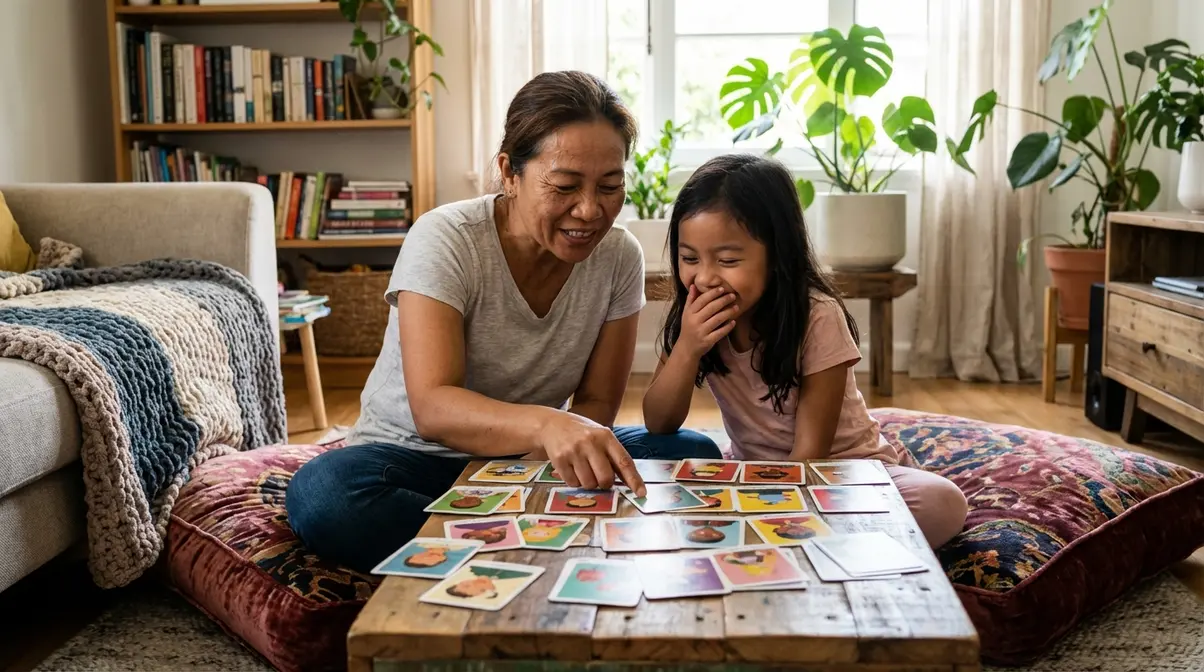
Adelle: And that's true whether we're talking about Spoon Thieves, Spoon Savers, ND Me, or the school cards that I've done more recently. They all have that core goal, that the person can look through the cards, either on their own or with somebody else, and develop some understanding around what it is that they might be experiencing, what it is that they need, and how to get that need met. So, for a lot of people, you know, you might pop them on the floor and do that with kids, or teenagers, or you can have them in a deck in your hand, and they can be kind of making categories or piles according to what's true, always true, never true, sometimes true for them, or what impacts most, along whatever, you know, rating system that they feel comfortable using.
Laetitia: I love that. And you know, it's something that, doing it from a place of again being regulated, is really helpful. So I know we worked on what are the things that are taking our spoons away the other day, and just sitting down and doing this exercise really helped, you know, discovering what is taking our energy away, and then what is filling our energy. So, we were using the analogy of the window, because for me, you know, I like, Zoe would understand better if I show, like, the window being fully open, and then the window closing, and then at the end of the day sometimes feeling like my window is actually super, super, super, super closed. So, it's very well isolated and isolating. So how can we reopen the window? And sharing about, okay, having a bath helps me open a bit the window, having a moment where I can go for a walk barefoot is reopening the window. So, doing it from a place of regulation was really helpful, whereas using it in a moment of dysregulation was not so helpful, in our own experience.
Adelle: 100%, and the cards, they really weren't designed to be used during a meltdown or a shutdown, or when somebody's, you know, feeling overwhelmed, there's too much sensory input happening. Yeah, not really designed for that. More, as you say, for when the person is regulated, when they're able to be self reflective, when they're able to answer questions or be curious about things. 100%, I wouldn't suggest using them in any other way, shape, or form, or you might have them thrown at you rather than starting a conversation. I think we don't want to build up a negative association with a resource. It's important to approach it in the right way, and as the parent or the therapist you will often be able to tell when that is.
Laetitia: Yes, I'll definitely link those cards in the show notes. And for those parents or carers who are listening, and they're just navigating a new diagnosis, a new assessment, either for themselves or for their child, what is one of the most important mindset shifts that you've noticed could support them, or their family, or their children, in the journey?
Adelle: Look, I think it's important to acknowledge that for many families this is such a huge process to undertake, and for adults too, if they're pursuing their own diagnosis in their 30s, 40s, 60s or beyond. I hear from a lot of older individuals that have just been diagnosed, you know, in their 60s or in their 70s, and they talk about what a relief it has provided to them, to finally understand who they are, and to give themselves permission to access the supports that they need, and things like that. But I think for families with younger children and teens, it's such an ordeal to go through, and the anticipation of the outcome as well factors into it. And even if a family is 99.9% sure of the outcome, it can still be an emotional situation when they're actually given that news. And so I always remind families that your child is still the same child that they always were, but now you have a tool that's going to help you to navigate parenting them in the way that they need to be parented, and to advocate for them in school, and to help them understand, as they grow older, who they are. And that, you know, that's one of the biggest gifts that you can give your child. And so, you know, we need to be, I guess, thankful about that ultimately, because, you know, the alternative is not so great.
Laetitia: Which is actually the term, like the name that you go with on Instagram, Neurodivergent Ally, which is really this allyship, and being here for your children and for everyone who's going through the journey. By the way, how did you come up with Neurodivergent Ally? Do you want to share the journey, your original journey on that?
Adelle: Yes. So, when I originally released the cards, I did them just under my clinic name, which is Nurture Clinical Psychology. So, the people out there that have the very original few hundred sets of the decks, it will say along the bottom, Nurture Clinical Psychology. And I guess I got to the point where I was like, well, I actually need to maybe rebrand these to reflect the actual work that I'm trying to do. And so, "neurodivergent" obviously was an easy part of the name to come up with, and at that time I hadn't had my formal diagnosis or confirmation of my ADHD neurotype. And so, as we do, I had that level of imposter syndrome that, you know, rarely goes away even with the diagnosis. And I was like, well, I don't want to position myself until I know for sure. So, I am an ally whether I'm diagnosed or not. And I wanted the cards to be for people who are not just neurodivergent people themselves, but for those that don't identify or haven't been assessed as Autistic or ADHD, but they want to be an ally and they want to help.
Adelle: So I came around from those two things, I suppose, and also I like wordplay. I like playing with sounds of words and understanding word meanings, and things like that. So to me it was capturing that, you know, people that use these products will be allies, neurodivergent allies, but also that when you are a neurodivergent person, we do things neurodivergently. So it was kind of almost like saying, you know, if you cut out the "a," it also looks like "neurodivergently," like we're doing things in neurodivergent ways. So that's kind of where that came about. But I didn't really think about the fact that, by using that as the name for the business and then on social media, that many people would think that my name is Ally, so I get loads of messages addressed to Ally. Which is funny, I don't usually even correct them, because I'm like, it doesn't matter at the end of the day what they think my name is, but it does, yeah, give me a little giggle that they think that's what it's called because that's my name.
Laetitia: Yeah, definitely. I love this story, and I think with your own journey and with the name Neurodivergent Ally, as we celebrate Neurodiversity Week, I think it's really this moment of, whether or not you identify as neurodivergent, you always have a role as an ally, you always have the ability to stand up for someone else. And I know within my friendship group, within people who don't identify as neurodivergent, they've been really stepping up in terms of allyship, whether for myself or for my own daughter. It's beautiful to witness, when we do this work of educating others and sharing our journey and sharing our own needs, how then allyship happens. And that takes so much, you know, it's such a spoonie thing for me, advocating that, actually getting someone else stepping into allyship and being here to voice and share what I need, is really, really powerful.
Laetitia: So again, I think, when you work this way, sometimes the leaps, like, I actually sent an email out to the people that received my newsletter yesterday, talking about how, as parents, we've all heard that phrase, you know, "the days are long but the years are short," to kind of describe that early phase of parenting. And how sometimes we look back and marvel at how much growth and change has happened with our child or our young person. And that as parents of ADHDers we feel that we have experienced the same thing, but sometimes there's that, or often there is that niggling concern in the back of, will my child actually ever achieve this particular milestone, or ever make this leap. And that can be really anxiety provoking, and not an experience that people that have neurotypical children or non disabled children are likely to understand. And sometimes the leaps creep up on us, and sometimes we're so stuck in the, you know, in the long days that we don't actually recognise when a leap happens. And those are the times that the allies around us can be helpful, because they will say, like, I've had parents of my children's friends say, "Oh, your daughter has made so much progress in the last six months. She came to our house the other night, and we noticed that she did this and she said that, and it was just so wonderful to see her interacting and doing all of this." I'm like, well, you know, I wouldn't have stopped and reflected on that without that prompt. So, I think those are the ways that can show up.
Adelle: But I've actually also had a long term client recently move out of home and is living with another family at the moment. And the shift for them, sometimes it doesn't look the traditional way, it's not what you're expecting. So for this young person, the way that them feeling safe and supported is showing up, is that they're actually doing a lot more sleeping than usual. They're napping a lot during the day. And so that, to me, is like, you know, we know that sleeping extra can be a sign of a mood disturbance. That's not it in this case. But what I think is happening is that this person finally feels so supported and so safe that their body is actually catching up on that really, you know, reparative, regenerative sleep. So I think that's really a standout thing, because I would not have expected that to happen. But as soon as this person shared it with me I was like, oh wow, that actually is such a reflection on the two situations that you found yourself in, in terms of levels of support, and how nice is it that your body feels so safe and calm now that it can catch up on whatever sleep and rest that it needs, without any barrier to that.
Laetitia: So yeah, I love it. Thank you so much for sharing this. And before I let you go, I would love for anyone who loved listening to you, Adelle, and your wisdom and experiences, to share a bit more, how they can find out more about your work, how they can follow you on social, and we'll put all of this in the show notes, of course.
Adelle: Sure. Yeah. So, I'm only in my clinic now a couple of days a week. I mostly do assessments now, so I don't offer therapy to new clients, because I just have a small, long term case load of people that I support, and don't really have capacity to take on much beyond that. But in terms of the resource side of things, you can find information about me and the resources and the work that I do on my website, neurodivergentally.com. My tag, or my handle, on social media across all of my accounts is neurodivergent_ally. So you can find me there. And I think, like as you said, you'll put the links in the show notes, but I think if people are just starting out and wanting to learn a bit more about me and how I work, social media is a good place to start, but also hop on my website and go to the freebies tab, because there are a number of different resources that people can download, to either use digitally or to print out. I released a children's book last year that can be purchased, but prior to that, for a good two years or so, I had an ebook version that's available as a free download, and that's still there. So, loads of families have really enjoyed that, especially if they're just new on their diagnosis or assessment journey with their younger kids. And I've even had a few families come for assessments in the clinic who have said, "Oh, we actually had your book for a while beforehand," and, you know, our child was really happy that they were coming to see the lady that wrote the book. So you know, it's really nice that that process of putting something out into the universe has kind of come full circle back to me, that I get to feel good about the contribution that's making. So yeah, maybe check out the free resources and the social media, and then you'll have a bit of a sense.
Laetitia: Thank you. Thank you so much, Adelle, for your time today, and sharing everything that you've learned in your own journey with us. Thank you.
Adelle: Oh, no problem. It was lovely to chat with you.
Laetitia: That's a wrap for The Neurodivergent Pulse. If this helped, follow the show and leave us a quick review on your favourite platform. You can even share this episode with someone who needs it. You can learn more about our platform at understanding.com.
Subscribe to The Neurodivergent Pulse.
Follow the show so a new episode finds you. It's free.