How to make your home ADHD-friendly, even in a busy multigenerational household
Discover how to turn a chaotic, multigenerational household into a calm, ADHD-friendly home. You do not have to sacrifice your family’s culture or routines. This guide covers practical organising, sensory-smart design, inclusive conversations and mindfulness. Support your ADHD child while honouring everyone’s needs. Small changes add up, one cosy nook and one mindful breath at a time.

In short
A calmer home helps an ADHD child settle. You do not need a whole room or a big budget. Start with one corner and one routine. In a shared house, sensory needs will clash. That is normal. Name the clash, then solve it together.
Finding calm amidst the chaos
Picture Priya. Her work calls buzz in the kitchen. Her mother is making breakfast. Her father is organising his morning prayers. Her two children race down the hall, giggling. Her eight-year-old son is an ADHD child and needs extra support. In a busy, multigenerational household, calm feels almost impossible. She honours family traditions. She helps with homework and after-school routines. She answers work emails. Priya often asks herself one question. "How do I create a peaceful, ADHD-friendly home when every day feels so full?"
If this sounds familiar, you are not alone. Many working parents in multigenerational families share these pressures. They want a calm home where ADHD kids can thrive. They also juggle cultural expectations and practical limits. Feeling overwhelmed does not mean you are failing. It means you care deeply. It also means you are carrying a lot.
ADHD is not a flaw. It is a vibrant way of experiencing the world. This guide offers practical, culturally aware strategies. They build a calm, inclusive home one small step at a time. With the right support, families like yours can thrive together. You get to celebrate every neurodivergent strength.
What ADHD kids actually need from a calm space
A calm home makes a real difference for an ADHD child. It helps their mood, their focus and their daily wellbeing. Gentle lighting, soft colours and less clutter all help. They work with how the ADHD brain takes in sensory input. Your child does not need fixing. Small changes at home give practical, strengths-based support. Everyone feels more at ease.
Why sensory factors matter in an ADHD-friendly home
Lighting, colours and clutter all matter a great deal. They affect how an ADHD child concentrates and self-regulates. Harsh lighting and loud noise raise stress for neurodivergent children. They also raise distraction. Warm, steady lighting invites focus and comfort. So do calm colours like soft green or blue. Clutter overwhelms ADHD children, especially in shared or busy homes. It makes calm harder to find. It makes organising harder too.
Environmental barriers and personal strengths
Lost homework and daydreaming are not personal failings. Neuroaffirming research reads them differently. They are signs that the environment needs adjusting. Crowded rooms and confusing routines create more difficulty than the ADHD itself. This lets families make small, achievable adjustments like:
Creating a quiet nook with familiar cushions or toys
Using photos or simple checklists for routines
Clearing surfaces in key play or homework zones
Inclusive, family-friendly support
Inclusive homes celebrate each child's strengths and needs. Invite extended family into conversations about new routines. Display visual guides in more than one language. Everyone can then work together.
Decluttering and organising for real life
A calm home is possible in a busy, multigenerational household. It is possible even when space and time feel tight. Small, steady steps have a big impact. You are building a supportive home, not a perfect one. Here is how to make it calmer without overwhelming anyone.
Start small with short, daily wins
Begin with 10-minute sessions using a timer or music playlist. Tackle one hotspot at a time, such as the entryway or kitchen table. Turn decluttering into a sorting game with your child. Use colour-coded baskets or boxes.
Prioritise zones and use smart storage
Focus first on the zones your child uses most. Think study nooks, play areas and sleep spaces. Use hidden storage or furniture that does two jobs, like ottomans with lids. Label everything with pictures or words. Use your home language if that helps.
Involve everyone and honour family values
Ask each family member to pick a small area to organise. Include the elders. Respect cultural or sentimental items by setting aside a "family treasures" box. Talk openly about it, and keep everyone included.
Pip remembers the appointments, the notes and the small wins, so you don't have to.
7 days free.
Designing zones and routines
A calm home is possible for an ADHD child. That holds even in a busy, multigenerational household. Simple zones and routines help your child feel organised and included. They help the whole family too. Here is how to work with what you already have.
Step 1: set up clear activity zones
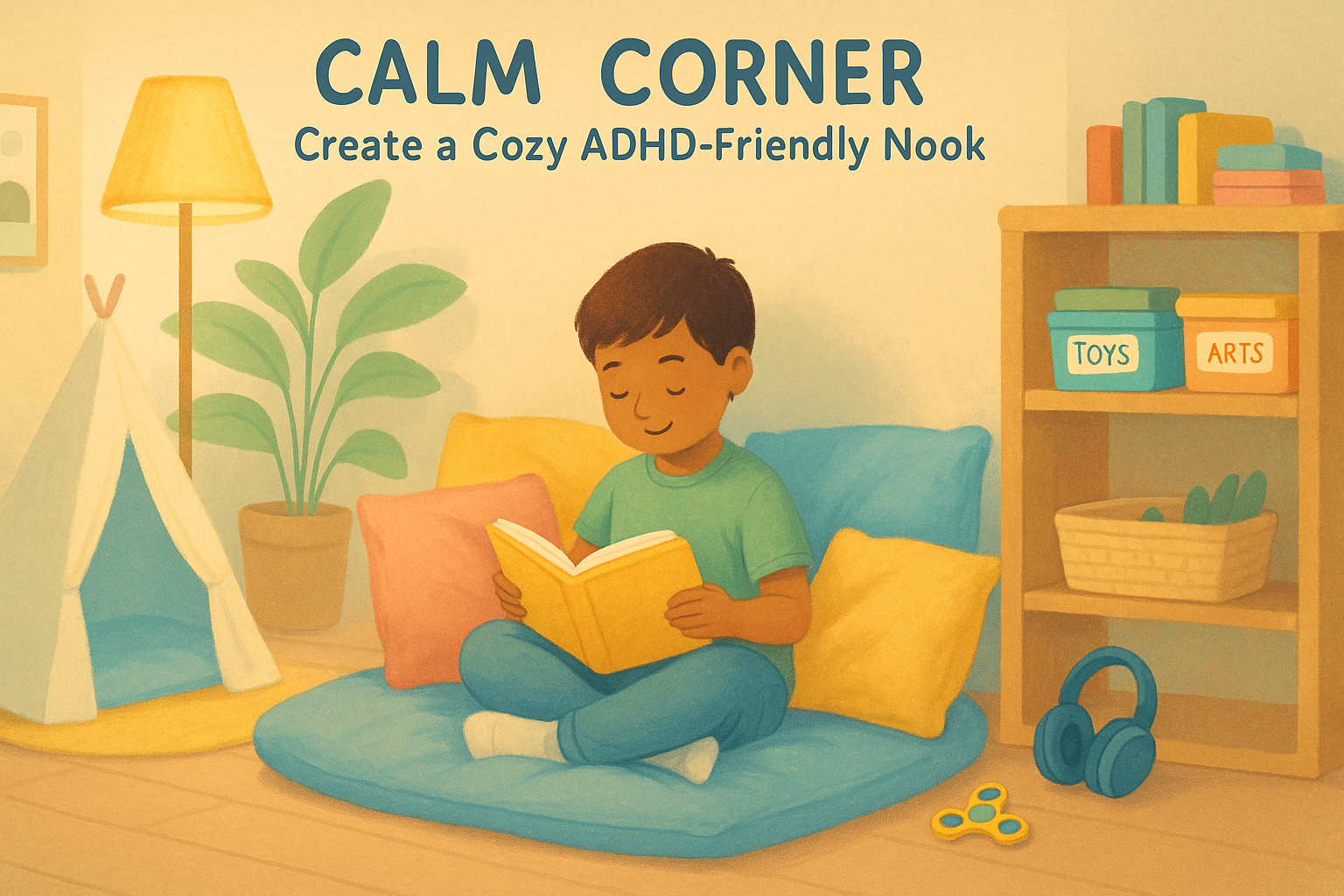
Aim for distinct spaces for sleep, study and play. This works in shared or small rooms too. Use large cushions, a small rug, or a bookshelf to mark each area. A corner with a soft blanket and favourite books works well. It becomes a quiet reading nook.
Step 2: use visual cues and practical tools
Visual supports reduce confusion and anxiety. Try:
Colour-coded baskets for toys, school books or chargers
Picture labels on drawers and shelves
Simple checklists (get up, brush teeth, school bag packed)
Weekly routines pinned up with family photos
These cues help your child follow routines on their own. Transitions get smoother too.
Step 3: balance structure with flexibility
Routines bring reassurance. Every day will still look a little different. That is true with several generations and traditions at play. Involve siblings and grandparents in setting up routines. Adjust the timing of family meals and prayers. Fit them around sensory needs and after-school energy.
Mindfulness and co-regulation
Calm does not need long routines or silent rooms. Short mindfulness and co-regulation practices help a lot. Two to five minutes at a time is enough. They help your child manage stress and feel settled. They help the whole family too. These strategies are practical, even in a busy household. You can shape them to fit your culture, routines and time.
Quick mindfulness moments for busy evenings
Try these activities, adapted from research-backed approaches for ADHD children:
Family breathing break
Gather everyone in a circle. Stand, sit, or sit on the bed. Guide each person to breathe in for four counts, then out for four.
Mindful body scan
Sit or lie down. Ask everyone to notice how their body feels from head to toe.
Bedtime wind down
Use soft lights and a favourite song. Add a moment of gratitude. Each person shares something good from the day.
Co-regulation: modelling calm as a family
ADHD children often benefit from co-regulation. That is when an adult calmly supports their emotional ups and downs. Include grandparents and siblings in shared routines. Try quiet story time with books in several languages. Or share a special peace object.
Bringing everyone on board
A calm home starts with bringing everyone onto the same page. Open communication helps everyone understand the new routines. It shows how they support your child's strengths. It also respects everyone's cultural views. Begin with the why. Try this: "Quiet spaces help your child feel less overwhelmed after school." "That means fewer meltdowns and more family harmony."
Practical ways to start the conversation
Use family meetings or group chats to share small wins and introduce changes gently.
Try starters like "What helps you feel calm at home?"
Or "How can we support each other when things feel hectic?"
Share visual aids such as simple diagrams of room layouts or routines.
Your family's journey towards calm
A calm, ADHD-friendly home is a journey. There is no need for perfection. Every small step matters. A cosy reading nook counts. So does pausing for a family check-in. Daily life starts to feel more manageable. Tiny changes lift your child's sense of comfort. They ease stress for the whole family.
Join the Understanding Zoe community
Parenting a neurodivergent child is easier with support. We would love to welcome you into the Understanding Zoe community.
Getting started is simple:
Download the app here.
Complete your account setup.
Start exploring, and tell us what works with a thumbs up or down.
You can try it free for 7 days. The tools save time and lower stress. You also join a growing group of people building a more neuroinclusive world.
We are grateful to everyone who walks this journey with us. We would love to welcome you in.
Further reading
Pip is not a doctor or therapist. It helps you organise and prepare, not diagnose or treat.
In a crisis call 000. Lifeline 13 11 14. Kids Helpline 1800 55 1800. 13YARN 13 92 76.
Ready to put it all in one calm place?
Tell Pip one thing today. It remembers the rest.
Stored in Australia, encrypted. Cancel before day 8 and you won't be charged.
Related articles

Is an ADHD assessment worth it at 40? An honest Australian answer
An adult ADHD assessment in Australia costs about $1,387 and takes about 10 weeks. Learn what a diagnosis gives you, what it does not, and when to wait.
Read more
Where is the village? Building neurodivergent community
Neurodivergent families experience isolation at twice the rate of neurotypical families, not because they can't cope, but because most spaces were never designed for them. In this episode, Laetitia Andrac (co-founder of Understanding Zoe) explores what real community looks like for neurodivergent people and families. She shares practical strategies for creating sensory-friendly, inclusive gatherings where everyone genuinely feels welcome, and explains how to build your village deliberately, right where you are.
Read more
Rejection sensitivity in kids with ADHD: A parent’s guide to building confidence and connection
Explore the misunderstood world of rejection sensitivity in kids with ADHD through heartfelt stories and practical advice. This guide unpacks why everyday setbacks hit so hard, the unique challenges for culturally diverse families, and step-by-step neuroaffirming strategies to foster resilience and confidence. Whether you're navigating stigma or searching for support, discover how compassion and understanding can transform your family’s journey.
Read more