In short

Alexithymia means finding it hard to notice, name or describe your own feelings. The feeling is there, often strongly. The words for it arrive late, or not at all.

It is common in Autistic people. A King's College London review suggests it affects about half of Autistic people.

Source: Kinnaird, Stewart and Tchanturia, King's College London, Investigating alexithymia in autism, European Psychiatry, 2019.

Many ADHDers and AuDHDers describe it too. It is not a lack of feeling. It is a gap between feeling something and knowing what it is.

Alexithymia is also different from interoception. Interoception is about noticing body signals like hunger or thirst. The two often travel together. We cover the body side on its own page about interoception.

What alexithymia feels like from the inside

You can feel something intensely and still not be able to say what it is.

For many people with alexithymia, emotion arrives as a body state first. A tight throat, a heavy chest, or a sudden need to leave the room. The label comes later, if it comes.

Sometimes the feelings blur together. Anger, worry, hunger and tiredness can all feel like the same kind of “bad”. Sometimes the only sign is that you have stopped coping.

None of this is a character flaw. It is a different route between feeling and words, and it has a name.

Why “how are you?” is the hardest question with alexithymia

For many people with alexithymia, the true answer turns up hours after the conversation ends.

“It means "Are you OK?" has never been a simple question for me. It's a question my body sometimes can't answer on demand, no matter how much I want it to. So when I say "I'm fine," it isn't a lie, but it's the only answer available in the time allowed.”
Laetitia Andrac, Autistic and ADHD co-founder of Understanding Zoe, who has alexithymia.
Writing on LinkedIn, 10 September 2026.
An adult writing notes at a desk at home
Laetitia Andrac on LinkedIn, 10 September 2026.

She goes on to say the real answer “might not surface for hours”. That gap is easy for other people to misread. It can look like avoidance, or like not caring. It is neither.

Her suggestion for friends, partners and colleagues is simple. Swap “are you OK?” for something specific you can answer. For example, “what was the hardest part of today?” or “what's your capacity like this week?”

How common is alexithymia in Autistic people?

Research suggests about half of Autistic people have alexithymia. That makes it common, but not universal.

In 2019, researchers at King's College London pooled the results of 15 studies. The team was Emma Kinnaird, Catherine Stewart and Kate Tchanturia. They compared Autistic and non-autistic groups on the Toronto Alexithymia Scale.

Nine of those studies used a cut-off score for alexithymia. Across them, about half of the Autistic people met it. In the non-autistic groups, it was under 1 in 20. The researchers were careful here. Alexithymia is common in autism, but it is not part of every Autistic person.

~50%

Of Autistic people met the cut-off, in the studies that used one.

Under 5%

Of non-autistic people in the same studies had it.

15

Studies brought together in the 2019 review.

Source: Kinnaird, Stewart and Tchanturia, King's College London, Investigating alexithymia in autism: A systematic review and meta-analysis, European Psychiatry, 2019.

Research on alexithymia in ADHD is newer and smaller. Many ADHDers and AuDHDers describe it all the same. That is a gap in the research, not a gap in their experience.

How alexithymia interacts with autism and ADHD

When feelings are hard to read, stress can build quietly. Then it is suddenly too much.

If you cannot tell you are overwhelmed, you cannot step back in time. That is one reason many Autistic people describe going from “fine” to meltdown or shutdown. There was no warning in between.

Over weeks, the same pattern can feed Autistic burnout. Nobody noticed the load rising, including you. For ADHDers, it can mean big feelings that seem to come from nowhere. Then they fade just as fast.

If you are Autistic and ADHD, both can happen at once. Our page on AuDHD explains why the two can pull in different directions.

Podcast

“Even when we are feeling it super strongly”

“It's difficult for us to name how we feel even when we are feeling it super strongly.”

Laetitia Andrac, speaking on The Neurodivergent Pulse, episode 48, 16 September 2026.

In the same episode, she makes a point that changes how the advice lands. Most “listen to your body” advice was written for brains that get the signal in real time. When that advice fails, it is easy to blame yourself instead of the advice.

How to work with alexithymia

You do not have to name the feeling in the moment. You need ways around the gap that do not depend on it.

Michael, an Autistic ADHDer in Brisbane, found this after a frightening day out. He shut down and could not think. Writing it down afterwards gave him a plan for next time. In his words: “With my monotropic brain, I can only do one thing at a time.” Monotropic means focusing deeply on one thing at a time.

Laetitia explores these habits further in why neurodivergent people struggle to notice emotions.

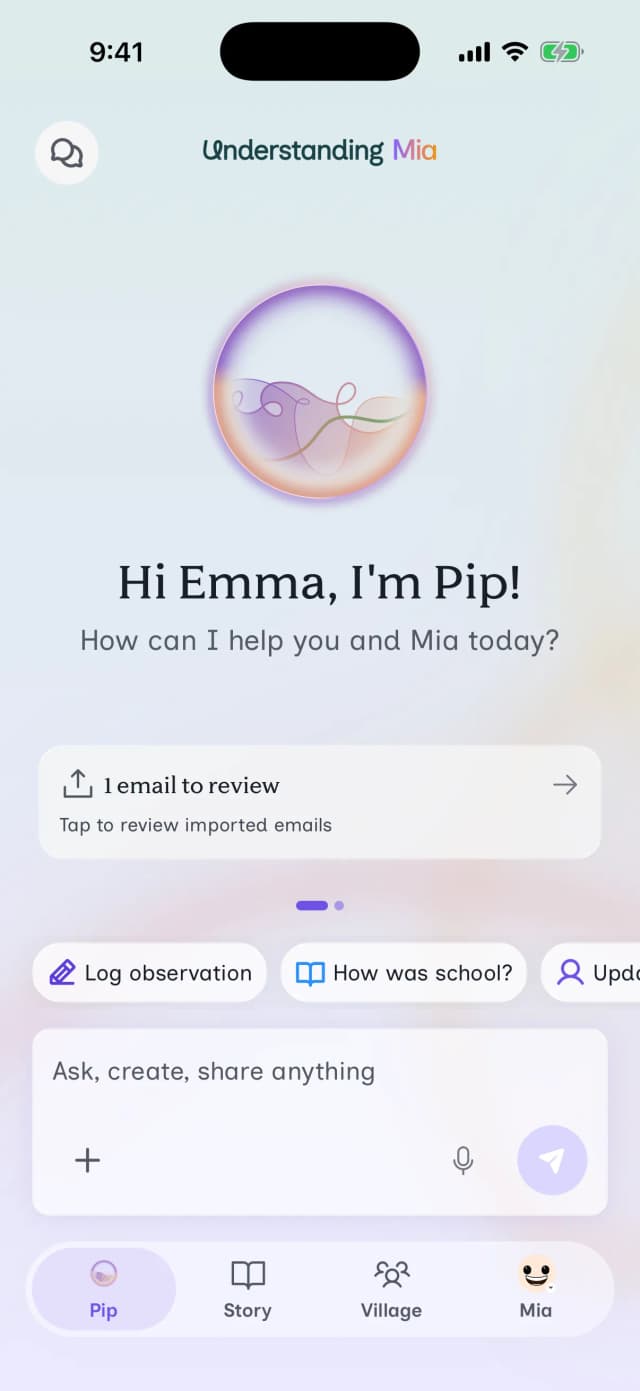
The Understanding Zoe app open on a phone, showing Pip's home screen

Where Understanding Zoe fits

Feelings do not always arrive on time. Understanding Zoe keeps the pieces together until they make sense.

Pip* is your pocket coach inside the Understanding Zoe app. You talk to it by voice or text about what actually happened today. It writes the day down and gives you something to try straight away.

Over time it shows you patterns you were too tired to notice. Observations, appointments, reports and strategies all live in one private place.

You can invite people who support you, like a partner, a friend or a psychologist. You choose what each person sees, document by document.

Pip is not a doctor and not a therapist. It helps you organise and prepare. It does not assess and it does not treat.

* Pip has nothing to do with the UK benefit called PIP, the Personal Independence Payment.

Their words, not ours

Rated 4.6 on the App Store

Real reviews from neurodivergent adults, parents and therapists. See the reviews.

“In just 3 days, UZ has changed my life. It's helped me work out concrete strategies for a deeply distressed nervous system, and provides insight and affirmation I wouldn't let myself see.”

AubreyDB · Neurodivergent adult · App Store

“As a late Diagnosed Neurodivergent, this has helped me so much to understand who I actually am.”

Laura M · Neurodivergent adult · Google

“As a therapist, to be able to both recommend and utilise this app with families is incredible. Creating space to connect, grow and thrive.”

Kaya L · Therapist · Google

As featured in

Startup Daily SmartCompany Channel 9 Mums and Co Women's Agenda Education Today ABC

Questions people ask us

Is alexithymia a diagnosis?

No. Alexithymia is described as a trait, not a condition. Researchers usually measure it with a questionnaire called the Toronto Alexithymia Scale.

You do not need a formal result to use what helps. If the description fits, that is reason enough to try the ideas on this page.

Does alexithymia mean I do not have feelings?

No. The feelings are there, and they are often strong. What is hard is noticing them in time, and finding the words for them.

Laetitia describes feeling something strongly while her answer to “how are you?” is hours away. The feeling was never missing. The words were just late.

What is the difference between alexithymia and interoception?

Interoception is noticing signals from inside your body. Hunger, thirst, pain and needing the toilet are examples. Alexithymia is about naming emotions.

They often travel together, because many emotions show up in the body first. We explain the body side on our page about interoception.

Can alexithymia change over time?

Many people build reliable ways around it. Word lists, looking back each evening and tracking patterns all help.

It may never feel automatic, and that is fine. The goal is not to feel the way other people do. It is to understand yourself in the way that works for you.

How can I support someone with alexithymia?

Ask questions that have an answer, like “what was the hardest part of today?” Then give them time to reply.

Try not to read “I'm fine” as a lie. It may be the only honest answer available in that moment. The fuller answer can still arrive, and it is worth waiting for.

If today is a hard day

Understanding Zoe is not a crisis service. If you are in danger now, call your local emergency number. That is 000 in Australia, 999 in the UK and 911 in the US.

For support in Australia, call Lifeline on 13 11 14. In the UK, call Samaritans on 116 123. In the US, call or text 988.

Nothing on this page is medical advice. It does not assess anyone. It is not a substitute for care from a professional who knows you.

Keep reading