In short

Autistic burnout is a long period of deep exhaustion that many Autistic adults go through. Skills you usually have can fade. Light, sound and people become much harder to bear.

Researchers at Portland State University defined it in 2020, from Autistic adults' own accounts. It typically lasts three months or more.

Source: Raymaker and colleagues, Portland State University, Defining Autistic Burnout, Autism in Adulthood, 2020.

It builds when life asks more than you can give for too long. Support is missing, or not enough. It is not laziness, and it is not a personal failing.

Autistic burnout is not a clinical diagnosis. It is a description, and it came from Autistic people describing their own lives. This page describes it. It does not diagnose it.

What Autistic burnout feels like from the inside

Many Autistic adults say the battery will not charge, however long they rest.

Everyday tasks that were once automatic can take huge effort. Cooking, replying to messages or planning a day can feel out of reach. Some people lose speech for a while.

Sensory input that you usually manage can become painful. Supermarkets, open-plan offices and busy rooms may feel impossible. Many people pull back from others simply to cope.

We collect more on energy, regulation and recovery in our regulation and burnout topic.

How researchers define Autistic burnout

The first research definition was built from Autistic adults' own accounts.

In 2020, Dora Raymaker led a team at Portland State University in the United States. Autistic people were part of the research team at every stage.

They analysed 19 interviews with Autistic adults and 19 public online accounts. From these, they wrote a definition of Autistic burnout.

It describes burnout as coming from “chronic life stress and a mismatch of expectations and abilities without adequate supports”. The key word is mismatch. The problem is the fit between a person and what is asked of them.

3+ months

Is how long Autistic burnout typically lasts, in the definition.

3

Core signs: exhaustion, loss of skills and lower tolerance to input.

38

Interviews and online accounts the definition was built from.

Source: Raymaker and colleagues, Portland State University, Defining Autistic Burnout, Autism in Adulthood, 2020.

The three core signs were chronic exhaustion, loss of skills and reduced tolerance to stimulus. Stimulus here means sensory input, like noise, light and touch.

Autistic burnout or depression? How to tell them apart

They can look alike from the outside. The researchers found they are not the same.

Raymaker's team concluded that Autistic burnout appears distinct from clinical depression. It also appears distinct from work burnout. Work is only one kind of load. Life stress of any kind adds to it.

This matters because the two may need different kinds of help. Advice to push through, or to get out more, can deepen Autistic burnout.

These questions will not decide it for you. They can help you talk it through with a GP or psychologist.

Autistic burnout and depression can also happen together. If you feel hopeless most days, please talk to a GP or psychologist. You deserve support for both.

Why masking and mismatch lead to Autistic burnout

Masking uses energy all day, and the cost adds up quietly.

Masking means hiding or copying behaviour to fit in. It can look like coping from the outside. Underneath, it drains the same account that everything else draws from.

Laetitia Andrac is co-founder of Understanding Zoe. She went through Autistic burnout more than a decade ago, in France. She was in her twenties, working at a strategy consulting firm.

“I masked for a long time, it cost me my health, cost me a big burnout.”
Laetitia Andrac, Autistic and ADHD co-founder of Understanding Zoe.
Speaking on The Neurodivergent Pulse, episode 41, 21 July 2026.
A woman resting in bed under a blanket in a dim room
Episode 41 of The Neurodivergent Pulse.

She later moved to Australia and rebuilt around her own rhythm. Her home office has no direct lighting. She keeps meetings to a minimum and works in the way that suits her brain.

Unmasking can bring relief, and it is not equally safe for everyone. It can carry more risk for women and LGBTQIA+ people. The same goes for people in Black, Brown, Indigenous or Asian (BBIA) communities. Many people are in more than one of these groups, and the risk adds up. You get to decide where it is safe for you.

Noticing brownout before Autistic burnout

Burnout rarely arrives out of nowhere. There is usually a dimmer stage first.

Some Autistic adults call this stage brownout. You are still functioning, but less well. Small things cost more, and recovery after a busy day takes longer.

Laetitia describes pushing through it until she ends up under her weighted blanket. For a few days she cannot use spoken words, and communicates in other ways. In her words: “brownout is ignored, and we go into burnout straight away.”

Podcast

“It gave me a new lens”

“I'd heard it as a concept, but experiencing just how much burnout can take away from you gave me a new lens.”

Sandhya Menon, AuDHD developmental psychologist and author, speaking on The Neurodivergent Pulse, episode 9, 11 November 2025.

Sandhya went through burnout herself before she knew she was Autistic. She now uses energy accounting, created by Maja Toudal, an Autistic psychologist. It treats energy like a bank account.

You track what charges you and what drains you. The aim, as Sandhya puts it, is to “stay in the black”. Burnout happens when you stay in the red for too long.

She also plans around what she knows will drain her. After speaking at an event, she no longer flies home the same day. In her words: “I need a few days. So I start to plan.”

What Autistic burnout recovery looks like

Recovery is less about doing more. It is about asking less of yourself for a while.

Autistic adults in the 2020 study named three things linked with recovery. The first was acceptance and social support. The second was time off or reduced expectations. The third was doing things in an Autistic way, including unmasking.

Having a name for Autistic burnout changes recovery

Knowing what is happening does not end burnout. It can change how you respond to it.

Case study

“This time I was more aware of what was happening”

“I think I actually hit autistic burnout before without recognising that it was autistic burnout... this time I had an autism diagnosis, so I was more aware of what was happening.”

Jasmine, an Autistic and ADHD adult in Australia. Read her full story about rebuilding after Autistic burnout.

Before she was assessed as Autistic, Jasmine blamed herself for what was happening. Knowing it was Autistic burnout gave her a different starting point.

Now she plans each day around the energy she actually has. She describes it in planning a day around energy you cannot predict.

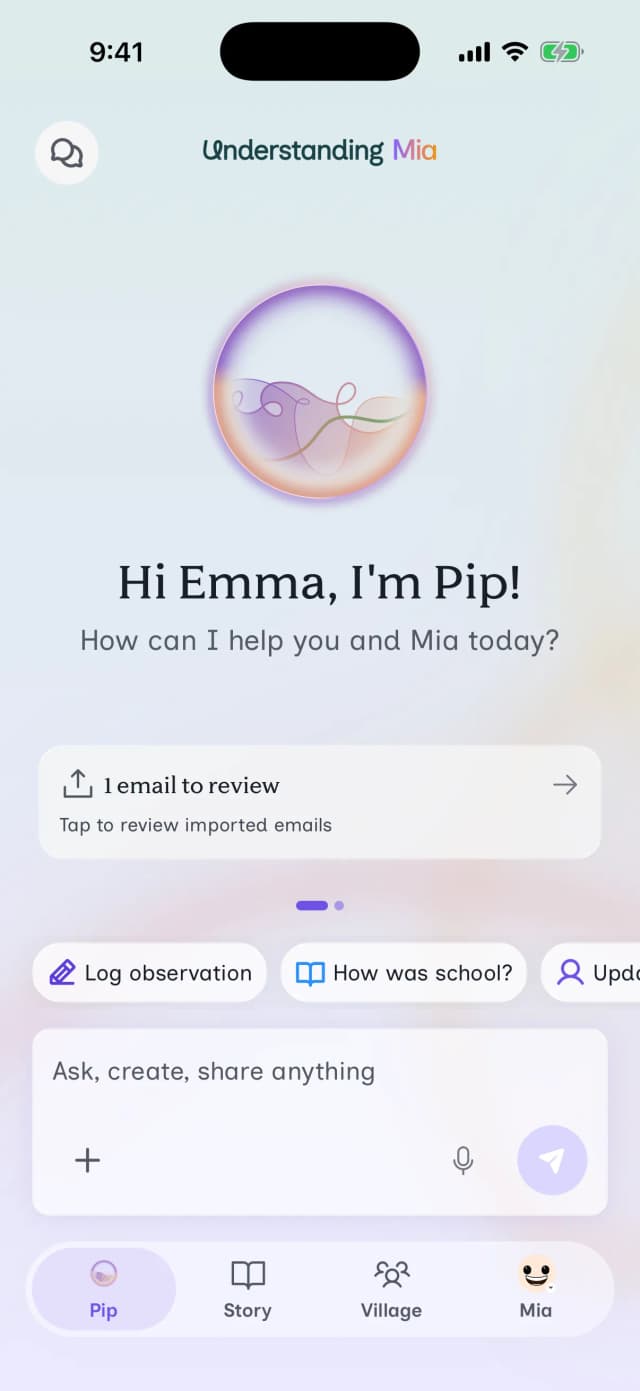
The Understanding Zoe app open on a phone, showing Pip's home screen

Where Understanding Zoe fits

Autistic burnout builds quietly. Understanding Zoe helps you see the load before it tips over.

Pip* is your pocket coach inside the Understanding Zoe app. You talk to it by voice or text about what actually happened today. It writes the day down and gives you something to try straight away.

Over time it shows you patterns you were too tired to notice. Observations, appointments, reports and strategies all live in one private place.

You can invite people who support you, like a partner, a friend or a psychologist. You choose what each person sees, document by document.

Pip is not a doctor and not a therapist. It helps you organise and prepare. It does not assess and it does not treat.

* Pip has nothing to do with the UK benefit called PIP, the Personal Independence Payment.

Their words, not ours

Rated 4.6 on the App Store

Real reviews from neurodivergent adults. See the reviews.

“In just 3 days, UZ has changed my life. It's helped me work out concrete strategies for a deeply distressed nervous system, and provides insight and affirmation I wouldn't let myself see.”

AubreyDB · Neurodivergent adult · App Store

“As a late Diagnosed Neurodivergent, this has helped me so much to understand who I actually am.”

Laura M · Neurodivergent adult · Google

As featured in

Startup Daily SmartCompany Channel 9 Mums and Co Women's Agenda Education Today ABC

Questions people ask us

Is Autistic burnout a clinical diagnosis?

No. It is not in the DSM-5 or the ICD-11. It is a description that came from Autistic adults explaining their own lives.

Researchers have since studied it and given it a definition. You do not need anyone's sign-off to recognise it in yourself, or to start resting.

How long does Autistic burnout last?

The 2020 definition says it typically lasts three months or more. Many people describe it lasting much longer.

Recovery depends on how much the load can drop. Less demand, less masking and more support all tend to shorten it. There is no fixed timeline, and slow recovery is not failure.

What is the difference between Autistic burnout and a shutdown?

A meltdown or a shutdown is a response to overload in the moment. It usually passes within hours, or a day or so.

Autistic burnout is a long state of exhaustion that lasts weeks or months. Because tolerance to input drops, meltdowns and shutdowns can come more often during it.

Can ADHDers have burnout too?

Many ADHDers describe burnout, and it can look different. This page focuses on Autistic burnout.

If you are Autistic and ADHD, both sets of needs matter at once. Our page on AuDHD explains how they can pull against each other.

How can I support an adult in Autistic burnout?

Take demands away rather than adding advice. Offer practical help, like meals or errands, without asking for a plan.

Accept other ways of communicating if speech goes. Messages, pictures and movement all count. Above all, believe them. Being believed is part of recovery.

If today is a hard day

Understanding Zoe is not a crisis service. If you are in danger now, call your local emergency number. That is 000 in Australia, 999 in the UK and 911 in the US.

For support in Australia, call Lifeline on 13 11 14. In the UK, call Samaritans on 116 123. In the US, call or text 988.

Nothing on this page is medical advice. It does not assess anyone. It is not a substitute for care from a professional who knows you.

Keep reading