ARFID is a recognised eating difference. A person eats a very narrow range of foods, or very little. It is not picky eating, and it is not about body image. It often links to sensory differences, fear or low interest in food.
A 2025 meta-analysis found that about 16% of people with ARFID were Autistic. It also found ARFID in about 11% of Autistic people studied.
Source: Sader and colleagues, University of Edinburgh, The co-occurrence of autism and ARFID: a prevalence-based meta-analysis, International Journal of Eating Disorders, 2025.
ARFID affects children and adults. Many families spend years hearing that a child is just fussy. Nobody names what is happening.
This page does not give treatment or dietary advice. For more on eating, see our eating and feeding topic.
Every person with ARFID is different. These patterns come up often.
ARFID is about more than preferring some foods. These are some of the ways people and families describe it.
Many people with ARFID also notice body signals like hunger late, or very strongly. We explore that on our page about interoception.
The two can look alike at first. Over time, they are very different.
“So in short, picky eating is common, it's usually temporary, and there's not much support or intervention needed necessarily, whereas ARFID, an eating disorder and neurodivergence, that really requires nuanced support and a team.”
Margo explains that picky eating often fades with age. ARFID does not simply go away, and it can affect health.
Some people find certain foods hard but do not have ARFID. For them, she prefers the phrase sensory feeding differences. It is kinder, and more accurate.
Margo's approach is called “fed is best”. Read more in fed is best: ARFID support for neurodivergent families.
ARFID and autism often appear together, in both directions.
In 2025, researchers in Edinburgh and Aberdeen pooled 21 studies. Together, they included 7,442 people.
About 16% of people with ARFID were Autistic. About 11% of Autistic people in the studies had ARFID.
The researchers suggested screening Autistic people for ARFID. They also suggested screening people with ARFID for autism.
Of people with ARFID were Autistic, across the pooled studies.
Of Autistic people in the studies had ARFID.
Studies, with 7,442 people, were brought together in 2025.
Source: Sader and colleagues, University of Edinburgh, The co-occurrence of autism and ARFID: a prevalence-based meta-analysis, International Journal of Eating Disorders, 2025.
Shame and pressure make eating harder for everyone at the table.
Many people with ARFID grew up being called fussy. Many parents feel judged for what their child eats. That shame can spread through a whole family.
Understanding the reasons behind ARFID can lift some of that weight. It is not a parenting failure, and it is not a character flaw.
“…realising that I have grown up with feeding differences and feeling shameful about my own safe food, before knowing the word safe food. So it was very healing for myself, as I'm neurodivergent and raising neurodivergent children, to just go through that journey.”
Laetitia Andrac, Autistic and ADHD co-founder of Understanding Zoe, speaking on The Neurodivergent Pulse, episode 20, 10 February 2026.
These ideas are about pressure and shame, not about what to eat.
This page does not give treatment or dietary advice. Please talk to a health professional about your own situation.
Mealtimes are easier when everyone understands. Understanding Zoe keeps the people who help on the same page.
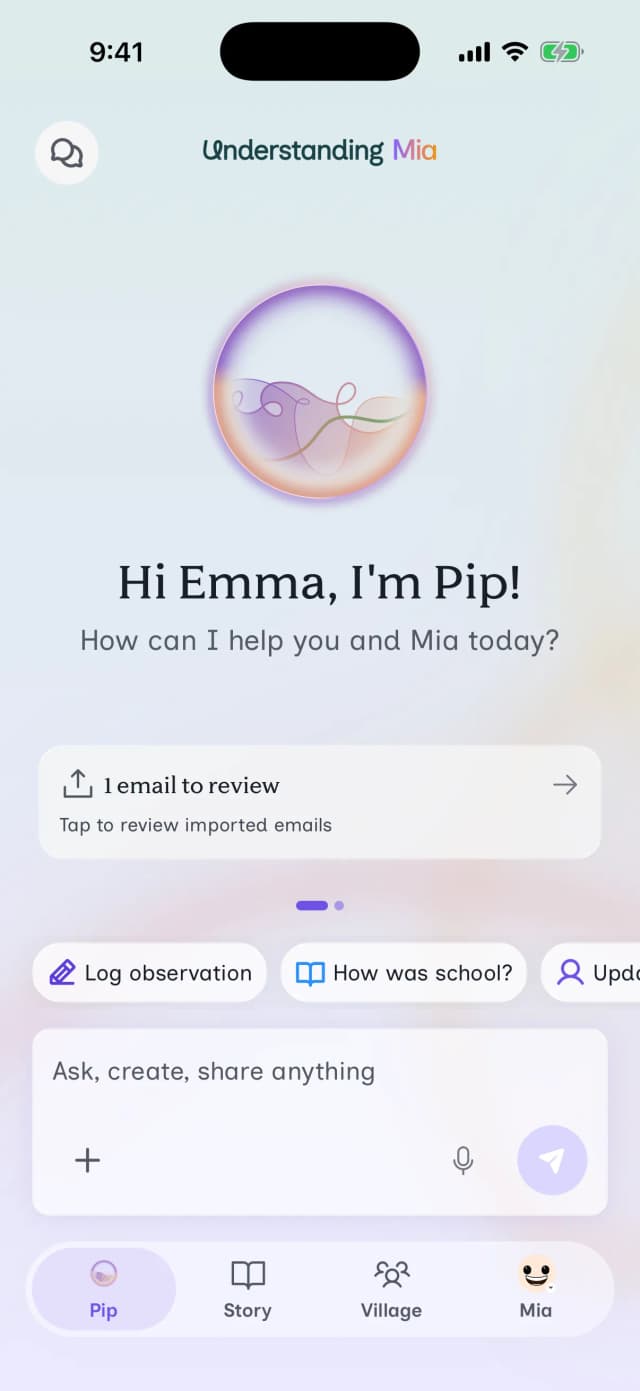
Pip* is your pocket coach inside the Understanding Zoe app. You talk to it by voice or text about what actually happened today. It writes the day down and gives you something to try straight away.
Over time it shows you patterns you were too tired to notice. Observations, appointments, reports and strategies all live in one profile.
The Care Village lets you invite family, teachers and therapists. You choose what each person sees, document by document. Supporters join free.
Pip is not a doctor and not a therapist. It helps you organise and prepare. It does not assess and it does not treat.
* Pip has nothing to do with the UK benefit called PIP, the Personal Independence Payment.
Real reviews from parents and therapists. See the reviews.
“This is the only one that doesn't make my daughter sound like a problem to be managed. I jot down what's happening day to day and it quietly pulls out the patterns I'm too tired to notice myself.”
yoyo_e · Parent · App Store
“My child had a big meltdown this morning and I have been debriefing with Pip just now. It's been so incredibly helpful and specific in helping me get a handle on it.”
Katy S · Parent · App Store
“As a therapist, to be able to both recommend and utilise this app with families is incredible. Creating space to connect, grow and thrive.”
Kaya L · Therapist · Google
ARFID (avoidant/restrictive food intake disorder) is a recognised eating difference, listed in the DSM-5 since 2013. It means eating a very narrow range of foods, or very little. This affects health or daily life.
It is not about body image or weight loss. It often links to sensory differences, fear of choking or low interest in food.
Picky eating is common and usually temporary. Many children grow out of it, and it rarely affects health.
ARFID does not simply go away with age. Nutritionist Margo White explains that it can affect health. It needs careful support from a team.
Yes. A 2025 meta-analysis pooled 21 studies. About 16% of people with ARFID were Autistic.
It also found ARFID in about 11% of Autistic people in the studies. The researchers suggested screening for each when the other is present.
Yes. ARFID is not only a childhood experience. Many adults have eaten a narrow range of safe foods for their whole lives.
Some only find the word ARFID in adulthood. Laetitia Andrac, co-founder of Understanding Zoe, felt ashamed of her safe foods. That was before she knew the term.
This page does not give treatment or dietary advice. A GP or family doctor is a good first step. They can help you find the right team.
Support for ARFID often involves a team. That may include a GP, a dietitian or nutritionist, and a feeding therapist. Look for people who work in a neuroaffirming way.
Understanding Zoe is not a crisis service. If you are in danger now, call your local emergency number. That is 000 in Australia, 999 in the UK and 911 in the US.
For support in Australia, call Lifeline on 13 11 14. In the UK, call Samaritans on 116 123. In the US, call or text 988.
Nothing on this page is medical advice. It does not assess anyone. It is not a substitute for care from a professional who knows you.