Time blindness is when time is hard to feel as it passes. Ten minutes and an hour can feel the same, and next week can feel far away until it is suddenly today. It is very common for ADHDers, and many Autistic people describe it too.

It is not laziness, and it is not a lack of care. It is a difference in how a brain senses time. Many ADHDers describe only two times: now, and not now.

If getting tasks started is the harder part for you, our page on executive function covers that. This page is about how time itself is experienced.

A note on the words. Some people prefer "time perception differences", because "blindness" borrows from another disability. Many people search for "time blindness", so we use both words on this page.

What time blindness looks like in everyday life

It shows up in more places than running late. Here are some of the most common.

Everyday examples of time blindness
WhenWhat it can look like
MorningsGetting up early and still running late, because getting ready took far longer than it felt.
Everyday tasksGuessing a job will take ten minutes when it takes an hour, or putting off a five minute task for days.
Deep focusLooking up from something absorbing and finding the whole afternoon has gone.
WaitingFive minutes in a queue or a waiting room feeling endless.
The futureA deadline next week feeling unreal until the night before.
The pastFinding it hard to say when something happened, or how long ago.

Why time blindness happens in ADHD

ADHD time blindness is one of the most studied parts of ADHD. Research has found real differences in how ADHDers judge time.

In 2022, Que Zheng and colleagues at the University of Hong Kong combined the results of 27 studies. Together, they included more than 1,600 children and teenagers with ADHD. Young ADHDers judged time less accurately and less precisely than their peers. They were also more likely to overestimate how long something took.

Many adults describe the same thing in daily life. Time is felt rather than counted, and it is felt most clearly when something is interesting or urgent. That is why the same person can lose an afternoon to a project, then rush to make an appointment.

Banner for the Understanding Zoe article about ADHD mornings
From our blog ADHD mornings: why they feel impossible, and what helps

Everyday ideas for the time of day when time blindness bites hardest. From episode 21 of The Neurodivergent Pulse.

Read the article
Time blindness and Autistic people

Many Autistic people describe time differences, especially around transitions and changes of plan.

The research is less settled here. In 2019, Martin Casassus, Ellen Poliakoff and colleagues at the University of Manchester reviewed the studies on time and autism. Tests of very short timings gave mixed results. Differences showed up most in thinking about time: planning, ordering events and picturing the future.

That fits what many Autistic people say. Moving from one thing to the next takes time and energy, and a change of plan can throw the whole day. This is real, even where lab tests have not measured it well. For AuDHDers, the ADHD and Autistic sides of time can show up together. Our page on AuDHD explains more.

Ideas that help with time blindness

The idea behind most of these is the same: if time is hard to feel, make it something you can see.

  • Put clocks where you can see them. An analogue clock in each room shows time moving in a way numbers do not.
  • Use a visual timer. Timers that show a coloured section shrinking make "ten minutes" something you can watch.
  • Measure in songs, not minutes. "Getting dressed takes two songs" is easier to feel than a number.
  • Time a regular task once. Write down how long it really took, then plan with that number next time.
  • Add a buffer. Take your best guess for a task, then add half again.
  • Set alarms for leaving, not arriving. The alarm that matters is the one that says "put your shoes on now".
  • Be kind about it. Running late is not a character flaw. Shame makes planning harder, not easier.

If you are an adult with time blindness

Calendar reminders set for when you need to leave take the work off your memory. Put travel time in as its own appointment.

Many people with time blindness end up very early, because they have learned not to trust the clock in their head. That is a strategy too, and it is fine.

See how Understanding Zoe works for neurodivergent adults.

If your child has time blindness

Children often need time made visible. Say "after this song" rather than "in five minutes". A visual timer helps at the hardest times of day.

A picture schedule shows what is coming next. Give a warning before a change, and a clear first step for the next thing.

Banner for the Understanding Zoe article about visual supports
Making time visible How visual supports ease executive overload

Why pictures stay when words vanish, and how schedules and timers ease a busy day. From episode 15 of The Neurodivergent Pulse.

Read the article
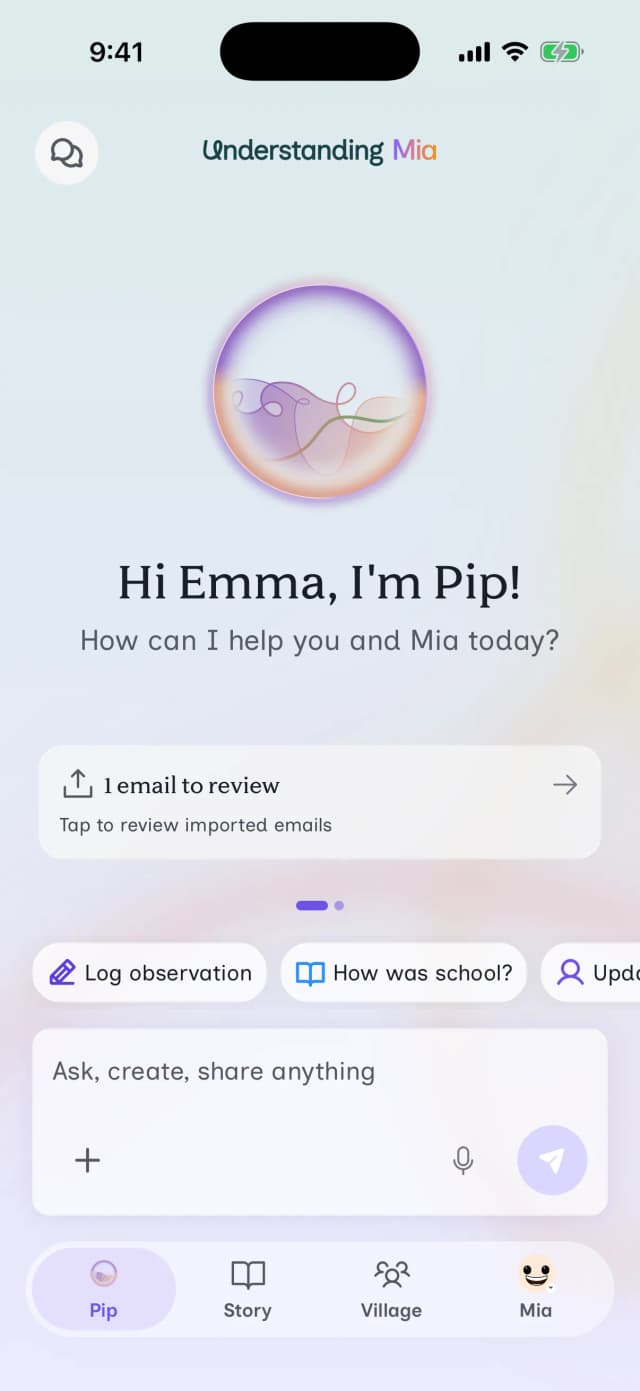
The Understanding Zoe app open on a phone, showing Pip's home screen

Where Understanding Zoe fits

Time blindness is easier when less has to be held in your head. Pip*, your pocket coach, keeps your notes by voice or text. The things you mean to come back to are written down.

You can also set reminders in Understanding Zoe. A reminder for when to leave, start or switch means you do not have to feel the time passing to act on it.

The Story tab lays your days out over time, so you can look back on them.

The Care Village lets you share a plan with family or school. It keeps the people who help on the same page, and you decide who sees what.

What Understanding Zoe does not do. It does not assess and it does not treat. Pip is not a therapist, and it does not replace one.

Start free trial

* Pip is the pocket coach in the Understanding Zoe app. It has nothing to do with the UK benefit called PIP, the Personal Independence Payment.

Questions people ask about time blindness

Is time blindness a sign of ADHD?

It is very common in ADHD, and research has found real differences in how ADHDers judge time. On its own, though, it is not enough to say someone is ADHD. Many things can affect how time feels, including tiredness, stress and anxiety.

If time blindness sits alongside other things that make you wonder, write them down and take them to your GP. Self-identification is valid too.

Is time blindness real?

Yes. A 2022 review of 27 studies found that young ADHDers judged time less accurately and less precisely than their peers. Many Autistic people describe time differences too.

It is not laziness or a lack of care. People with time blindness often care a great deal about being on time, and work very hard at it.

Can Autistic people have time blindness?

Yes. Many Autistic people describe losing track of time, finding transitions slow, or finding a change of plan hard. Research has found the clearest differences in planning and thinking about time, rather than in judging short timings.

Where research has not caught up, lived experience still counts. Visual schedules, warnings before changes and visible clocks help many Autistic people.

What kind of clock or timer helps with time blindness?

Anything that shows time rather than just counting it. Analogue clocks show the hands moving through the hour. Visual timers show a coloured section getting smaller as time runs out.

Some people like a watch that vibrates at set times, so a reminder does not depend on hearing it. Try a few and keep what works in real life.

Is time blindness the same as always being late?

No. Lateness is one result, but time blindness also shows up in waiting, planning ahead and remembering when things happened.

Some people with time blindness are almost always early. They have learned not to trust their sense of time, so they leave far too soon. Both come from the same difference.

Sources

  1. Zheng Q, Wang X, Chiu KY, Shum KK. Time perception deficits in children and adolescents with ADHD: a meta-analysis. Journal of Attention Disorders, 2022.
  2. Casassus M, Poliakoff E, Gowen E, Poole D, Jones LA. Time perception and autistic spectrum condition: a systematic review. Autism Research, 2019.

If today is a hard day

Understanding Zoe is not a crisis service. In an emergency, call 999. Samaritans are on 116 123, any time. Childline is 0800 1111 for young people. You can also text SHOUT to 85258. In Australia, call 000 in an emergency, or Lifeline on 13 11 14.

Nothing on this page is medical advice. It does not assess anyone, and it is not a substitute for care from a professional who knows you. If something here sounds familiar, write it down and take it to your GP.

Keep reading