Hyperfixation is when one interest, task or topic takes up almost all of your attention, for hours, days or weeks. It is common for ADHDers and Autistic people, and often strongest for AuDHDers, who are both. The rest of the world goes quiet, and time can disappear.

Hyperfixation is a community word, not a diagnostic term. You will not find it in the diagnostic manual. Researchers use related words instead: hyperfocus for ADHD, and special interests or monotropism for autism.

For many people, it is where their best work, deepest knowledge and greatest joy come from. It can also make eating, sleeping and switching tasks harder. Both are true, and this page covers both.

Hyperfixation, hyperfocus and special interests: what is the difference?

The three words overlap, and people use them in different ways. This is how they are most often used.

Hyperfixation, hyperfocus and special interests compared
WordWhat it describesHow long it lastsWhere the word comes from
HyperfixationAn interest, activity or topic that takes up most of your attention. It often arrives suddenly and fades just as fast.Days, weeks or months.The neurodivergent community, mostly ADHDers and Autistic people.
HyperfocusA state of deep, absorbed attention on one task, where you lose track of time and what is around you.Minutes to hours at a time.Research, where it is linked mostly with ADHD.
Special interestA deep, lasting passion for a subject, often a big part of who a person is.Often years, sometimes a lifetime.Autism research and the Autistic community.

Hyperfocus is the state you are in. Hyperfixation and special interests are about what holds your attention, and for how long. Use whichever word fits your own experience best.

Why hyperfixation happens in ADHD and autism

ADHD and Autistic brains spread attention differently. Interest, not importance, often decides where it goes.

In ADHD

ADHD attention tends to lock on to what feels interesting, new or urgent. Once it locks on, it can be hard to let go. In 2019, Priti Shah, Kathleen Hupfeld and Tessa Abagis at the University of Michigan surveyed more than 600 adults. People with more ADHD traits reported hyperfocus more often, in study, hobbies and screen time.

In autism

In 2005, Dinah Murray, Mike Lesser and Wenn Lawson, an Autistic researcher, described monotropism. It is the idea that Autistic attention gathers into a few deep channels at a time, rather than spreading across many. That depth is why special interests can feel so complete, and why switching away can feel so hard.

In AuDHD

For AuDHDers, both can happen at once. One part of you wants to go deep, and another part wants something new. Many people describe it as a tug of war inside the same brain. Our page on AuDHD explains more.

Cover art for episode 7 of The Neurodivergent Pulse, The tug-of-war brain
From our podcast The tug-of-war brain: ADHD, autism and strengths

Why deep focus and the pull towards something new can live in the same brain, and how to work with both. Episode 7 of The Neurodivergent Pulse.

Listen to the episode
Why hyperfixation is often a strength

Deep interests build knowledge, skill and calm. They also connect people who share them.

In 2018, Rachel Grove, Rosa Hoekstra and colleagues studied special interests in Autistic adults. Adults who were more motivated by their interests reported higher wellbeing. They were also more satisfied with their social life and their leisure time.

  • Depth. Weeks inside one subject can build expert knowledge that others take years to reach.
  • Rest and regulation. A familiar interest can be the calmest place in a loud day.
  • Connection. Interests are a way into friendships with people who love the same things.
  • Learning. Children and adults often learn best through what they already love.

On episode 7 of our podcast, Understanding Zoe co-founder Laetitia Andrac shares a story about her daughter. Her teacher built lessons around her interest at the time, Greek mythology. Laetitia says it shifted everything.

From The Neurodivergent Pulse, episode 7

Looking after yourself during hyperfixation

Deep focus is worth protecting. So are the needs it can push out of the way, like food, sleep and rest.

The same 2018 study found that very intense engagement, beyond what felt good to the person, went with lower wellbeing. So the aim is never less interest. It is enough room around it for everything else.

  • Body signals get missed. Hunger, thirst and needing the bathroom can go unnoticed for hours. Our page on interoception explains why.
  • Stopping hurts. Being pulled out of deep focus can feel jarring, and it can lead to distress.
  • Sleep slips. "One more hour" turns into the middle of the night.
  • Money goes fast. A new interest can come with a lot of buying, very quickly.
  • The drop. When an ADHD hyperfixation fades, it can leave guilt about the time or money spent. Nothing has gone wrong. Interests often come back.

How to work with hyperfixation, not against it

Keep the interest, and build a little room around it for food, sleep and the people in your life.

  • Decide the stopping point before you start. Put a timer in another room, so you have to get up to turn it off.
  • Keep water and a snack within reach. It is easier than remembering to stop for them.
  • Leave a bookmark. Write down exactly where you are up to. Stopping feels safer when you know you can come back.
  • Use a waiting rule for spending. Wait a few days before buying anything for a new interest.
  • Build the interest into other things. Chores, study and time with family can all borrow from it.

If you are an adult with hyperfixations

Hyperfixation can feel like your best self and your most frustrating self in the same week. You do not need to make an interest useful for it to be worth your time.

If starting and stopping is the harder part, our pages on autistic inertia and executive function cover that.

If your child has an intense interest

Join the interest rather than compete with it. Lining up cars or reciting facts is real play, and real learning.

Warn your child before it is time to stop, and agree when they can come back to it. A sudden stop can feel like losing something.

Cover art for episode 18 of The Neurodivergent Pulse, Play is learning
From our podcast Play is learning: how curiosity helps neurodivergent kids thrive

Why special interest play, like lining up cars, is meaningful and does not need to be redirected. Episode 18 of The Neurodivergent Pulse.

Listen to the episode
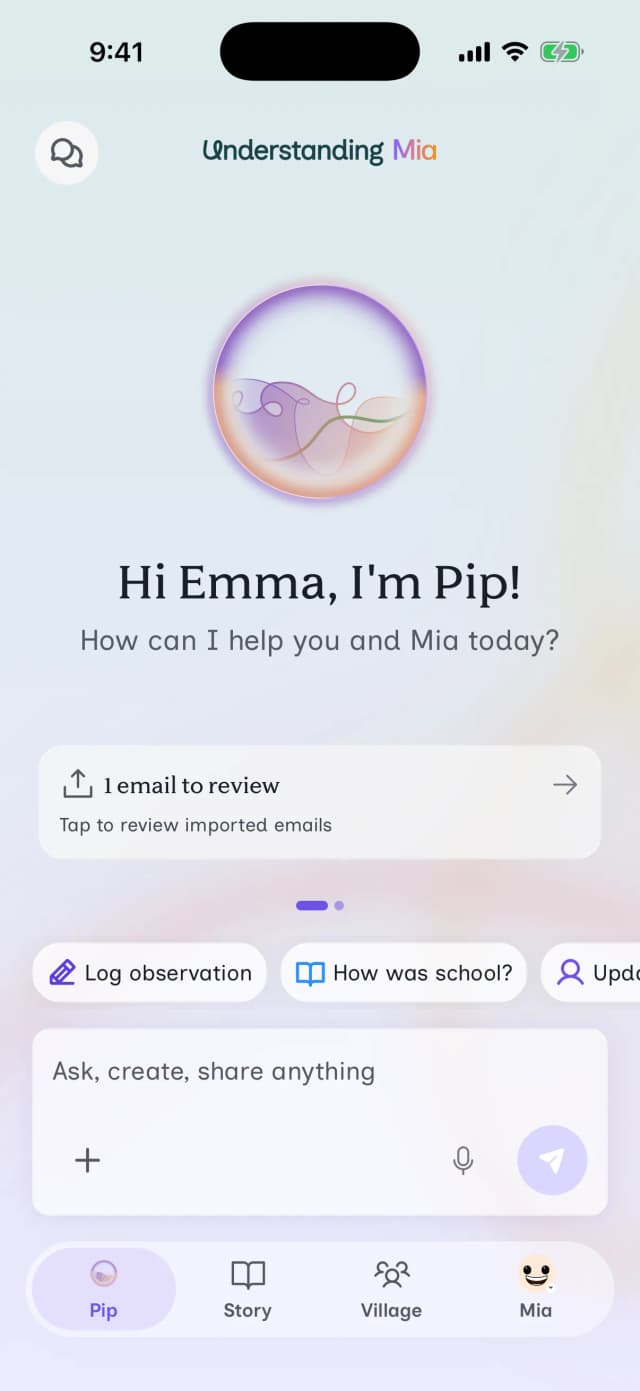
The Understanding Zoe app open on a phone, showing Pip's home screen

Where Understanding Zoe fits

Pip* is your pocket coach. Tell it what helped you stop, start or switch, by voice or text. It keeps your notes in one place.

The Story tab lays your notes out over time, in plain language. You can look back and notice what you want to keep doing.

The Care Village lets you share chosen notes with family or school. It keeps the people who help on the same page, and you decide who sees what.

What Understanding Zoe does not do. It does not assess and it does not treat. Pip is not a therapist, and it does not replace one.

Start free trial

* Pip is the pocket coach in the Understanding Zoe app. It has nothing to do with the UK benefit called PIP, the Personal Independence Payment.

Questions people ask about hyperfixation

Is hyperfixation a sign of ADHD or autism?

Not on its own. Anyone can get absorbed in something they love. Hyperfixation is very common for ADHDers and Autistic people, though. It is often more intense, and harder to step out of.

If hyperfixation sits alongside other things that make you wonder, write them down and take them to your doctor. Self-identification is valid too. You do not need a report for your experience to count.

What is the difference between hyperfixation and a special interest?

A special interest is usually a deep, lasting passion, often part of who an Autistic person is. It can last years. A hyperfixation often arrives suddenly and fades after days, weeks or months.

Many people have both. An AuDHDer might have a lifelong special interest and a string of shorter hyperfixations around it. Use the word that fits you.

Is hyperfixation a bad thing?

No. Deep focus is not a problem to fix. For many people it is where their best work, knowledge and joy come from. Research on Autistic adults links engaging with special interests to higher wellbeing.

It only needs support when it starts costing food, sleep, money or time with people you love. Even then, the aim is to make room around the interest, not to take it away.

How do I step out of a hyperfixation when I need to?

Plan the exit before you go in. A timer in another room, a song that means “finish up”, or a person who checks in can all help.

Leave yourself a note about exactly where you stopped, so coming back feels easy. Have something gentle to move on to, like a snack or a short walk. Stepping out is easier when the next thing is not a demand.

Can hyperfixation lead to burnout?

It can add to it. Long stretches without food, sleep or rest drain energy, even when the activity itself feels good. Many neurodivergent people say the crash after a big hyperfixation is part of their burnout story.

Watch for signs that rest is overdue, and build breaks into deep work. Our page on autistic burnout covers what burnout looks like and what helps.

Sources

  1. Hupfeld KE, Abagis TR, Shah P. Living “in the zone”: hyperfocus in adult ADHD. ADHD Attention Deficit and Hyperactivity Disorders, 2019. Free summary by the same researchers: Hyperfocus: the ADHD superpower, Frontiers for Young Minds, 2021.
  2. Murray D, Lesser M, Lawson W. Attention, monotropism and the diagnostic criteria for autism. Autism, 2005.
  3. Grove R, Hoekstra RA, Wierda M, Begeer S. Special interests and subjective wellbeing in autistic adults. Autism Research, 2018.
  4. Understanding Zoe. The Neurodivergent Pulse, episode 7, 2025.

If today is a hard day

Understanding Zoe is not a crisis service. In an emergency, call 911. You can call or text 988 to reach the 988 Suicide & Crisis Lifeline, any time. In Australia, call 000 in an emergency, or Lifeline on 13 11 14.

Nothing on this page is medical advice. It does not assess anyone, and it is not a substitute for care from a professional who knows you. If something here sounds familiar, write it down and take it to your doctor.

Keep reading