In short

ADHD in women often looks different from the picture most people know. It can look like a busy mind and constant tiredness. It can look like years of working harder than everyone else. Many women are not identified until adulthood.

A 2020 UK expert consensus describes ADHD in women as often subtle and turned inward. Coping strategies can hide it for years.

Source: Young and colleagues, Females with ADHD: an expert consensus statement, BMC Psychiatry, 2020.

Many women start to wonder in their thirties, forties or later. Something shifts, and the old ways of coping stop working.

If you are also Autistic, our page on AuDHD explains being both.

How ADHD can show up in women and gender diverse adults

Every ADHDer is different. These patterns come up again and again.

By adulthood, many women and gender diverse adults have built years of coping strategies. These can hide ADHD from others, and even from themselves. The signs below often sit underneath.

ADHD is also more common in transgender and gender diverse people. A 2020 University of Cambridge study found higher rates of ADHD, as well as autism. The patterns above can apply to them too.

If the big feelings sound familiar, our page on rejection sensitive dysphoria explains more. For starting and finishing tasks, see our page on executive function differences.

Why ADHD in women is so often identified late

Many women are described as creative, dramatic or kind. Nobody thinks of ADHD.

“It probably hid so many things because it kept getting kind of palmed off as, "She's eccentric, she's creative, she's dramatic."”
Madeleine Jaine Lobsey, Autistic and ADHD founder of Wondiverse, assessed at 49.
Speaking on The Neurodivergent Pulse, episode 23, 3 March 2026.
A woman sitting in an armchair at home, smiling
Episode 23 of The Neurodivergent Pulse.

Madeleine thought ADHD meant physical hyperactivity, so she never saw herself in it. The racing thoughts and the speed of her thinking were the parts nobody named.

She also describes learning to mask, and succeeding for a long time. Then the cost grew, and her energy ran out. Being assessed brought some grief. It also gave her, in her words, “the levers and dials” of her life.

What the research says about ADHD in women

Experts agree that ADHD in women is under-recognised, and often turned inward.

In 2020, a group of UK experts published guidance on ADHD in women. It was led by psychologist Susan Young. They called for a move away from seeing ADHD only as a behaviour problem.

They described a subtler, more inward picture that is common in women. They noted that coping strategies can mask ADHD and delay an assessment. Many adult women first recognise it themselves.

Australia's 2022 clinical practice guideline for ADHD agrees. It says women may be under-recognised and less likely to be referred. They are more likely to be told they have anxiety or depression instead.

Source: Australian ADHD Professionals Association, Australian Evidence-Based Clinical Practice Guideline for ADHD, 2022.

2.5 to 5%

Of adults are estimated to be ADHD, according to the 2020 consensus.

22

Experts wrote the 2020 consensus, most of them based in the UK.

Source: Young and colleagues, Females with ADHD: an expert consensus statement, BMC Psychiatry, 2020.

Masking, energy and the cost of coping with ADHD

Covering ADHD takes energy every day. Over years, the cost adds up.

Masking means hiding or copying behaviour to fit in. For many women, it looks like extra lists, extra hours and constant self-checking. From the outside, it can look like coping.

Over time, it can lead to exhaustion. Our page on Autistic burnout explains how that works for Autistic adults. Many ADHDers recognise it too.

Unmasking can bring relief, and it is not equally safe for everyone. It can carry more risk for women and LGBTQIA+ people. The same goes for people in Black, Brown, Indigenous or Asian (BBIA) communities. Many people are in more than one of these groups, and the risk adds up. You get to decide where it is safe for you.

ADHD, hormones and menopause

Hormonal changes can make ADHD traits feel stronger for a while.

The 2020 expert consensus says ADHD traits may be heightened by hormonal changes. It names the menstrual cycle and menopause among them.

A 2025 University of Iceland study compared 535 ADHD women and 4,857 women who are not ADHD. 54 per cent of ADHD women reported severe perimenopause changes, in mood and in the body. For other women, it was 30 per cent.

These changes also started earlier. The biggest gap was among women aged 35 to 39.

In a 2026 University College Dublin study, 19 ADHD women described their perimenopause. The researchers called for joined-up, affirming care for both.

Not every study agrees. A 2025 King's College London study found no clear difference in menopause experiences. The research is still growing.

The experts advise reviewing ADHD treatment during and after menopause. If strategies that worked for years suddenly stop, hormones may be part of the picture.

Tracking how you feel across a month can help. Patterns are easier to show a doctor than to describe from memory. This applies to anyone whose hormones change like this, including some trans and non-binary people.

Source: Jakobsdóttir Smári and colleagues, University of Iceland, Perimenopausal symptoms in women with and without ADHD, European Psychiatry, 2025. Kini-Seery and colleagues, University College Dublin, “Hormones rule me”: the impact of perimenopause on women with ADHD, Women's Health, 2026. Chapman and colleagues, King's College London, Examining the link between ADHD symptoms and menopausal experiences, Journal of Attention Disorders, 2025.

What to do if you think you are ADHD

You do not need to be sure before you act. Start by writing down what you notice.

Keep short notes on your days: what drained you, what helped and what slipped. Include the good days too. A few weeks of notes can say more than a single appointment.

  • Start with your GP or family doctor. Bring your notes. Ask whether an adult ADHD assessment makes sense for you.
  • Ask who you would see. Look for a clinician with experience of ADHD in adult women.
  • Ask about cost and waiting times. These vary a lot. It helps to know before you commit.

An assessment does not always lead to support on its own.

You do not need a formal assessment to start understanding yourself. Read more about how Understanding Zoe supports neurodivergent adults.

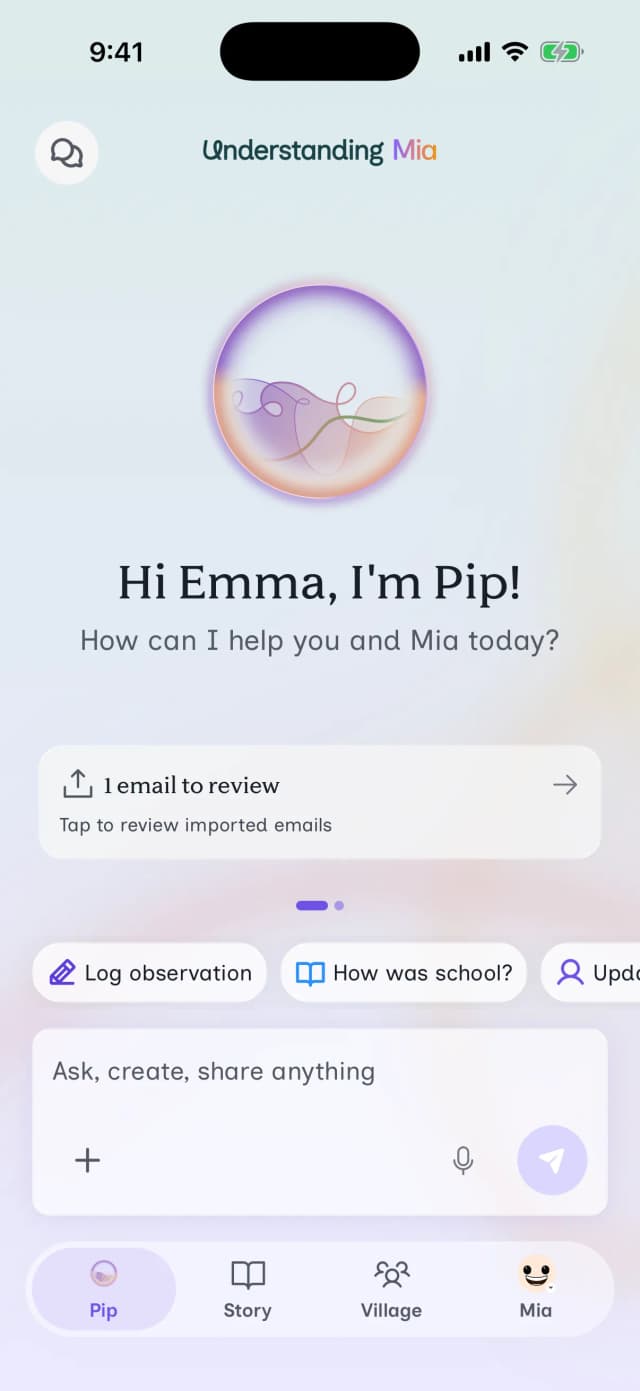
The Understanding Zoe app open on a phone, showing Pip's home screen

Where Understanding Zoe fits

Your patterns tell a story. Understanding Zoe helps you see it, at your own pace.

Pip* is your pocket coach inside the Understanding Zoe app. You talk to it by voice or text about what actually happened today. It writes the day down and gives you something to try straight away.

Over time it shows you patterns you were too tired to notice. Observations, appointments, reports and strategies all live in one private place.

You can invite people who support you, like a partner, a friend or a psychologist. You choose what each person sees, document by document.

Pip is not a doctor and not a therapist. It helps you organise and prepare. It does not assess and it does not treat.

* Pip has nothing to do with the UK benefit called PIP, the Personal Independence Payment.

Their words, not ours

Rated 4.6 on the App Store

Real reviews from neurodivergent adults. See the reviews.

“In just 3 days, UZ has changed my life. It's helped me work out concrete strategies for a deeply distressed nervous system, and provides insight and affirmation I wouldn't let myself see.”

AubreyDB · Neurodivergent adult · App Store

“As a late Diagnosed Neurodivergent, this has helped me so much to understand who I actually am.”

Laura M · Neurodivergent adult · Google

As featured in

Startup Daily SmartCompany Channel 9 Mums and Co Women's Agenda Education Today ABC

Questions people ask us

Why is ADHD in women so often missed?

The best-known picture of ADHD is loud and physically restless. Many women do not look like that. Their restlessness is often in their thinking, and they learn to cover it well.

A 2020 UK expert consensus says ADHD in women is often subtle and turned inward. Coping strategies can hide it for years. Australia's 2022 ADHD guideline adds that women are often told it is anxiety or depression.

Can you develop ADHD as an adult?

No. ADHD is lifelong, so it does not start in adulthood. What changes is how visible it becomes. A new job, a move or new responsibilities can stretch coping strategies past their limit.

The 2020 consensus notes that ADHD often shows more in women at times of transition. Many women first recognise it themselves, and then ask their doctor. That is a common and valid route.

Does menopause affect ADHD?

It can. The 2020 expert consensus says ADHD traits may feel stronger during hormonal changes. It names the menstrual cycle and menopause among them. A 2025 Icelandic study found severe perimenopause changes were more common in ADHD women.

The experts also advise reviewing ADHD treatment around menopause. If strategies that used to work suddenly stop, hormones may be part of the reason. It is worth raising with your doctor.

Is it ADHD or anxiety?

It can be both. Anxiety often sits alongside ADHD in women. Sometimes it grows from years of working hard to keep up and cover gaps.

Australia's 2022 guideline says women are often told it is anxiety or depression. If anxiety treatment has only partly helped, it may be worth asking about ADHD.

Is an ADHD assessment worth it as an adult?

For many women, yes. An assessment can give you an explanation for a lifetime of patterns. It can also open access to medication, if that is something you want.

It rarely opens funded support on its own, and it can be costly. Deciding not to seek one is a real answer too. Our article is an ADHD assessment worth it at 40? weighs this up for Australia.

If today is a hard day

Understanding Zoe is not a crisis service. If you are in danger now, call your local emergency number. That is 000 in Australia, 999 in the UK and 911 in the US.

For support in Australia, call Lifeline on 13 11 14. In the UK, call Samaritans on 116 123. In the US, call or text 988.

Nothing on this page is medical advice. It does not assess anyone. It is not a substitute for care from a professional who knows you.

Keep reading