Stimming is repetitive movement, sound or sensation that helps a person regulate. It can soothe, focus, express joy or release big feelings. It is a strength, not something to fix.
Autistic adults in a 2019 UK study described stimming as a way to regulate. They objected to treatment that aims to eliminate it.
Source: Kapp and colleagues, University of Exeter and University College London, “People should be allowed to do what they like”: autistic adults' views and experiences of stimming, Autism, 2019.
Stimming is common in Autistic people and ADHDers, at every age. Many people stim without thinking of it that way.
Hiding stims takes energy. When people can stim freely, many find it easier to think, connect and stay calm.
Stims come in many forms. They can involve any of the senses.
There is no right or wrong way to stim. These are some of the forms people describe.
Many people stim more when their energy is low or their senses are overloaded. We explore body signals on our page about interoception.
Clinical psychologist Brianna Thomas says stimming is self-regulation.
“I would say, pair it to the thing that you're trying to get done at the time, and point out to the person, moving my body like this is helping me learn, or moving my hands like this is helping me concentrate on playing, or it's making my body feel calm.”
Laetitia Andrac, co-founder of Understanding Zoe, asked Brianna this question for herself. She had stimmed on stage when Understanding Zoe won an Australian technology competition.
People asked her what stimming was. Her simple answer is that it is self-regulation. When people understand it, they are more likely to accept it.
Autistic adults describe stimming as useful, and as something that deserves acceptance.
In 2019, UK researchers spoke with 32 Autistic adults about stimming. They were from the University of Exeter and University College London.
Two themes stood out. Stimming helps people regulate, soothe themselves and express intense feelings or thoughts. It is also not always accepted, but understanding can change that.
Participants objected to treatment that aims to eliminate stimming. They saw it as a useful way of coping.
Autistic adults shared their views on stimming in the 2019 study.
Main themes: stimming helps people regulate, and it deserves acceptance.
Source: Kapp and colleagues, Autistic adults' views and experiences of stimming, Autism, 2019.
Holding in a stim takes effort, and that effort adds up.
Many people learn early that stimming draws looks or comments. So they hold it in. That is one part of masking, which means hiding or copying behaviour to fit in.
Masking uses energy all day. Over time, it can feed exhaustion. Our page on Autistic burnout explains how.
Stimming freely is not equally safe everywhere. You get to decide where it feels safe for you.
“I remember as a child spinning all the time and loving spinning and loving swinging and feeling that movement all the time, but then I also realised that there was a point where it wasn't acceptable to be spinning anymore … so it actually still feels glorious if there's nobody around and I can skip or I can spin and it's like I'm breaking the rules.”
An Autistic adult in a 2019 UK study of stimming.
Stimming is worth celebrating. These ideas make it easier to stim freely.
Stimming tells you something about what your body needs. Understanding Zoe helps you notice the patterns.
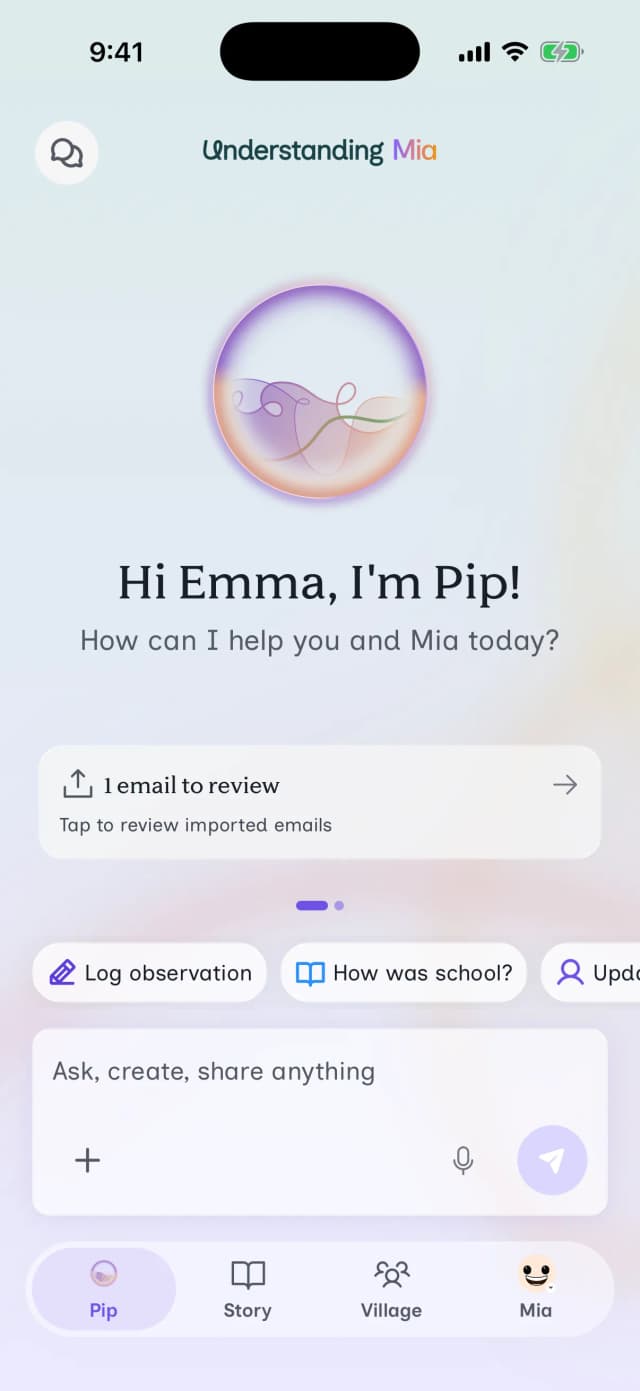
Pip* is your pocket coach inside the Understanding Zoe app. You talk to it by voice or text about what actually happened today. It writes the day down and gives you something to try straight away.
Over time it shows you patterns you were too tired to notice. Observations, appointments, reports and strategies all live in one private place.
You can invite people who support you, like a partner, a friend or a psychologist. You choose what each person sees, document by document.
Pip is not a doctor and not a therapist. It helps you organise and prepare. It does not assess and it does not treat.
* Pip has nothing to do with the UK benefit called PIP, the Personal Independence Payment.
Real reviews from neurodivergent adults and therapists. See the reviews.
“In just 3 days, UZ has changed my life. It's helped me work out concrete strategies for a deeply distressed nervous system, and provides insight and affirmation I wouldn't let myself see.”
AubreyDB · Neurodivergent adult · App Store
“As a late Diagnosed Neurodivergent, this has helped me so much to understand who I actually am.”
Laura M · Neurodivergent adult · Google
“As a therapist, to be able to both recommend and utilise this app with families is incredible. Creating space to connect, grow and thrive.”
Kaya L · Therapist · Google
Stimming is repetitive movement, sound or sensation that helps a person regulate. It can look like hand flapping, rocking, humming, tapping or spinning.
Many Autistic people and ADHDers stim, and so do many other people. Clicking a pen or jiggling a leg are forms of stimming too.
Autistic adults in a 2019 UK study said stimming helps them soothe intense feelings. It also helps them think and express emotions.
Some said it helped them cope in crowded or stressful places. For many, it is simply part of who they are, and it feels good.
No. Autistic adults in the 2019 study objected to treatment that aims to eliminate stimming. They described it as a useful way of coping.
If a stim causes injury, keep the person safe. Look for another way to meet the same need. The need behind a stim matters, and deserves respect.
Yes. Stimming is not something people grow out of. Many adults stim openly, and many learned to hide it.
Laetitia Andrac, co-founder of Understanding Zoe, has stimmed on stage. Adults in the research said stimming became easier to accept once people understood it.
Clinical psychologist Brianna Thomas suggests linking the stim to what it helps you do. For example, “moving my hands helps me concentrate.”
Simple, practical words help people understand. Once people understand stimming, they are more likely to accept it.
Understanding Zoe is not a crisis service. If you are in danger now, call your local emergency number. That is 000 in Australia, 999 in the UK and 911 in the US.
For support in Australia, call Lifeline on 13 11 14. In the UK, call Samaritans on 116 123. In the US, call or text 988.
Nothing on this page is medical advice. It does not assess anyone. It is not a substitute for care from a professional who knows you.