In short

Parents raising neurodivergent children spend about 33 hours a week on caregiving. About 10.5 of those hours go to emotional regulation, advocacy and admin. Most people never see that work.

These figures come from Making the Invisible Visible, our 2025 study of 1,091 Australian families.

Source: Understanding Zoe, Making the Invisible Visible: 2025 research report, a national study of 1,091 Australian families, with research partners Sunday Insights and PureSpectrum.

Every family shares the demands of daily care. For families raising neurodivergent children, the load is heavier, and it rarely switches off.

Much of it is quiet work that keeps systems turning and needs met. It happens in the background, so most people never see it.

How many hours the invisible work of caring takes

Caring for a neurodivergent child is close to a full-time job. It comes on top of everything else.

Parents in our study described the visible tasks of care. They also described the quiet work behind them. That quiet work took about 10.5 hours a week.

1,091

Australian families took part in the 2025 study.

33 hrs

A week spent on caregiving for neurodivergent children.

10.5 hrs

A week on emotional regulation, advocacy and administration alone.

Source: Understanding Zoe, Making the Invisible Visible: 2025 research report, a national study of 1,091 Australian families, with research partners Sunday Insights and PureSpectrum.

This is some of what that invisible work looks like, in parents' own descriptions.

  • Emotional regulation. Helping a child through big feelings, often many times a day.
  • Advocacy. Speaking up at school, with services and with family.
  • Administration. Forms, waiting lists, appointments and reports.
  • Repeated explanations. Telling each new person about your child, from the start.
  • Holding the whole picture. Remembering what works, what does not and what comes next.

Proud of their children, and unseen themselves

Parents spoke about their children with real pride, and about a load that often goes unnoticed.

“You can be grateful and exhausted in the same breath.”
A parent, raising neurodivergent children, in the 2025 study.
A parent and child reading together on a sofa at home
Making the Invisible Visible, Understanding Zoe's 2025 study.

73% of parents in the study felt proud or grateful almost every day. One mother described watching her daughter's unique perspective unfold, and the joy in her authenticity.

That pride sits alongside real tiredness. As another parent put it: “You can be grateful and exhausted in the same breath.”

Families told us their children are people to support and learn from, not problems to solve.

The children are not the burden. The load comes from systems that are not set up to support them, or their parents.

Who carries the invisible work of caring

Many parents doing this work are neurodivergent themselves.

More than three in five parents raising neurodivergent children identified as neurodivergent themselves. That shapes how the load is felt.

Neurodivergent parents were more likely to feel exhausted. 64% said so, compared with 42% of neurotypical parents.

Michael is an Autistic ADHDer and dad of two in Brisbane. He puts it this way: “…sometimes our autistic traits clash, and I'm trying to work out how I can do this properly.” Read Michael’s story.

Many neurodivergent parents recognise themselves as they learn about their child. Our pages on autism in women and ADHD in women may help.

9 in 10

Parents of neurodivergent children feel misunderstood or invisible.

3 in 5

Parents raising neurodivergent children are neurodivergent themselves.

64%

Of neurodivergent parents feel exhausted, compared with 42% of neurotypical parents.

Source: Understanding Zoe, Making the Invisible Visible: 2025 research report, a national study of 1,091 Australian families, with research partners Sunday Insights and PureSpectrum.

Case study

“It was all on me”

“It was very fractured. It was very much about me pushing information to the people in his life. It was all on me.”

Kate, a parent in Australia. Read her story about sharing the load of raising a neurodivergent child.

The cost of caring at work

The hardest part is often the system, not the parenting.

Parents described a maze of forms, waiting lists and repeated explanations. Services often sit apart, and families hold the threads together.

27% of parents had turned down promotions or opportunities because of caregiving demands. 63% said workplaces should offer structured supports for caregivers.

As one parent in the study put it: “The stress isn't from parenting. It's from systems that don't bend.”

What would lift the invisible work of caring

Parents asked for flexibility, understanding and support that joins up.

  • Flexible work. 44% of parents wanted flexible start and finish times. Remote options help too.
  • Structured caregiver support. 63% of parents said workplaces should offer structured supports for caregivers.
  • Joined-up services. Fewer repeated explanations, and one shared picture of the child.
  • Shared load at home. Partners and family can hold part of the picture, not only one parent.
  • Belonging and acceptance. For 46% of parents, the top hope is a child who feels safe and accepted.

Lil Desille is an AuDHD clinical psychologist. For couples raising children, Lil says the biggest pressure is often the mental and domestic load. Hear more in episode 12 of The Neurodivergent Pulse.

Small changes make a big difference. Families told us they want connection and understanding, not correction.

About the Making the Invisible Visible study

Research built with families, not just about them.

Making the Invisible Visible is a 2025 national study of 1,091 Australian families. It was run with research partners Sunday Insights and PureSpectrum.

It combines a national survey with families' own words. It captures the visible tasks of caregiving and the invisible load behind them.

Read our 2025 research report, Making the Invisible Visible, free on our website, or request the full report.

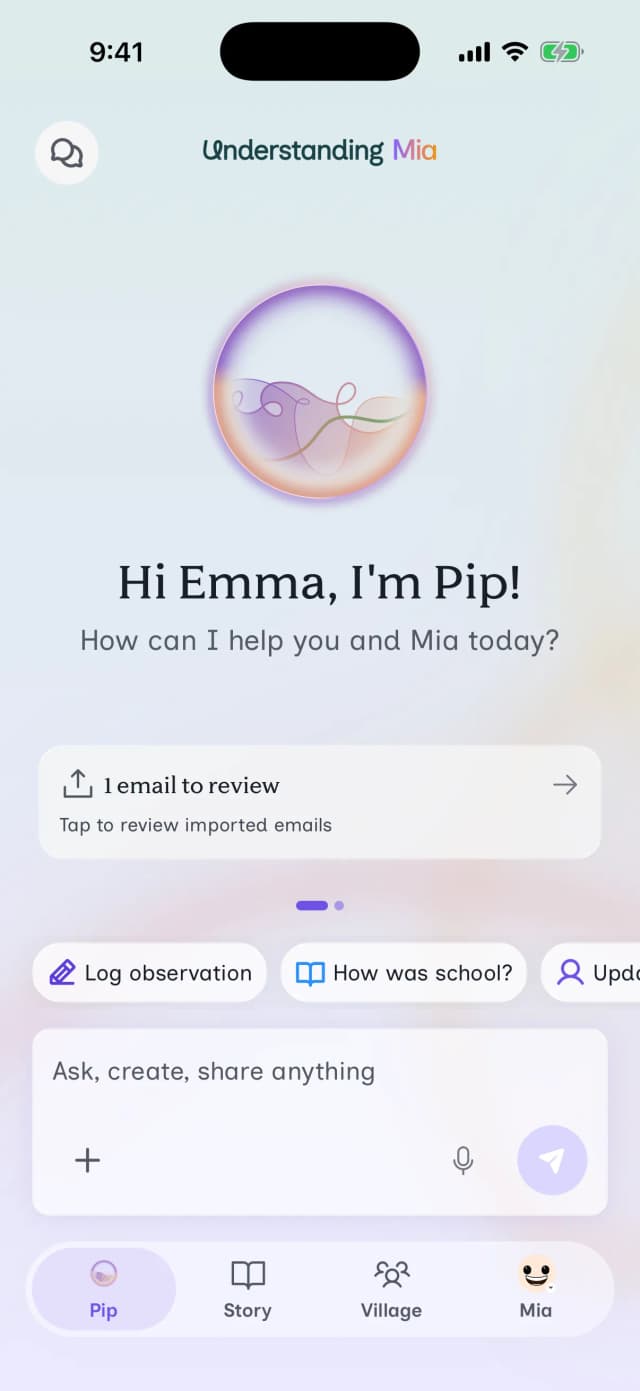
The Understanding Zoe app open on a phone, showing Pip's home screen

Where Understanding Zoe fits

Your notes become one shared picture. Understanding Zoe holds it for everyone who helps.

Pip* is your pocket coach. You talk to it by voice or text about what actually happened today. It writes the day down and gives you something to try straight away.

Over time it shows you patterns you were too tired to notice. Observations, appointments, reports and strategies all live in one profile.

The Care Village lets you invite family, teachers and therapists. You choose what each person sees, document by document. Supporters join free.

Pip is not a doctor and not a therapist. It helps you organise and prepare. It does not assess and it does not treat.

* Pip has nothing to do with the UK benefit called PIP, the Personal Independence Payment.

Their words, not ours

Rated 4.6 on the App Store

Real reviews from Australian parents. See the reviews.

“This is the only one that doesn't make my daughter sound like a problem to be managed. I jot down what's happening day to day and it quietly pulls out the patterns I'm too tired to notice myself.”

yoyo_e · Parent · App Store

“This app is a genuine must-have for ND families. Pip gives advice and direction in those tough moments, like meltdowns and Centrelink forms.”

Sian R · Parent · Google Play

“My child had a big meltdown this morning and I have been debriefing with Pip just now. It's been so incredibly helpful and specific in helping me get a handle on it.”

Katy S · Parent · App Store

As featured in

Startup Daily SmartCompany Channel 9 Mums and Co Women's Agenda Education Today ABC

Questions people ask us

How many hours a week does caring for a neurodivergent child take?

Our 2025 study included 1,091 Australian families. Parents spent about 33 hours a week caring for their neurodivergent children.

About 10.5 of those hours went to emotional regulation, advocacy and administration. That is the work most people never see.

What is invisible caregiving work?

It is the thinking, planning and emotional work behind the visible tasks. It includes helping a child regulate, advocating at school and filling in forms.

It also includes remembering everything and explaining your child again and again. You hold the whole picture in your head.

Are many parents of neurodivergent children neurodivergent themselves?

Yes. In our study, more than three in five of these parents were neurodivergent themselves.

Neurodivergent parents were more likely to feel exhausted. 64% said so, compared with 42% of neurotypical parents.

How does caregiving affect work?

In our study, 27% of parents had turned down promotions or opportunities. Caregiving demands were the reason.

63% said workplaces should offer structured supports for caregivers. 44% wanted flexible start and finish times.

Where can I read the research report?

You can read the key findings from our 2025 research report free on our website, or request the full report. Visit Making the Invisible Visible: 2025 research report.

The study was run in 2025 with research partners Sunday Insights and PureSpectrum. It combines a national survey with families' own words.

If today is a hard day

Understanding Zoe is not a crisis service. In an emergency call 000. Lifeline is 13 11 14. Kids Helpline is 1800 55 1800. 13YARN is 13 92 76.

Nothing on this page is medical advice. It does not assess anyone. It is not a substitute for care from a professional who knows you.

Keep reading