For parents who are neurodivergent too
Autistic and raising autistic children: how Michael Coles keeps his family's reports, patterns and plans in one place
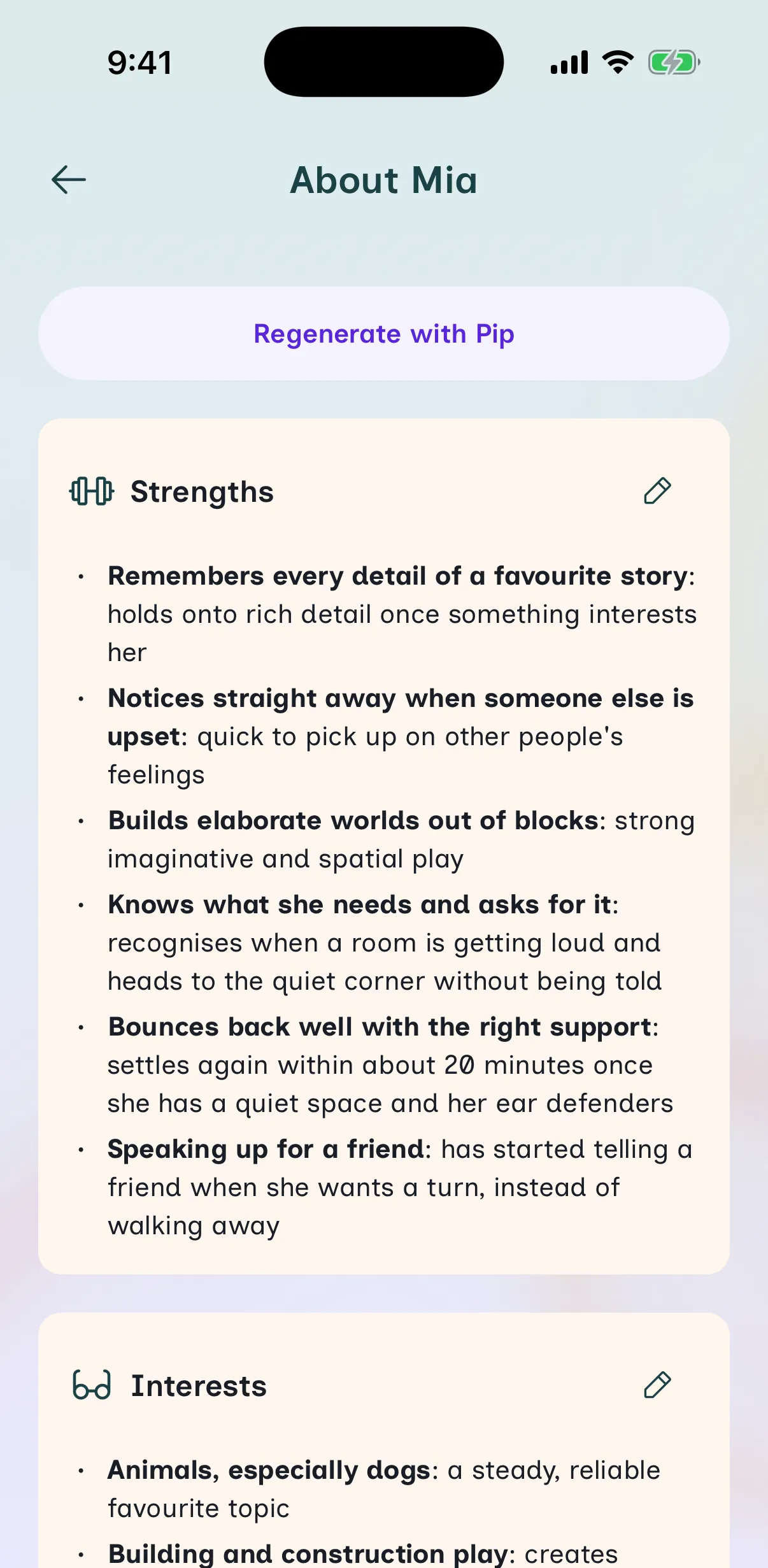
Michael Coles is an autistic ADHDer in Australia, raising two neurodivergent children. He kept their reports on a hard drive and their patterns in his head. He now uploads reports, school emails and therapist observations to Understanding Zoe. He keeps a profile for himself as well as his children. In the moment, he asks for a plan.
By Laetitia Andrac, co-founder of Understanding Zoe. Published 25 August 2026. About 8 minutes to read.
At a glance
- Who
- Michael Coles, autistic ADHDer, 51 at the time of recording (May 2026)
- Where
- Brisbane, Queensland, Australia
- Children
- Two neurodivergent children, a daughter and a son
- Using Understanding Zoe since
- 2025
- Support team
- Occupational therapists, speech pathologists, psychologists, teachers
- Before
- Reports on a hard drive; experiences and patterns held in his head
- Also
- Host of the Deep Dive Podcast, Program Facilitator at Empower Autism, and a speaker on autistic burnout, unconscious bias, and the gap between awareness and understanding
- Uses it for
- Uploading reports, school emails and therapist observations; capturing incidents so there is a plan next time; a profile for himself as well as his children; building a strengths and adjustments document to share
Before: two children, two sets of triggers, and one brain holding all of it
Michael’s weeks do not repeat.
“Week to week is still different for us, because you can’t predict what it’s actually going to look like in the first place.”
His two children experience the world differently from each other. They have different triggers, anxieties and sensitivities, and interact with their surroundings in different ways. His daughter had been having a difficult time at school. Michael was working all of this out while managing his own Autistic ADHD brain. Sometimes his traits and his daughter’s clashed.
“Sometimes with my personality, or how I interact, especially with my daughter, sometimes our autistic traits clash, and I’m trying to work out how I can do this properly.”
The information existed, but it was not anywhere useful. Reports sat on a hard drive, and observations from teachers and therapists arrived by email. What happened on a hard day, and what helped, stayed in his head.
“All we did was have the information from reports. Now we can upload the reports and get a specific answer that I could actually really use.”
Michael is not an outlier in our research. He is in the largest group of parents. In 2025, Understanding Zoe surveyed 1,091 Australian parents. Of those raising a neurodivergent child, 63% also identify as neurodivergent themselves. They also give more time to support and advocacy. Neurodivergent parents of neurodivergent children average 37 hours a week. For neurotypical parents of neurodivergent children, it is 25 hours (Understanding Zoe, Making the Invisible Visible, 2025, n=1,091).
The moment it changed: shutdown at a theme park
During the school holidays, Michael’s daughter went missing at a theme park.
Stories like this rarely mention the parent’s own neurodivergence. In an emergency, it does exactly what it always does. Monotropism is the tendency to attend deeply to one thing at a time. It is a strength in most of Michael’s life. At the theme park, it was not. There was a child missing and a lifeguard to find.
“With my monotropic brain, I can only do one thing at a time. I was trying to get a lifeguard, or trying to look for a child, and there was a lot of things going on at the same time. My brain was going in too many directions and it was causing me to shut down.”
Days like this still happen. What changed is that Michael now captures them. That way, the next time looks more like a plan than a shutdown.
“Having those experiences and trying to learn from them and trying to capture those. So if there’s a similar situation again, I know to plan for it... we could have a plan and work out what plan is actually going to work.”
What Michael does with Understanding Zoe
In a moment like the theme park, Michael now has somewhere to go first. He takes a step back with Understanding Zoe, then acts.
He uploads everything that used to be scattered
Reports off the hard drive, emails, and the observations teachers and professionals share with him.
He captures what happens, as it happens
Incidents, and the morning and evening routines that work some days and not others. He finally writes down what he had been carrying in his head.
He keeps a profile for himself
Not only for his children. He uploads his own reports and describes how he interacts with the world.
He builds a document he can hand over
Strengths, challenges and the adjustments that need to be in place. He shares it where it matters.
In his words
On using it for himself, not only his children
“Sharing how I interact with the world, and also uploading my reports, have helped as well, because with me being an autistic adult, I do have my own challenges.”
On frustration, and stepping back
“I’m not the perfect parent. I’m pretty open to that... It’s helpful with the app because it helps manage the frustration. I’ve got to take a step back and sometimes realise that what I’m doing may not be helping.”
On the moment nobody is available
“You can have moments where everything’s going pretty well, but then one moment can bring everything down, and you need that app to be able to have that moment where the clinicians are not available, or the school is not available... It needs to be there at that particular time.”
On what it is actually doing
“It’s more supporting the way that the autistic brain actually works.”
On the adjustments document
“You can put a document together with the strengths, weaknesses, the challenges, and the accommodations that you need to put in. So it’s helpful within certain settings, because having those accommodations and communicating those with them is really useful.”
To someone on the fence
“It’s actually a very important tool. I think it will change how you interact with your children and interact with the world.”
What Michael told us that we have not fixed yet
Michael invited his children’s therapists onto the app. Most did not take it up.
“I have invited them onto the app as well, but they haven’t been able to accept. So having that integration will probably be important in the future.”
He is right, and it is a real limit. Some therapists join straight away, and others never do. A family cannot make that happen alone, and we have not solved it yet.
Michael's household is not rare
In 2022, the Australian Bureau of Statistics counted 290,900 Autistic Australians. That is 1.1% of the population, and a 41.8% increase on 2018. Prevalence is 3.1% among people under 25. Among people aged 25 and over, it is 0.3% (ABS, Autism in Australia, 2022).
The National Autism Strategy 2025 to 2031 notes that references to autism “are often in relation to children only and do not recognise the experience of autism across the life span”.
Michael lives in that gap. He is a parent, and also the adult the system rarely describes.
If some of this sounds like you
You are neurodivergent too, and you are raising a neurodivergent child.
Sometimes your traits and your child’s traits clash.
Your child’s reports sit on a hard drive. What helps on a hard day is only in your head.
When too much happens at once, you can shut down.
Understanding Zoe is an Australian app for neurodivergent adults and caregivers of neurodivergent children. You tell Pip what happened. Pip helps you make sense of it and keeps what helps in one private place. You do not need a formal assessment to begin.
7 days free. Cancel before day 8 and you won’t be charged. After that it is A$14.99 a month or A$119.99 a year. Pip chats are private to you.
Questions parents and neurodivergent adults ask
I'm Autistic myself and my child is Autistic. How do other parents cope?
Michael describes doing two things at once. He works out his children's triggers while managing his own Autistic ADHD brain. In 2025, Understanding Zoe surveyed 1,091 Australian parents. Of those raising a neurodivergent child, 63% also identify as neurodivergent. It is the most common experience in our research, not an unusual one.
What happens when my Autistic traits and my child's traits clash?
In Michael's words: "Sometimes with my personality, or how I interact, especially with my daughter, sometimes our autistic traits clash, and I'm trying to work out how I can do this properly." He uses Understanding Zoe to work through those moments, not to stop them happening.
Can I use it for myself as an Autistic adult, or only as a parent?
Both. Michael keeps a profile for himself alongside his children's. He uploads his own reports and describes how he interacts with the world. He says this helps his parenting, and helps him and his wife work together.
Where do I keep my child's OT, speech and psychology reports?
Michael's were on a hard drive. Now he uploads them to Understanding Zoe, along with school emails. The observations teachers and professionals send him go in too. So when he asks about his child, the answer draws on his child's own documents. It is not general advice about children.
What goes into an adjustments document for school?
Michael builds one with strengths, challenges and the adjustments that need to be in place. Many people call these accommodations. He shares the document with the settings where it matters. He describes this as one of the more useful things he does with the app. Sharing adjustments is what changes what happens in the room.
I shut down in a crisis. Does that make me a bad parent?
No. Michael describes shutting down while he looked for his daughter at a theme park. Monotropism means attending to one thing at a time, and there were several. He now records what happened, so the next time has a plan. Shutdown is how some Autistic brains respond to overload, not a failure of care.
Listen: Michael's full conversation
Episode 31 of the Neurodivergent Pulse Podcast, 23 minutes, with Laetitia Andrac. Published 3 May 2026.
From overwhelm to clarity: A parent's journey with Understanding Zoe

About this case study
- Source
- Episode 31 of the Neurodivergent Pulse Podcast, recorded and published 05 May 2026, hosted by Laetitia Andrac
- Written by
- Laetitia Andrac, Understanding Zoe
- Published
- 25 August 2026
- Last reviewed
- 25 August 2026
- Next review
- February 2027
- Consent
- Michael agreed in writing to be named and quoted on this page.
- Quotes
- Lightly edited from the recording to remove spoken filler, and approved by Michael before publication.
Find Michael
Michael hosts the Deep Dive Podcast at deepdiveau.net. He talks with Australians about lived experience of neurodivergence. He also speaks on autistic burnout and inclusion.
References
- Understanding Zoe, Making the Invisible Visible: The Hidden Realities of Life for Neurodiverse Families, 2025. n=1,091 Australian parents. understandingzoe.com/white-paper
- Murray D, Lesser M and Lawson W, “Attention, monotropism and the diagnostic criteria for autism”, Autism, 2005, 9(2), pages 139 to 156. The paper that introduced monotropism. Full text, free to read. monotropism.org/murray-lesser-lawson
- Australian Bureau of Statistics, Autism in Australia, 2022, released 11 October 2024. 290,900 Autistic Australians, 1.1% of the population, a 41.8% increase on 2018. Prevalence is 3.1% among people under 25 and 0.3% among people aged 25 and over. abs.gov.au/articles/autism-australia-2022
- Australian Government Department of Health, Disability and Ageing, National Autism Strategy 2025 to 2031, released 14 January 2025. health.gov.au/resources/publications/national-autism-strategy-2025-2031
Read next
- Hear the whole episodeEpisode 31 of the Neurodivergent Pulse Podcast, 23 minutes with Michael and Laetitia.
- The study behind the numbersKey findings from Making the Invisible Visible, our 2025 study of 1,091 Australian parents.
- Understanding Zoe for adultsA profile for yourself, not only for your child. How the app works when you are the one who needs it.
- Understanding Zoe for parents and carersReports, observations and the plan for a hard afternoon, in one place for your child.