Autism in women often looks different from the picture most people know. Many Autistic women learn to mask, copying others and hiding what they find hard. Many are not identified until adulthood.
In a Dutch study, 31.7% of Autistic women said an earlier label had been wrong. For men, it was 16.7%.
Source: Kentrou and colleagues, Vrije Universiteit Amsterdam, Perceived misdiagnosis of psychiatric conditions in autistic adults, eClinicalMedicine, 2024.
Many women start to wonder in their thirties, forties or later. Often something shifts, and the effort of keeping up becomes too much.
We also have a page on ADHD in women.
Every Autistic person is different. These patterns come up again and again.
By adulthood, many Autistic women have spent years studying how to fit in. It often works, at a cost. These are some of the patterns that sit underneath.
Many Autistic women also find it hard to name their feelings or notice body signals. Read more about alexithymia and interoception.
For many women, being identified brings relief, and grief, at the same time.
“I often grieve what my life could have been like if I'd had [the assessment] earlier.”
Before she was assessed, Jasmine blamed herself for years of exhaustion. Knowing she was Autistic gave her a new way to understand her past.
A 2026 University of Nottingham study heard the same from adults assessed late. Understanding was one of the main changes people described.
Source: French and Cassidy, University of Nottingham, “Going Through Life on Hard Mode”: the experience of late diagnosis of autism and/or ADHD, Autism in Adulthood, 2026.
Masking and other labels are two big reasons women are identified late.
A UK study included 306 Autistic and 472 non-autistic adults. Autistic women reported more masking than Autistic men. Among non-autistic adults, there was no gender difference.
A Dutch study of 1,211 Autistic adults looked at earlier labels. Women were far more likely to report an earlier label that later felt wrong. Personality, anxiety and mood labels were the most common ones.
Source: Hull and colleagues, University College London, Gender differences in self-reported camouflaging in autistic and non-autistic adults, Autism, 2020.
Of Autistic women said an earlier psychiatric label had been wrong.
Of Autistic men said the same.
Autistic adults took part in the Dutch study.
Source: Kentrou and colleagues, Vrije Universiteit Amsterdam, Perceived misdiagnosis of psychiatric conditions in autistic adults, eClinicalMedicine, 2024.
Masking can keep you safe. Over years, it can also wear you down.
Masking means hiding or copying behaviour to fit in. It can mean rehearsing conversations, holding in movements like stimming or forcing eye contact. From the outside, it can look like coping.
Over time, the effort can lead to exhaustion. Our page on Autistic burnout explains how that happens, and what helps.
Unmasking can bring relief, and it is not equally safe for everyone. It can carry more risk for women and LGBTQIA+ people. The same goes for people in Black, Brown, Indigenous or Asian (BBIA) communities. Many people are in more than one of these groups, and the risk adds up. You get to decide where it is safe for you.
“I think the big cost is just kind of like energy and exhaustion. It's like when your brain works in a very different way than other people, you're essentially trying like twice as hard to like be in the same places or to do the same things.”
Jocelyn Green, Autistic and ADHD student and advocate, speaking on The Neurodivergent Pulse, episode 36, 9 June 2026.
Start from your own needs, not from how others expect you to be.
You do not need to be sure before you act. Start by writing down what you notice.
Keep short notes on your days: what drained you, what helped and what felt easy. Include the good days too. A few weeks of notes can say more than a single appointment.
You do not need a formal assessment to start understanding yourself. Read more about how Understanding Zoe supports neurodivergent adults.
Your patterns tell a story. Understanding Zoe helps you see it, at your own pace.
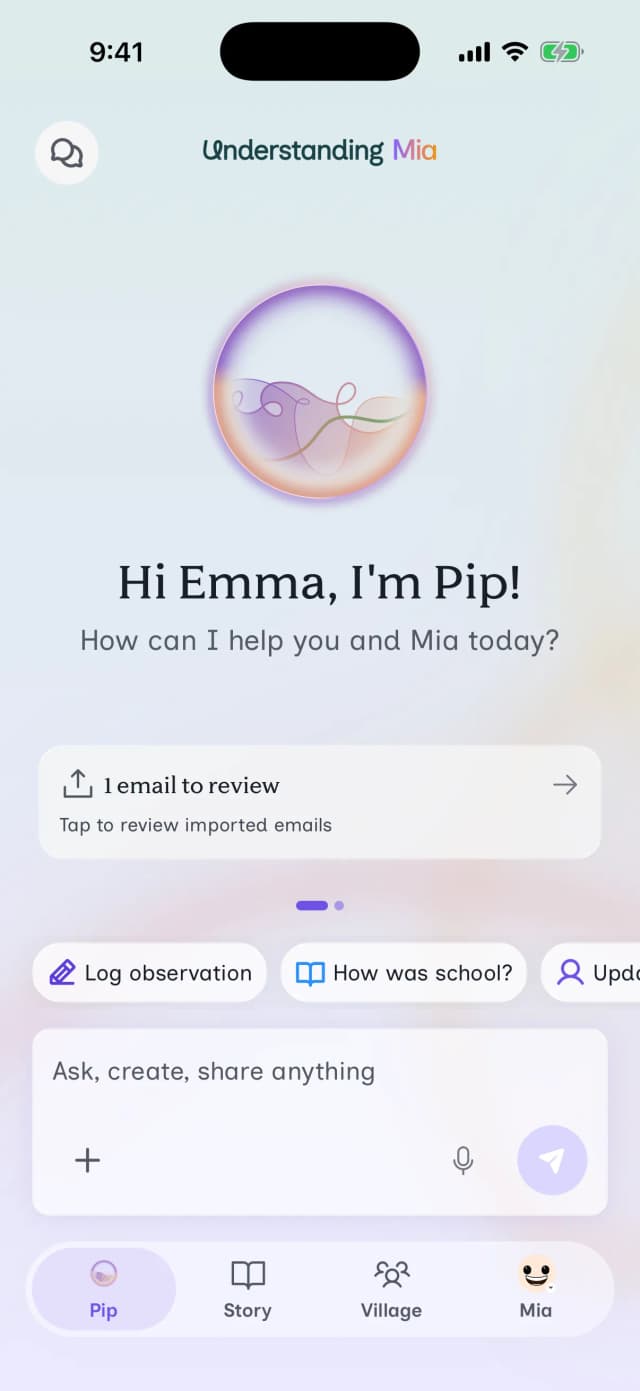
Pip* is your pocket coach inside the Understanding Zoe app. You talk to it by voice or text about what actually happened today. It writes the day down and gives you something to try straight away.
Over time it shows you patterns you were too tired to notice. Observations, appointments, reports and strategies all live in one private place.
You can invite people who support you, like a partner, a friend or a psychologist. You choose what each person sees, document by document.
Pip is not a doctor and not a therapist. It helps you organise and prepare. It does not assess and it does not treat.
* Pip has nothing to do with the UK benefit called PIP, the Personal Independence Payment.
Real reviews from neurodivergent adults. See the reviews.
“In just 3 days, UZ has changed my life. It's helped me work out concrete strategies for a deeply distressed nervous system, and provides insight and affirmation I wouldn't let myself see.”
AubreyDB · Neurodivergent adult · App Store
“As a late Diagnosed Neurodivergent, this has helped me so much to understand who I actually am.”
Laura M · Neurodivergent adult · Google
Autism assessment tools were built around how autism often looks in men. Many women learn to mask, which means hiding or copying behaviour to fit in. That makes autism harder to see, even for the woman herself.
A UK study found that Autistic women reported more masking than Autistic men. Among non-autistic adults, there was no gender difference at all. So the difference seems to be linked to autism, not to gender alone.
Many women describe feeling different for as long as they can remember. Social situations can be draining, even when they go well. Sensory input like noise, light or clothing can be hard to bear.
Deep, focused interests are common, and so is a strong need for routine. Many women also describe long recovery time after social events. Every Autistic woman is different, so no single list fits everyone.
Yes. A Dutch study asked 1,211 Autistic adults about earlier labels. 31.7% of women said one had been wrong. For men, it was 16.7%.
Personality labels were the most common, followed by anxiety and mood conditions.
For many adults, it brings a new understanding of themselves. A University of Nottingham study spoke with adults assessed late. Understanding was one of the main changes they described.
The same study found that timing matters. Some people also felt the weight of a label. Self-identification is valid too. You can decide what is right for you, and when.
Yes. This page is for women and gender diverse adults. A University of Cambridge study found more autism in transgender and gender diverse people.
Many gender diverse adults describe the same patterns of masking and late identification. They deserve the same careful look, and a clinician who respects who they are.
Understanding Zoe is not a crisis service. If you are in danger now, call your local emergency number. That is 000 in Australia, 999 in the UK and 911 in the US.
For support in Australia, call Lifeline on 13 11 14. In the UK, call Samaritans on 116 123. In the US, call or text 988.
Nothing on this page is medical advice. It does not assess anyone. It is not a substitute for care from a professional who knows you.