In short

Autistic inertia is when starting, stopping or changing an activity is very hard. It happens even when you want to. You know what to do. Your body and mind do not move on cue.

In the first study of Autistic inertia, 32 Autistic adults took part. They described difficulty starting, stopping and changing activities, outside their conscious control.

Source: Buckle and colleagues, University of Manchester, “No way out except from external intervention”: first-hand accounts of autistic inertia, Frontiers in Psychology, 2021.

Inertia is not laziness, and it is not a lack of motivation. Many people describe wanting to do the thing very much, and still being stuck.

We also have a page on executive function differences. It covers planning and task switching.

What Autistic inertia can feel like

Inertia shows up in both directions: getting going, and getting out.

Autistic adults in the research described inertia in many different ways. These are some of the patterns they shared.

Inertia also comes and goes. On other days, the same deep focus can bring long stretches of easy, productive work. Stress and sensory overload often make inertia worse. So can low energy. Many Autistic people also find body signals hard to read. See our page about interoception.

Why working alongside someone helps with Autistic inertia

For many Autistic people, another person nearby makes starting possible.

“I know that when there is something I am meant to be doing, but I don't know where to start and how to start and when to do it, just sitting with someone even across a screen and just knowing that we're both doing that thing is actually really helping me.”
Laetitia Andrac, Autistic and ADHD co-founder of Understanding Zoe.
Speaking on The Neurodivergent Pulse, episode 36, 9 June 2026.
A person sitting at a desk with a laptop and papers, thinking
Episode 36 of The Neurodivergent Pulse.

This is sometimes called body doubling. The other person does not need to help. Their presence is enough to make starting feel possible.

Autistic adults in the Manchester study said the same. Some worked beside someone else. One texted a “stuck buddy” when she felt stuck, and they made a plan together.

What the research says about Autistic inertia

Autistic people asked for this research, and an Autistic researcher led it.

In 2021, a University of Manchester team ran the first study of Autistic inertia. It was led by Karen Leneh Buckle, who is Autistic.

They held focus groups with 32 Autistic adults aged 23 to 64. People described difficulty starting, stopping and changing activities, outside their conscious control.

Prompts from others and a supportive setting made action easier. Stress and poor mental health made inertia worse. It affected daily life and wellbeing for many people.

32

Autistic adults shared their experience in the first study of Autistic inertia.

3

Things they found hard: starting, stopping and changing activities.

Source: Buckle and colleagues, University of Manchester, First-hand accounts of autistic inertia, Frontiers in Psychology, 2021.

When stopping is as hard as starting

Inertia is not only about getting going. Leaving an activity can be just as hard.

A switch from one task to another asks for both at once. You have to stop one thing and start the next. That is why transitions can feel so big.

If you are Autistic and ADHD, inertia can sit alongside ADHD traits. Our page on AuDHD explains how the two can pull in different directions.

Research

“Even stopping not doing anything is stopping doing something”

“I can't get to the point where I'll go to do the thing because it's almost like I got to stop whatever I'm doing, whether I'm doing anything or not. Even stopping not doing anything is stopping doing something.”

Ruth, an Autistic adult in the University of Manchester study of Autistic inertia, 2021.

What helps with Autistic inertia

Pushing harder rarely works. Changing what surrounds the task often does.

  • Work alongside someone. A friend in the room, or on a video call, can make starting easier.
  • Use a stuck buddy. Agree a simple message, like “I'm stuck”, and plan the next step together.
  • Break it into tiny steps. “All you need to do is sit up” can be the first step of a morning.
  • Lean on routines. Things you do the same way each time need less effort to start.
  • Book a set time. An appointment or a plan with someone else can make it easier to start.
  • Lower stress and demands. Rest, quiet and fewer demands often make inertia easier.

These ideas come from Autistic adults in the Manchester study, and from our podcast. Not every strategy works for everyone. Try one at a time, and keep what helps.

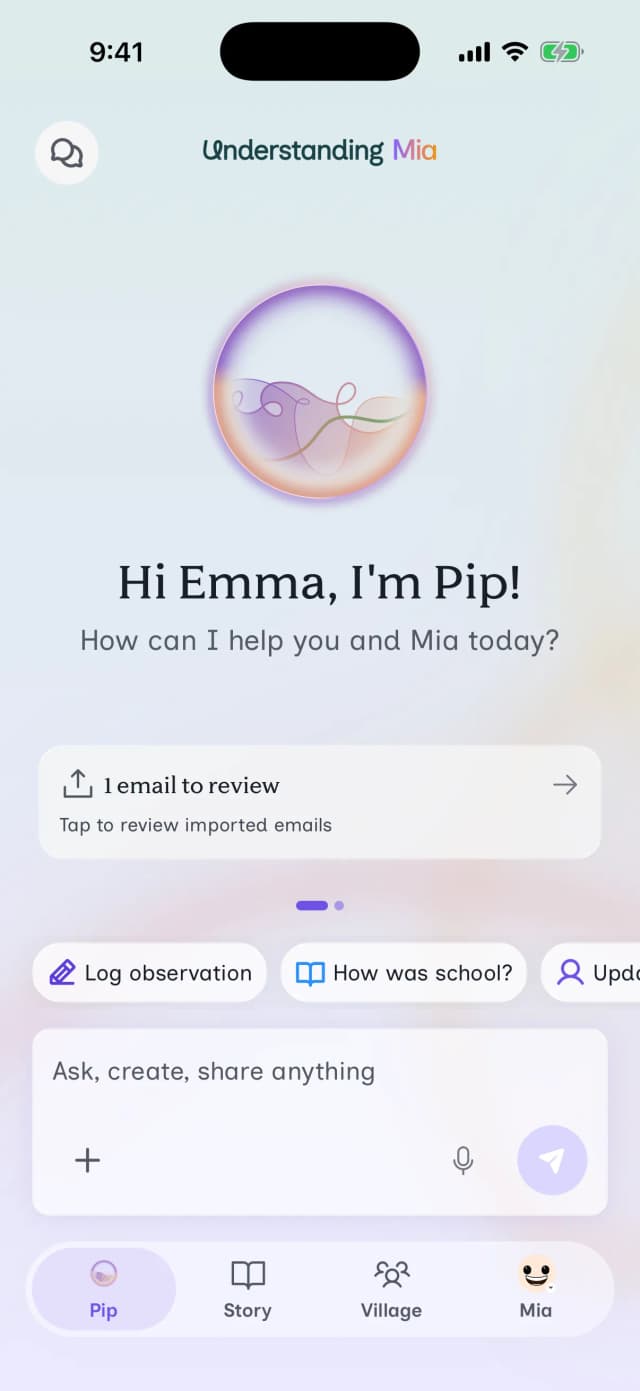
The Understanding Zoe app open on a phone, showing Pip's home screen

Where Understanding Zoe fits

Some days you get going, some days you do not. Understanding Zoe helps you see why.

Pip* is your pocket coach inside the Understanding Zoe app. You talk to it by voice or text about what actually happened today. It writes the day down and gives you something to try straight away.

Over time it shows you patterns you were too tired to notice. Observations, appointments, reports and strategies all live in one private place.

You can invite people who support you, like a partner, a friend or a psychologist. You choose what each person sees, document by document.

Pip is not a doctor and not a therapist. It helps you organise and prepare. It does not assess and it does not treat.

* Pip has nothing to do with the UK benefit called PIP, the Personal Independence Payment.

Their words, not ours

Rated 4.6 on the App Store

Real reviews from neurodivergent adults. See the reviews.

“In just 3 days, UZ has changed my life. It's helped me work out concrete strategies for a deeply distressed nervous system, and provides insight and affirmation I wouldn't let myself see.”

AubreyDB · Neurodivergent adult · App Store

“As a late Diagnosed Neurodivergent, this has helped me so much to understand who I actually am.”

Laura M · Neurodivergent adult · Google

As featured in

Startup Daily SmartCompany Channel 9 Mums and Co Women's Agenda Education Today ABC

Questions people ask us

What is Autistic inertia?

Autistic inertia is when starting, stopping or switching activities is very hard. It happens even when you want to. It is not a choice, and it is not laziness.

In the first study on it, Autistic adults said it was outside their conscious control. Some said it felt more like being physically stuck than a planning problem.

Is Autistic inertia the same as executive dysfunction?

They overlap, but they are not the same. Executive function differences are about planning, organising and switching. They are common in ADHD too. Read more on our page about executive function differences.

Autistic inertia is the Autistic experience of getting stuck, both starting and stopping. Some people in the research said it felt closer to a movement difference.

Why is stopping just as hard as starting?

Inertia works both ways. Once you are in an activity, leaving it can take as much effort as starting. That is why a simple switch can feel so big.

One person in the study put it this way: “Even stopping not doing anything is stopping doing something.” Many Autistic adults recognise that feeling.

Does stress make Autistic inertia worse?

Yes. People in the study said stress, anxiety and poor mental health made inertia harder. Being very tired, in pain or overloaded made it harder too.

That is why rest and lower demands often help. Our page on Autistic burnout explains how long stretches of overload can build up.

How can other people help with Autistic inertia?

A gentle prompt from someone can make a real difference. Working quietly alongside someone also helps many people get going.

Try not to read inertia as not caring or not trying. People in the study said that judgement made things worse. Patience and practical help make it easier.

If today is a hard day

Understanding Zoe is not a crisis service. If you are in danger now, call your local emergency number. That is 000 in Australia, 999 in the UK and 911 in the US.

For support in Australia, call Lifeline on 13 11 14. In the UK, call Samaritans on 116 123. In the US, call or text 988.

Nothing on this page is medical advice. It does not assess anyone. It is not a substitute for care from a professional who knows you.

Keep reading