An occupational therapist, or OT, helps people take part in the everyday things that matter to them. For an Autistic child, that might be getting dressed, eating, playing, managing a busy classroom, or finding ways to handle sound, light and touch. The goal is a life that works for the child, not a child who looks less Autistic.

This page explains what an OT actually does, what a session looks like and what happens between sessions. It describes the discipline. It does not recommend or rank any practitioner.

What an occupational therapist does for an Autistic child

OTs look at the whole day: what a child needs to do, wants to do and finds hard. Then they work on the fit between the child and their world.

  • Everyday activities. Dressing, eating, toileting, sleep routines and getting ready for the day.
  • Sensory needs. Understanding how a child experiences sound, light, touch, taste and movement, and shaping spaces and routines around that.
  • Play and learning. Fine motor skills such as holding a pencil, gross motor skills such as climbing, and play that builds confidence.
  • School and childcare. Ideas for the classroom, transitions and the playground, often shared with teachers.
  • Body awareness. Some OTs work on interoception, noticing signals such as hunger, thirst or needing the toilet. Our page on interoception explains more.

In Australia, occupational therapists are registered health practitioners. You can check any OT on the public register kept by AHPRA, the Australian Health Practitioner Regulation Agency.

What an OT session looks like

For young children, most sessions look a lot like play. That is on purpose.

Sessions might happen in a clinic, at home, at school or by telehealth. A first appointment usually involves a lot of listening: what your child loves, what a typical day looks like, and what you and your child want to work on.

Australia's national guideline for supporting Autistic children says goals should be set by the child and family, with support from practitioners. Supports should be practical and personally meaningful. Children should not be pushed to interact in neurotypical ways if that would harm their freedom or identity.

Questions to ask a new OT

How do you set goals with families? How do you make sure my child enjoys sessions? What will you share with school, and how? How will we know if something is not working?

Signs an approach fits your child

Your child wants to go back. Goals make sense to your family. Stims, interests and communication styles are respected. You leave with ideas you can actually use at home.

Banner for the Understanding Zoe article Play is learning
From our podcastPlay is learning: how curiosity helps neurodivergent kids thrive

Why messy, child-led play is the learning itself, from The Neurodivergent Pulse.

Read the article

What happens between OT sessions

An hour a week or fortnight is a small part of a child's life. Most of the change happens in everyday moments.

Good OTs share ideas you can fold into routines you already have, rather than adding homework to a busy family. They also want to hear what happened since last time: what worked, what did not, and what changed at home or school.

Writing a few notes as you go makes that conversation easier. A photo of a set-up that worked, a note about a hard morning, or a question that came up at bedtime all help the next session start in the right place.

Understanding Zoe keeps the family's picture between sessions. Notes, photos and questions stay in one place, so you can look back on them before the next session and share what you choose with your child's OT.

How families usually pay for occupational therapy

Costs vary between practices. These are the most common ways families pay.

Common ways to pay for occupational therapy in Australia
RouteHow it worksWorth knowing
NDISFor NDIS participants, OT can be part of a plan.Our page on the NDIS and autism explains how the scheme works.
MedicareA GP can sometimes refer for a small number of rebated allied health sessions each year.Ask your GP whether a care plan applies to your child.
Private healthSome extras cover includes occupational therapy.Check your limits before you book.
TelehealthSome OTs see families by video, which widens the choice if you live outside a city. You can also book telehealth consultations with neurodiversity-affirming OTs in the Understanding Zoe app.Ask how fees, reports and cancellations work before you book.
Private feesYou pay the practice directly.Ask about fees, report costs and cancellation policies up front.

Getting ready for an OT appointment

A few notes help a new OT understand your child faster.

Before the first session

Print it, or keep it on your phone.

  • What your child loves, and what helps them feel settled.
  • Three or four everyday moments that are hard, with rough dates.
  • Any reports from paediatricians, psychologists or speech pathologists.
  • What school or childcare has noticed.
  • Your questions, written down so you do not have to hold them in your head.

Where Understanding Zoe fits

Therapy works best when everyone around a child is on the same page. That is hard when notes, reports and ideas live in different places.

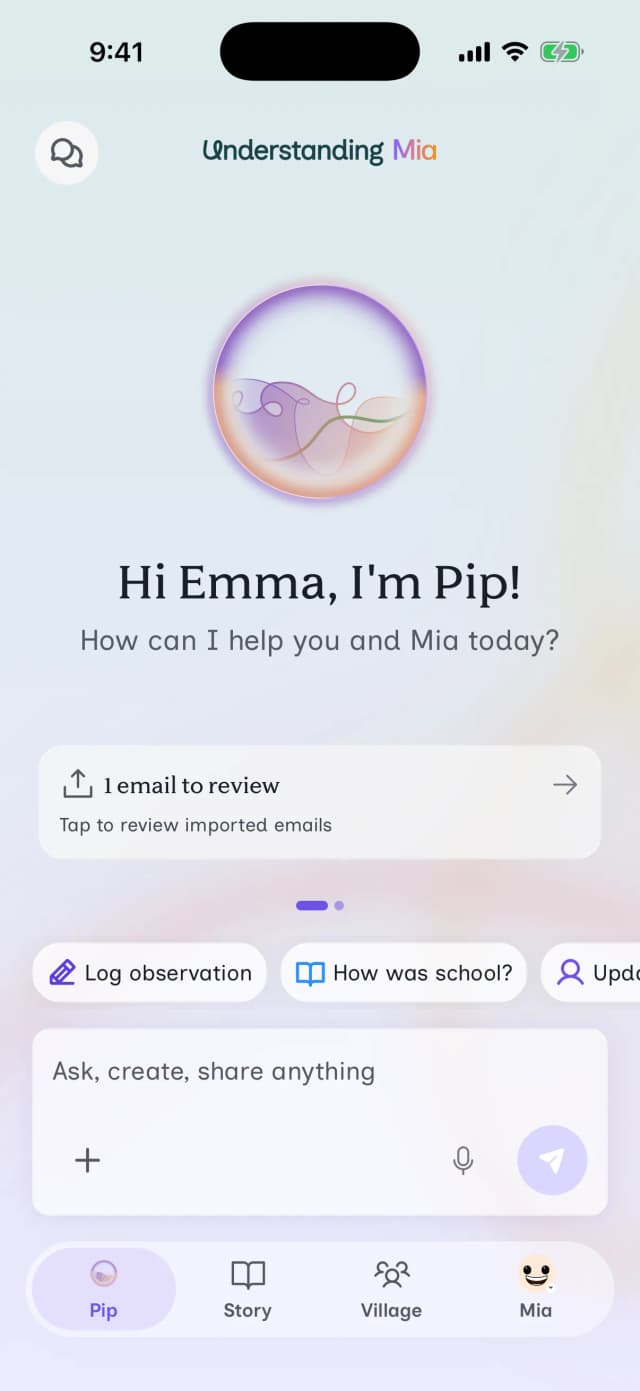
Pip* is your pocket coach. You tell it what you notice, by voice or text, and it keeps your notes. The Story tab lays your notes out over time, in plain language, so it keeps the family's picture between sessions.

The Care Village lets you share chosen notes and documents with your child's OT, teachers or family. You decide who sees what. Allied health practitioners join free when you invite them.

You can also book telehealth consultations with occupational therapists in the app. We select OTs who work in a neurodiversity-affirming way, and your notes and documents stay in one place before and after each session.

Who provides the therapy. The app itself does not assess or treat, and it is not therapy. Consultations are with registered occupational therapists we work with. Built with families, researchers and allied health.

The Understanding Zoe app open on a phone, showing Pip's home screen

Try Understanding Zoe at your own pace

Understanding Zoe is for neurodivergent people and the people who love them, at every age and stage.

Family, teachers and your care team join free when you invite them.

Start free trial

* Pip is the pocket coach in the Understanding Zoe app. It has nothing to do with the UK benefit called PIP, the Personal Independence Payment.

As featured in

Startup Daily SmartCompany Channel 9 Mums and Co Women's Agenda Education Today ABC

Questions people ask about occupational therapy for autism

Does my child need an autism diagnosis to see an OT?

No. You can book an occupational therapist without a diagnosis, and many children see an OT for everyday challenges before or without one. Some funding routes need a diagnosis or a referral, so check before you book.

If your child is younger than 6 and there are concerns about their development, the NDIS early childhood approach can help without a diagnosis.

What is the difference between an OT and a speech pathologist?

An OT focuses on everyday activities, sensory needs, play and motor skills. A speech pathologist focuses on communication, including speech, language, understanding and alternative ways to communicate, as well as eating and swallowing.

Many Autistic children see both. When they share notes and goals, the support fits together better.

How long will my child need occupational therapy?

It depends on your child's goals. Some children see an OT for a few months around a particular change, such as starting school. Others see one on and off for years as needs change.

Ask your OT how you will review goals together, and what would tell you both that it is time to pause or change direction.

Can OT happen at school or by telehealth?

Yes, depending on the practice. Some OTs visit schools and childcare centres, which helps teachers see ideas in action. Telehealth works well for parent coaching and for many older children.

Ask what format suits your child, and how the OT will share ideas with the adults around them.

How do I know if an OT is neuroaffirming?

Ask how they set goals, and listen for whether your child's wellbeing and interests come first. A neuroaffirming OT respects stimming, communication styles and sensory needs, rather than trying to make a child look less Autistic.

Our page on neuroaffirming support explains what to look for.

Sources

  1. Autism CRC. National Guideline for supporting the learning, participation, and wellbeing of autistic children and their families in Australia, 2022.
  2. Australian Health Practitioner Regulation Agency. Register of practitioners.
  3. Occupational Therapy Board of Australia. occupationaltherapyboard.gov.au.
  4. National Disability Insurance Agency. Our Guidelines: Early childhood approach.

If today is a hard day

Understanding Zoe is not a crisis service. In an emergency in Australia call 000. Lifeline is 13 11 14. Kids Helpline is 1800 55 1800. 13YARN is 13 92 76. Outside Australia, contact your local emergency number.

Nothing on this page is medical, legal or financial advice. It does not assess anyone, and it is not a substitute for care from a professional who knows you. If something here sounds familiar, write it down and take it to your GP.

Keep reading