The National Disability Insurance Scheme (NDIS) funds support for Australians with a disability that is likely to be permanent. Many Autistic children and adults are on it. Autism is not an automatic ticket in, though. The NDIS looks at how a person's support needs affect everyday life, not at the word on a report.

This page explains how the scheme works when your child is Autistic: the two ways in, what changes with age, how Thriving Kids fits, and what happens after you apply. It describes the scheme. It does not tell you what to ask for, and the National Disability Insurance Agency (NDIA) makes every decision.

The words on this page. We say Autistic, with a capital A, because many Autistic people prefer identity-first language. The NDIS uses its own terms, such as "impairment" and "functional capacity". We use them where we quote the rules, so you recognise them on the forms.

Who can apply to the NDIS with autism

Three basic rules come first, for everyone. Then the NDIA looks at support needs.

  • Age. You must be younger than 65 on the day you apply. For a child, a parent or carer applies on their behalf.
  • Residency. You must be an Australian citizen, a permanent resident or hold a Protected Special Category visa.
  • Living in Australia. Australia must be home, where you spend most of your time.

After that, the NDIA checks whether a person meets the disability requirements, the early intervention requirements, or both. Under the law, it looks at impairments and their effect on daily life, not at the type of diagnosis. That is why two Autistic children can get different answers.

The two ways into the NDIS for an Autistic child

The scheme has two sets of requirements. A child can meet one, the other or both.

Disability requirements

The impairment is likely to be permanent, and it substantially affects the ability to do everyday activities. Think communication, getting around, self-care, learning, social interaction or self-management.

Support is usually needed for life, so the NDIS plans for the long term.

Early intervention requirements

The impairment is likely to be permanent, and support now is likely to reduce the support a child needs later. Early intervention is a common way in for young Autistic children.

A separate rule covers children younger than 6 with developmental delay. They can meet the early intervention requirements without an autism diagnosis.

Your child's report matters, but the NDIA also wants to understand daily life: what a good day looks like, what a hard day looks like, and the help it takes to get through both.

What changes with your child's age

Who you deal with depends on how old your child is. The age bands matter more than most families expect.

How the NDIS works with Autistic children at different ages
AgeWho helps youDiagnosis needed?Worth knowing
Younger than 6An NDIS early childhood partner, a local organisation the NDIS funds.No, if there are concerns about development.The partner can offer short-term early supports, or help you apply.
6 to 8An early childhood partner.Often, for some supports.The early childhood approach covers children younger than 9, so support carries on through the start of school.
9 and olderA local area coordinator, another kind of NDIS partner.Usually, as part of the evidence.Teenagers and adults apply in the same way as everyone else.

If you are worried about a young child, you do not need to wait for an assessment before asking for help. Your GP, child health nurse or early childhood educator can connect you with an early childhood partner.

Jessica Otter, an Autistic mum and founder of Aussie Autism Family
From our podcast I believe you: trusting yourself as an autism parent

Jessica Otter on trusting her instincts as a parent, when professionals and family did not always listen.

Read the article

How Thriving Kids fits alongside the NDIS

Thriving Kids is a new program for children aged 8 and under with developmental delay or autism and low to moderate support needs.

It sits outside the NDIS. Governments are funding it together, and it delivers support through places children already go, such as early learning, schools and community services. It began rolling out in stages from 1 October 2026.

Children with permanent and significant disability, including Autistic children with high support needs, will continue to be eligible for the NDIS under the usual rules. Changes to who can enter the NDIS as a child are planned once Thriving Kids is fully in place, and they need changes to the law first.

Our Thriving Kids guide for parents explains who it is for, what you can use now and what happens if your child is already on the NDIS.

Applying to the NDIS for your Autistic child, step by step

The steps are the same whether you apply under the disability or the early intervention requirements.

  1. Talk to an NDIS partner

    For a child younger than 9, that is an early childhood partner. For an older child, a local area coordinator. They explain the options and can help you apply, but they cannot tell you whether your child will be found eligible.

  2. Gather evidence

    Evidence comes from your child's treating health professionals. It should confirm the primary disability and describe how it affects different parts of life. Reports from a paediatrician, psychologist, speech pathologist or occupational therapist are common.

  3. Make an access request

    You apply by phone, on a form, or with help from your partner. You will be asked about your child, your evidence and how support needs show up day to day.

  4. Wait for the decision

    The NDIA decides whether your child is eligible. It may ask for more information or another report first. If you disagree with the decision, you can ask for it to be reviewed.

  5. Plan together

    If your child is eligible, the next step is planning. You talk through your child's goals and what support looks like. Our guide on what NDIS plans cover and how to prepare for a review picks up from here.

What to bring to an NDIS conversation

You know your child best. Writing it down helps that knowledge reach the people making decisions.

Before you call

Print it, or keep it on your phone.

  • Every report you have, in one place, with dates.
  • A description of a typical day, and of a hard day.
  • What your child finds easy, and what takes extra help.
  • The supports you already use, at home, at school and elsewhere.
  • Your questions, written down so you do not have to hold them in your head.

Where Understanding Zoe fits

NDIS conversations come with a lot of paper. Reports, letters and emails arrive from different people at different times.

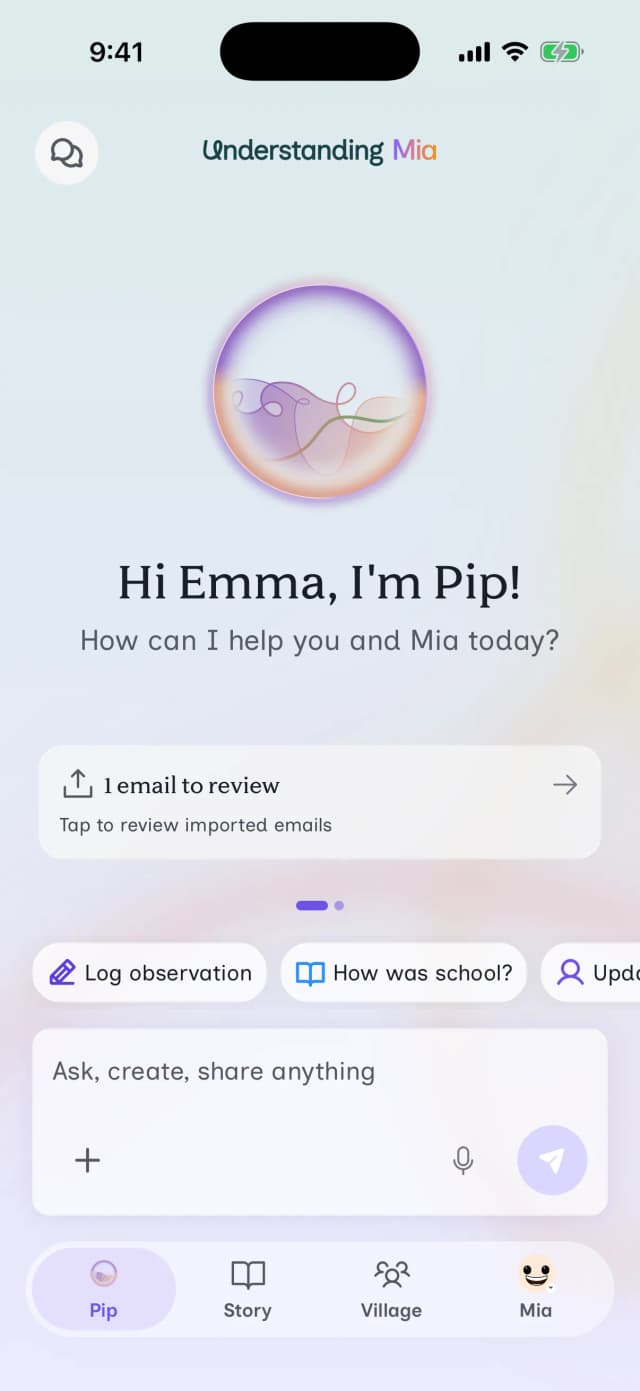
Pip* is your pocket coach. You tell it what you notice, by voice or text, and it keeps your notes. The Story tab lays your notes out over time, in plain language, so you can look back and prepare what to raise in a planning meeting.

Reports and letters can be kept with your child's records. The Care Village lets you share chosen documents with family, school or your care team. You decide who sees what.

What Understanding Zoe does not do. It does not assess or treat, and it does not decide or affect NDIS eligibility. The NDIA makes every decision about access and funding.

The Understanding Zoe app open on a phone, showing Pip's home screen

Try Understanding Zoe at your own pace

Understanding Zoe is for neurodivergent people and the people who love them, at every age and stage.

Family, teachers and your care team join free when you invite them.

Start free trial

* Pip is the pocket coach in the Understanding Zoe app. It has nothing to do with the UK benefit called PIP, the Personal Independence Payment.

As featured in

Startup Daily SmartCompany Channel 9 Mums and Co Women's Agenda Education Today ABC

Questions people ask about the NDIS and autism

Is autism automatically covered by the NDIS?

No. Eligibility depends on how a person's impairments affect everyday life, and whether support is likely to be needed for life or would reduce support needs later. An autism diagnosis is important evidence, but the NDIA looks at the whole picture.

Many Autistic children and adults are NDIS participants. Others meet their support needs through schools, health services and programs outside the scheme, such as Thriving Kids for younger children.

Does my child need an autism diagnosis before we contact the NDIS?

Not if your child is younger than 6 and there are concerns about their development. An early childhood partner can offer short-term early supports or help you apply, without a diagnosis.

For older children, evidence from a treating health professional is usually part of an application. If you are still waiting for an assessment, talk to your partner about what can happen in the meantime.

What is the difference between an early childhood partner and a local area coordinator?

Both are local organisations the NDIS funds to help families. Early childhood partners work with children younger than 9 and their families. Local area coordinators work with people aged 9 and older.

Neither one decides whether your child is eligible. That decision always sits with the NDIA.

Will Thriving Kids replace the NDIS for my child?

Not for every child. Thriving Kids is designed for children aged 8 and under with developmental delay or autism and low to moderate support needs. Children with permanent and significant disability, including Autistic children with high support needs, continue to be eligible for the NDIS under the usual rules.

If your child is already on the NDIS, our Thriving Kids guide explains what is known so far. Your early childhood partner can tell you how it applies to your family.

What can I do if the NDIA says my child is not eligible?

You can ask for the decision to be reviewed. Read the decision letter carefully, because it explains why the decision was made and how long you have to ask for a review.

It can help to ask your child's health professionals whether their reports describe daily life in enough detail. You can also apply again later if your child's situation or evidence changes.

Sources

  1. National Disability Insurance Agency. How to check your eligibility. ndis.gov.au.
  2. National Disability Insurance Agency. Our Guidelines: Early childhood approach. ourguidelines.ndis.gov.au.
  3. National Disability Insurance Agency. Age of children supported under the NDIS early childhood approach is changing, 2023.
  4. National Disability Insurance Agency. How to gather evidence. ndis.gov.au.
  5. National Disability Insurance Agency. Thriving Kids. ndis.gov.au, 2026.
  6. National Disability Insurance Scheme Act 2013, sections 22 to 25. Federal Register of Legislation.

If today is a hard day

Understanding Zoe is not a crisis service. In an emergency in Australia call 000. Lifeline is 13 11 14. Kids Helpline is 1800 55 1800. 13YARN is 13 92 76. Outside Australia, contact your local emergency number.

Nothing on this page is medical, legal or financial advice. It does not assess anyone, and it is not a substitute for care from a professional who knows you. If something here sounds familiar, write it down and take it to your GP.

Keep reading