Neuroaffirming support starts from a simple idea: Autistic, ADHD and other neurodivergent people are not broken versions of anyone else. Their brains work differently. Support should help them live well as themselves, not train them to look like someone they are not.
This page explains what neuroaffirming, strengths-based support means, how it differs from older approaches, and what it looks like at home, at school and in therapy. It is also the standard every page on this site is written to.
Neuroaffirming support, also called neurodiversity-affirming care, rests on a few shared principles.
Older approaches often measured success by how typical a person seemed. Neuroaffirming support measures it by how well a person is living.
| Question | Older approaches often asked | Neuroaffirming support asks |
|---|---|---|
| The goal | How can we reduce these behaviours? | What does this person need to feel safe and take part? |
| Stimming | How do we stop it? | What does it do for them, and is it safe? |
| Communication | How do we get eye contact and speech? | How does this person communicate best, and how do we meet them there? |
| Who sets goals | The professional. | The person and their family, with the professional's help. |
Australia's national guidelines now point the same way. The 2023 guideline on autism assessment strongly recommends care that is strengths-focused, culturally sensitive and neurodiversity-affirming. The 2022 guideline on supporting Autistic children says goals should be set by the child and family, and children should not be pushed to interact in neurotypical ways if that would harm their freedom or identity.
Strengths-based does not mean ignoring what is hard. It means starting from what a person does well and building outwards.
In our 2025 study of 1,091 Australian families, parents described children who are curious, creative and deeply empathetic. Nearly half said their greatest hope is for their child to feel safe and accepted as they are. More than three in five parents raising neurodivergent children are neurodivergent themselves.
Parents raising neurodivergent children who are neurodivergent themselves.
Whose top hope is for their child to feel safe and accepted as they are.
Who feel proud or grateful almost every day.
Source: Understanding Zoe, Making the Invisible Visible, a 2025 study of 1,091 Australian families with Sunday Insights and PureSpectrum.
It looks different in every setting, but the questions stay the same.
Routines built around energy, not just the clock. Space for interests and stims. Quiet places to recover after school or work. Our page on stimming explains why suppressing it costs more than it saves.
Adjustments to the room, the timetable and how learning is shown. Teachers who see behaviour as communication. Our guide to neuroaffirming classrooms goes further.
Goals that matter to the child and family. Sessions a child wants to come back to. Our page on occupational therapy for autism covers what to ask.
Clear instructions, flexible hours and fewer unwritten rules. Our page on masking explains what it costs when people cannot be themselves.
Psychologist Adelle Sushames on what neuroaffirming support means in practice, beyond a training certificate.
Read the articleThe right questions show quickly whether support starts from the person or from a checklist.
Print it, or keep it on your phone.
Understanding Zoe was built by a family with an Autistic daughter, around these same principles. It starts from your child or yourself as a whole person.
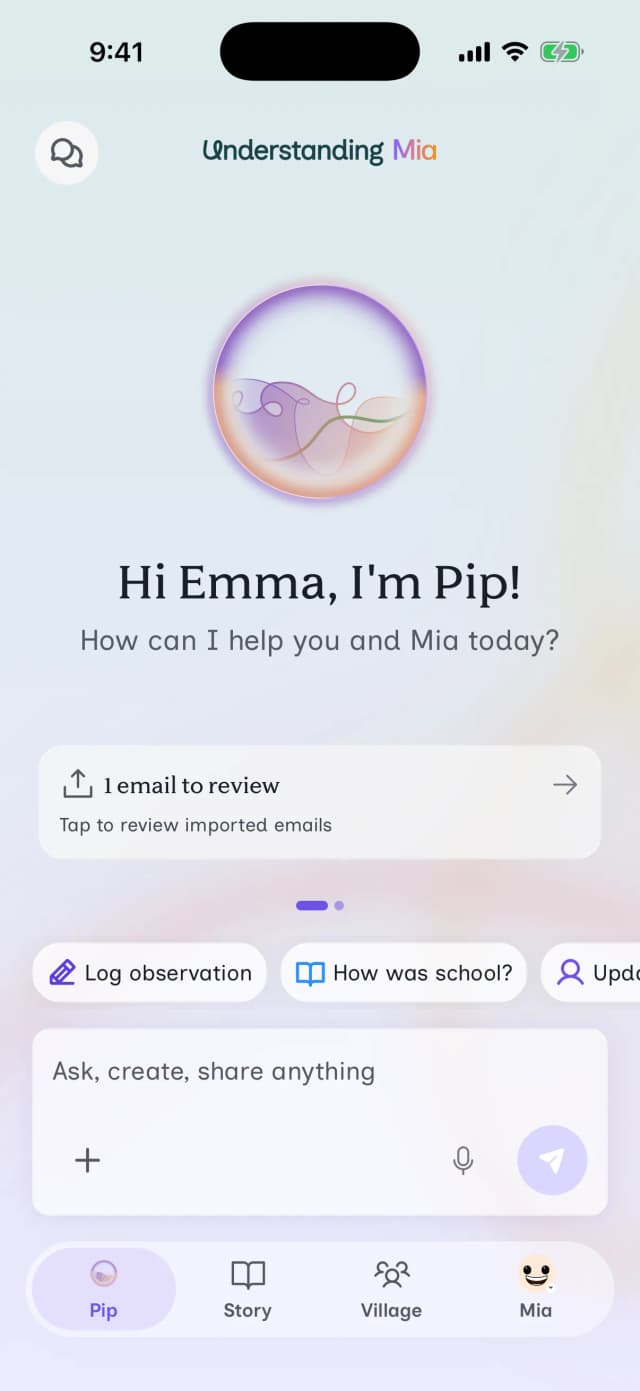
Pip* is your pocket coach. You tell it what you notice, by voice or text, and it keeps your notes. The Story tab lays your notes out over time, in plain language, so you can look back and notice what you want to keep doing.
The Care Village keeps the people who help on the same page. You decide who sees what.
What Understanding Zoe does not do. It does not assess and it does not treat. Built with families, researchers and allied health.
Understanding Zoe is for neurodivergent people and the people who love them, at every age and stage.
Family, teachers and your care team join free when you invite them.
* Pip is the pocket coach in the Understanding Zoe app. It has nothing to do with the UK benefit called PIP, the Personal Independence Payment.
Neuroaffirming means accepting neurodivergent people as they are, and supporting them to live well as themselves. It treats differences in how people think, communicate and experience the world as natural human variation, with strengths and support needs.
In practice, it means goals set with the person, respect for stimming and communication styles, and changing environments as well as building skills.
Yes. People use neuroaffirming, neurodiversity-affirming and neurodiversity-affirmative to mean the same broad approach. Australia's 2023 guideline on autism assessment uses the term neurodiversity-affirming.
Whatever the label, look at what a service actually does, not just the words on its website.
No. Neuroaffirming support takes real challenges seriously, such as sleep, anxiety, communication or getting through a school day. The difference is the goal: helping a person thrive as themselves, not making them look less neurodivergent.
Strengths-based support starts from what a person does well and uses that to work on what is hard.
Ask how they set goals, how they respond to stimming and meltdowns, and how they support different ways of communicating. Listen for whether your child's wellbeing and interests come first.
A neuroaffirming practitioner should welcome your questions and change their approach if something is not working for your child.
Yes. Neuroaffirming classrooms adjust the environment, timetable and ways of showing learning, and treat behaviour as communication. In Australia, schools must also make reasonable adjustments for students with disability under the Disability Standards for Education.
Our guide to neuroaffirming classrooms has practical ideas to share with teachers.
Understanding Zoe is not a crisis service. In an emergency in Australia call 000. Lifeline is 13 11 14. Kids Helpline is 1800 55 1800. 13YARN is 13 92 76. Outside Australia, contact your local emergency number.
Nothing on this page is medical, legal or financial advice. It does not assess anyone, and it is not a substitute for care from a professional who knows you. If something here sounds familiar, write it down and take it to your GP.