ADHD on its own rarely leads to an NDIS plan. That is not because ADHD is not real or not hard. The National Disability Insurance Scheme (NDIS) does not decide eligibility by diagnosis at all. It looks at whether a person's impairments are likely to be permanent and how much they affect everyday life.
This page explains where ADHD sits in the scheme, why so many families find it confusing, and where ADHD support usually comes from instead. It describes the scheme. It does not tell you what to ask for, and the National Disability Insurance Agency (NDIA) makes every decision.
The words on this page. We say ADHD, and ADHDer for the person. The NDIS uses its own terms, such as "impairment" and "functional capacity". We use them where we describe the rules, so you recognise them on the forms.
There is no ADHD category in the NDIS. Every applicant is assessed against the same rules in the NDIS Act.
In 2023 the Senate Community Affairs References Committee ran a national inquiry into ADHD assessment and support. A whole chapter looked at the NDIS. It found widespread confusion about whether people with ADHD can be eligible.
The committee heard that some NDIS participants list ADHD as their only disability, and for others it is a secondary disability. It also noted that not everyone with ADHD will meet the access requirements. Eligibility is not based on the type of disability or condition. A person must meet each of the disability requirements in the law.
The NDIA publishes lists of conditions that are likely to meet the disability requirements. ADHD is not on them. Those lists do not override the law, though, so an ADHDer can still become a participant if they meet the requirements.
The same rules apply to everyone. Three basic ones come first, then the disability or early intervention requirements.
For many ADHDers, the question is whether ADHD substantially affects daily life in a way that is likely to be permanent, and that needs disability-specific support. The NDIA weighs the evidence person by person.
ADHD often sits alongside other differences. The NDIS looks at the whole person, not at one diagnosis at a time.
Many ADHDers are also Autistic, which people often call AuDHD. Some also have an intellectual disability, a learning difference or a psychosocial disability. When an application is made, the evidence describes every impairment and how they affect daily life together.
Our page on the NDIS and autism explains how the scheme works for Autistic children, including the two ways in and what changes with age.
The NDIS early childhood approach supports children younger than 9 and their families, through local early childhood partners.
Children younger than 6 do not need a diagnosis to get early support where there are concerns about their development. Your GP, child health nurse or early childhood educator can connect you.
From age 9, families and adults work with a local area coordinator, another kind of NDIS partner. They can explain the options and help with an application.
They cannot tell you whether you will be found eligible. That decision always sits with the NDIA.
For most ADHDers, support comes from the health system, school or work, and everyday changes.
| Where | What it can cover | Worth knowing |
|---|---|---|
| Your GP | Referrals, general health, and in some states assessment or medicine. | Our page on ADHD assessment in Australia shows where trained GPs can assess. |
| Medicare | Rebates for specialist and allied health appointments, with a referral. | Four Medicare items cover a neurodevelopmental assessment for people under 25, once each in a lifetime. |
| School | Adjustments to how a student learns and is assessed. | Schools must make reasonable adjustments under the Disability Standards for Education. |
| Work | Changes to tasks, hours, tools or the environment. | Our guide on telling an employer you are neurodivergent covers the choice. |
Medicine and the medical side of ADHD care sit with doctors and the health system, not the NDIS. Whether to try medicine is your decision, made with your doctor.
Ideas for the hardest part of the day, from episode 21 of The Neurodivergent Pulse.
Read the articleWhatever the outcome, a clear picture of daily life makes every conversation easier.
Print it, or keep it on your phone.
Reports, referrals and letters arrive from different people at different times. Keeping them together saves telling your story again at every appointment.
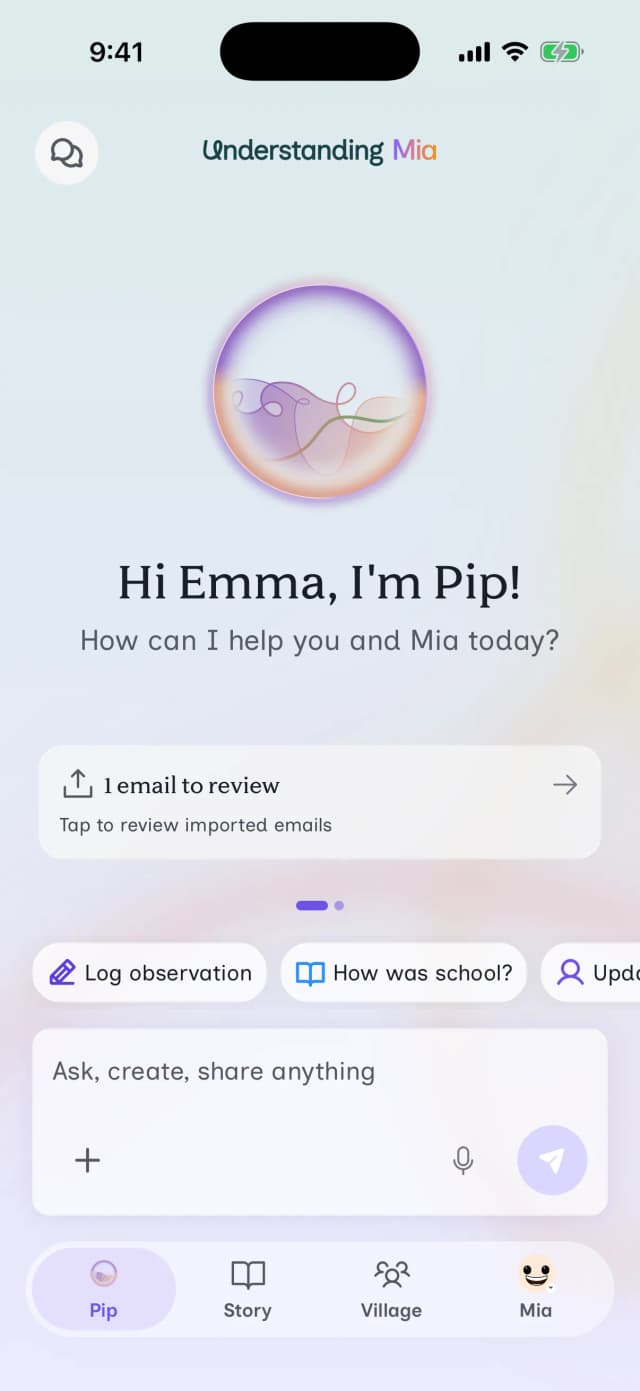
Pip* is your pocket coach. You tell it what you notice, by voice or text, and it keeps your notes. The Story tab lays your notes out over time, in plain language, so you can look back and prepare what to raise in a planning meeting or with your GP.
The Care Village lets you share chosen documents with family, school or your care team. You decide who sees what.
What Understanding Zoe does not do. It does not assess or treat, and it does not decide or affect NDIS eligibility. The NDIA makes every decision about access and funding.
Understanding Zoe is for neurodivergent people and the people who love them, at every age and stage.
Family, teachers and your care team join free when you invite them.
* Pip is the pocket coach in the Understanding Zoe app. It has nothing to do with the UK benefit called PIP, the Personal Independence Payment.
ADHD is not on the NDIA's lists of conditions that are likely to meet the disability requirements. That does not rule anyone out. The NDIS decides eligibility by the effect of impairments on daily life, not by diagnosis.
Separately, ADHD can count as a disability under other laws, such as anti-discrimination law. That matters for adjustments at school and work, even when someone is not on the NDIS.
The early childhood approach supports children younger than 9 with developmental delay or disability, and their families. Children younger than 6 do not need a diagnosis to get early support where there are concerns about their development.
Talk to your GP, child health nurse or early childhood educator. They can connect you with an early childhood partner, who can explain what is available where you live.
No. Medicine and the medical side of ADHD care sit with doctors and the health system. A GP, paediatrician or psychiatrist prescribes, and some ADHD medicines are subsidised through the Pharmaceutical Benefits Scheme.
Our page on ADHD assessment in Australia explains who can prescribe, and how that differs between states.
The NDIA looks at every impairment and how they affect daily life together. When you apply, make sure the evidence describes each one, not only the main diagnosis.
Our page on the NDIS and autism explains the two ways in for Autistic children and what changes with age.
Most ADHD support in Australia sits outside the NDIS. Your GP is the usual starting point. Medicare rebates help with specialist and allied health appointments, and schools must make reasonable adjustments for students with disability.
Everyday changes matter too. Our page on executive dysfunction has ideas you can use now, with or without a formal plan.
Understanding Zoe is not a crisis service. In an emergency in Australia call 000. Lifeline is 13 11 14. Kids Helpline is 1800 55 1800. 13YARN is 13 92 76. Outside Australia, contact your local emergency number.
Nothing on this page is medical, legal or financial advice. It does not assess anyone, and it is not a substitute for care from a professional who knows you. If something here sounds familiar, write it down and take it to your GP.