Tips for raising a neurodivergent child: mindset over method
After an autism diagnosis, parents often feel they need the right method or technique. Autistic family consultant Maisie Soetantyo argues the opposite: mindset matters far more than method. This article explores why curiosity and radical acceptance are the most practical tools for neurodivergent parenting. Learn how to trust yourself as a parent, protect your child's identity, and create a home where they can simply be themselves.
In short
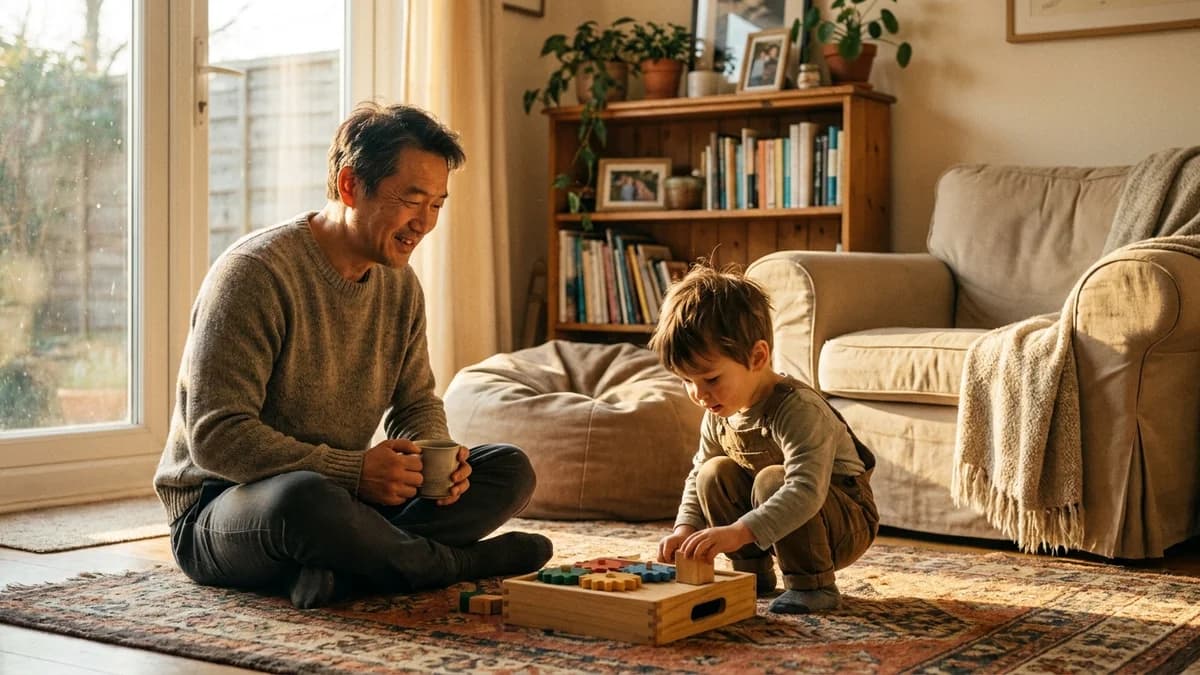
Neurodivergent parenting starts with mindset, not method. Maisie Soetantyo is an openly autistic family consultant and mum. She says parents are already wired to raise their child: “You just have to have the belief in yourself that I am going to learn alongside this baby.” Lead with curiosity, protect your child’s safe space at home, and let their identity belong to them.
The report arrives. Maybe it is twenty pages long, maybe thirty. You sit with it at the kitchen table after the kids are in bed. You read words like ‘significant support needs’ and ‘atypical sensory processing’ and ‘recommend further intervention’. Somewhere in the middle of all that professional language, a quiet voice in your head says: I don’t know how to do this.
That feeling is real. It is also, according to Maisie Soetantyo, one of the most common things she sees in families after a diagnosis. It is not a sign that you’re the wrong parent for your child. It is a sign that you’ve been handed a lot of information and not nearly enough reassurance.
In Episode 50 of the Neurodivergent Pulse podcast, host Laetitia Andrac speaks with Maisie Soetantyo, M.Ed., an openly autistic family and inclusivity consultant. Maisie has worked alongside autistic people and their families for more than 30 years. They explore why mindset matters more than method. They talk about what it really means to trust yourself as a parent. And they show how home can become the one place where your child gets to simply be themselves.
Why neurodivergent parenting starts with mindset, not method
The most important thing you can bring to neurodivergent parenting is not a technique. It is a mindset. Maisie has spent decades working with families. She says the parents who find their way are the ones who lead with curiosity and acceptance, not the ones who found the right programme first.
She describes the neurodivergent parenting mindset this way: “The mindset has to be, uh, about radically accepting the person that you’re, you’re, um, being blessed to be put in the same room with.” That means leaning into discomfort rather than pulling away from it. It means staying open when something confuses you, rather than deciding it’s not for you.
It also means giving yourself permission not to know everything yet. As Maisie puts it: “It’s okay for me not to know everything today.” No parent, professional or teacher has a crystal ball. Curiosity is what moves you forward when certainty is not available. For the people who live alongside neurodivergent children every day, curiosity is often the most practical tool there is.
Mindset shift: You are already wired to raise this child
A diagnosis can make you feel like the least qualified person in the room. Suddenly there are reports, specialists, therapists and teachers. It can seem like everyone else knows more about your child than you do. Maisie wants to push back on that feeling directly.
You are wired to raise this baby because you share the genetics. You just have to have the belief in yourself that I am going to learn alongside this baby.
She is not dismissing professional expertise. Professionals have training, and that training matters. But as Maisie says: “They may be trained, but you as a parent, as a human being, you’re equipped to navigate this journey.” A specialist sees your child for an hour a week. You see them at breakfast, at bedtime, during the hard moments and the good ones. That knowledge is real, and it counts.
The fear that comes with a new diagnosis is understandable. Maisie names it plainly: “When we receive a diagnosis for our kiddo, we become very scared. You feel like you’re in crisis ‘cause you don’t know how to raise this human being.” That fear is real, and it is common. In a national study of over 1,000 Australian families, 64% of parents raising neurodivergent children said they often feel exhausted. That compares with 42% of parents raising neurotypical children. And 64% said they often feel overwhelmed, compared with 32% of parents raising neurotypical children (our research on neurodivergent families). This is not a personal failing. It is what happens when you carry a large and often invisible load. The answer to that fear is not to hand all your trust to the professionals. It is to trust that you will learn, a little more tonight, a little more tomorrow. It is also a reminder that your own needs belong in the family too, not just your child’s.
Parenting an autistic child after a diagnosis can feel like a role you were never trained for. If you’re looking for something to help you make sense of the reports and the observations, Understanding Zoe offers a free 7-day trial of its neuroaffirming app. It turns a lot of information into manageable next steps. It is designed to support your instincts, not replace them.
When neurodivergence affects the whole family
Raising a neurodivergent child affects everyone in the household. That is something professionals rarely prepare you for. Siblings, partners, grandparents all feel the effect. Research shows that parents of neurodivergent children spend around 10.5 hours each week on emotional regulation, advocacy and administration alone. That sits on top of roughly 30 hours on specific caregiving tasks. That is a second job’s worth of invisible work. It shapes every relationship in the house. Maisie speaks about this from her own experience, not just her professional one. If you are working out how different neurotypes within one family create a constant pull in different directions, you are not alone in that experience.
She shares a moment that many parents will recognise, even if they have never said it out loud: “My daughter told me when I think she was six or seven, my eldest, she was like, ‘You stopped paying attention to me when my brother was born.’ You know, she actually said that. And I had to go back and actually work very hard to, to repair that relationship.”
She is not sharing that story to add to your guilt. She is sharing it because it happens in real families, including hers. Repair is possible. When one child needs more of your energy, another child may feel the gap. That is not a failure of love. It is a reality of the situation. Naming it, and then working to repair it, is what matters.
Maisie’s advice in these moments is to suspend the voice of judgement. That means suspending it towards yourself, and towards others. “If something falls apart, then it just means that you… Hopefully you can s- also see the positive. Hopefully learn from the situation.” Doing your best, in the actual conditions of your actual life, is enough.
Pip remembers the appointments, the notes and the small wins, so you don't have to.
7 days free on iPhone and Android.
How to make home a safe space for your autistic teen
Support for autistic young people often falls away between the ages of 14 and 18. Parenting neurodivergent teens through this gap is one of the least-discussed challenges in the space. School becomes harder. Social expectations grow. The gap between who your teen is and who the world wants them to be can feel very wide. What they need most during those years, Maisie says, is a place where none of that follows them.
Every moment of your day is full of criticism. You know? How sad it is for this person having to still, having that feeling still at home.
Home needs to be different. That does not mean ignoring everything or never having conversations. It means protecting a space where your teen can reset, recharge and simply exist without being corrected. Maisie describes it this way: “Just because we don’t understand it, it doesn’t mean we don’t accept it.” For more on building authentic connection with neurodivergent young people, the PACE framework offers a practical starting point.
When parents in a national study of over 1,000 Australian families were asked what mattered most for their child’s future, nearly half said their greatest priority was for their child to feel safe and accepted as they are. Another 39% hoped for neurodivergence to be seen as a difference, not a deficit. You can explore Understanding Zoe’s latest findings for more. Home is where that safety has to start.
Here are some small ways to create an autistic-friendly safe space at home:
Keep a bedroom or corner of the house free from correction and unsolicited feedback.
Make safe foods available without comment or negotiation.
Allow uninterrupted time with a special interest, without asking what it is for.
Let your teen eat foods separately if that is what works for them, without turning it into a discussion.
Do not require them to explain their preferences. Accept what you do not understand yet.
Protect their rituals and routines as the reset tools they are, not habits to be broken. Understanding protecting your child’s routines as the recharging tools they are can help you see these moments through a nervous system lens rather than a behavioural one.
Maisie also names something that can be easy to overlook. Autistic play and collecting are often judged as too childish, too niche, or too strange. Teachers mock it. Peers mock it. When that same judgement comes from home, there is nowhere left to land. Your acceptance of the things your teen loves, even the things you do not understand, is one of the most protective things you can offer.
How autism shapes your child’s identity (and why that belongs to them)
There is often pressure to shape a neurodivergent child into a particular version of success. That pressure can come from family, from culture, from well-meaning professionals. Maisie is clear about where identity actually lives: “That person’s identity belongs to that person and should only belong to that person.” This connects to a wider conversation about the hidden cost of pushing neurodivergent young people toward performance when what they need most is space to simply be.
Your role as a parent is not to direct that identity. It is to walk alongside it. Maisie describes it this way: “You imagine yourself walk alongside this person, or sometimes you walk a little bit behind, or sometimes you walk a couple of steps in front of that person, but you’re on the same path.” The path belongs to your child. You are there to accompany them, not to choose the destination.
Trusting that process can feel slow. Maisie knows this from her own family: “I’ve waited for, like, my son, like, finally asking to cut his hair or finally wearing a pair of jeans, you know, just not too long ago.” Those moments arrive on their own timeline. When they do, they mean something, because they came from the person themselves.
Do special interests have to become careers?
One of the most common myths about autistic children is that their special interest should become their career. Maisie pushes back on this gently but firmly. “Not every interest needs to be… You know, this is another one of those myths that, you know, what’s your autistic child’s, you know, skill?”
A special interest can be a source of joy. It can be a way to recover from a hard day. It can be something a person does quietly, for themselves, with no audience and no outcome. That is not wasted potential. That is a life. As Maisie puts it, a young person “might choose, ‘I’m just gonna do this as a hobby to recuperate.’” That is not a consolation prize. That is something worth protecting.
Maisie’s own work through Autism Career Pathways is about helping autistic people build meaningful careers when that is what they want. But the starting point is always the person, not the productivity. Curiosity about what your child loves matters far more than converting that love into a job description.
How to find five minutes that belong only to you
Maisie closes with something her own mother told her. It is the kind of advice that sounds small until you actually try it. As a parent, you put yourself at the bottom of the list. You know this. You probably do it every day. Maisie’s mother had a simple suggestion for finding your way back to yourself.
“When you put the cream on your face, do it slower. Like, just brush your hair slower. Just try to slow things down in those stolen moments.” The idea is not to carve out a long stretch of time you do not have. It is to take the five minutes you are already spending alone, wherever that is, and make them genuinely yours. Slow the actions down. Let it be “five minutes of you and for you.”
That is something you can control. In a day that often feels like it belongs to everyone else, that matters.
You do not need to have all the answers to be the right parent for your child. Lead with curiosity. Protect their space to be themselves. Accept what you do not understand yet, and wait for them to explain it in their own time. Somewhere in the middle of all of that, find five minutes that belong only to you.
As Maisie says:
Before you can be anything, you have to be you first.
That is true for your child. It is true for you too. If you would like support turning the information you are gathering into clear next steps, try Understanding Zoe free for 7 days. It is built to reduce the load, not add to it.
Frequently asked questions
What is neurodivergent parenting?
Neurodivergent parenting means raising a child whose brain works differently from what is considered typical. That includes autistic children, children with ADHD, and others with different neurological profiles. It is less a set of techniques and more a mindset. That mindset is built on curiosity, acceptance, and a willingness to understand your child on their own terms. It does not measure them against neurotypical milestones. The most effective neurodivergent parenting starts with how you see your child, not what you do next.
How do I trust myself as a parent after an autism diagnosis?
Trusting yourself after an autism diagnosis starts with a simple truth: professional reports and specialist appointments do not cancel out what you already know about your child. As Maisie Soetantyo puts it, you are wired to raise this child because you share the genetics and the daily life. A specialist sees your child for an hour a week. You see them at breakfast, at bedtime, and in every moment in between. That knowledge is real. You might also find it helpful to explore community support for autism parents who are finding their way. If you need support making sense of the information, Understanding Zoe offers a free 7-day trial to help you turn reports into manageable next steps.
How does autism shape a child’s identity?
Autism is not separate from a person’s identity. It is part of how they experience the world, process information, and connect with what they love. When parenting an autistic child, the most important thing to understand is that their identity belongs to them. It does not belong to a diagnosis, a therapy goal, or a parent’s vision of success. Your role is to walk alongside that identity as it develops, not to redirect it toward a set destination.
What are good long-term goals for an autistic child?
The most meaningful long-term goals for an autistic child centre on wellbeing, self-knowledge, and the freedom to live a life that fits them. That might include a career, but it does not have to. Joy, connection, and the ability to recover from hard days are real and valuable outcomes. Maisie Soetantyo encourages parents to protect their child’s interests and passions as ends in themselves, not as raw material for productivity.
Connect with Maisie
Website: Autism Career Pathways
Free and affordable courses: GEM Academy (Guiding Extraordinary Minds)
Instagram: @maisiesoetantyo
Instagram: @autismcareerpathways
Instagram: @guidingextraordinaryminds
Pip is not a doctor or therapist. It helps you organise and prepare, not diagnose or treat.
In a crisis call 000. Lifeline 13 11 14. Kids Helpline 1800 55 1800. 13YARN 13 92 76.

Ready to put it all in one calm place?
Tell Pip one thing today. It remembers the rest.
Stored in Australia, encrypted. Cancel before day 8 and you won't be charged.
Related articles

Where is the village? Building neurodivergent community
Neurodivergent families experience isolation at twice the rate of neurotypical families, not because they can't cope, but because most spaces were never designed for them. In this episode, Laetitia Andrac (co-founder of Understanding Zoe) explores what real community looks like for neurodivergent people and families. She shares practical strategies for creating sensory-friendly, inclusive gatherings where everyone genuinely feels welcome, and explains how to build your village deliberately, right where you are.
Read more
The 5 things your neurodivergent child actually needs
Understanding your neurodivergent child's needs can be life-changing. Instead of forcing them to conform to "neurotypical" standards, it's important to acknowledge their unique qualities and support them in a way that helps them flourish. Here's what your neurodivergent child actually needs
Read more
Why so many Autistic women and gender diverse people are identified late
Autism tests were built around boys, girls needed more visible difficulty to be assessed, and masking worked. Australia's own evidence on late identification.
Read more