An ADHD assessment is how a trained professional finds out whether a person is ADHD. In Australia, a psychiatrist, paediatrician or psychologist does it, usually over two or more appointments. In some states, a GP with extra ADHD training can now do it too. They look at life now and life in childhood, and the assessment ends with a written report.
ADHD stands for attention deficit hyperactivity disorder, the name used in the diagnostic manual. We say ADHD, and ADHDer for the person. ADHD is a difference in how a brain handles attention, energy and interest. It brings real strengths, and some things that need support.
Why we say assessment. Many people search for an "ADHD diagnosis". We say "assessment", because it describes what happens: someone looks carefully and describes what they find. You will see both words on this page so you can find it.
Four kinds of professional are involved. Which one you see depends mostly on age and on whether medicine is part of the plan.
| Professional | Usually sees | ADHD medicine | Referral |
|---|---|---|---|
| GP | Everyone. The usual first stop, and the person who writes referrals. | Can continue it. In some states, GPs with extra training can now assess ADHD and start medicine too. See where. | None needed. |
| Paediatrician | Children and teenagers. | Can start and manage it. | A GP referral, which you need for a Medicare rebate. |
| Psychiatrist | People of any age. Most adult assessments happen here. | Can start and manage it. | A GP referral, which you need for a Medicare rebate. |
| Psychologist | People of any age. | Cannot prescribe. They assess, then refer on if you want medicine. | Not needed to book. Ask what Medicare covers before you start. |
Many adults see a psychologist for the detailed testing first. A psychiatrist then uses that report in their own assessment. Children are more often seen by a paediatrician, sometimes with a psychologist alongside.
Medicine is one option, not the point of an assessment. Whether to try it is your decision, made with your doctor.
Australia is part way through letting GPs with extra training assess ADHD. A GP assessment is charged as a GP appointment, so it should cost far less than a specialist one.
| Where you live | Can a trained GP assess ADHD? |
|---|---|
| Western Australia | Yes. Trained GPs can assess from age 10. WA Health |
| South Australia | Yes. RACGP newsGP |
| Tasmania | Yes. Tasmanian Department of Health |
| New South Wales | Not yet. GPs are being trained. NSW Government |
| Victoria | Not yet. GPs are being trained. Victorian Department of Health |
| Queensland | Medicine only. Trained GPs can prescribe for adults, but cannot assess. Queensland Government |
| ACT | Not yet. GPs can continue an existing prescription. ACT Government |
| Northern Territory | No change announced. |
GP assessments are for straightforward cases. If you also live with anxiety, depression or something more complex, a GP may still refer you on to a psychiatrist or paediatrician. Not every trained GP sees adults, either.
This is changing quickly. Check your state or territory health department before you decide on it.
Six steps, from the first question to the report. Some people move through them in weeks. For others it takes much longer.
Note the moments that made you wonder, at home, at work or at school. Real examples help more than a list of words. The appointment checklist shows what else to gather.
Book a longer appointment if you can, and say you want to talk about ADHD. Your GP can check things like sleep and general health, then write a referral.
Options include private clinics, public services and telehealth providers, including Understanding Zoe. Ask about fees and waiting times when you call. It is fine to join more than one waiting list, and to ask for the cancellation list.
Most assessments mix interviews and questionnaires, over more than one session. What happens at the appointment explains each part.
You receive a written report, and usually a feedback session to go through it. Ask every question you have. The report is yours to keep and share.
That might be medicine, a psychologist, changes at work or school, or simply understanding yourself better. You choose what fits, and you can change your mind.
An ADHD assessment is a long, careful conversation. There is no single test, and no blood test or brain scan for ADHD.
In 2022 the Australian ADHD Professionals Association (AADPA) published the national clinical practice guideline for ADHD. It asks assessors to gather information from more than one person and more than one part of life. In practice, most assessments include these parts.
Many adults are identified after years of being told they were lazy or disorganised. Women and gender diverse people are often identified later than men. Our page on ADHD in women explains why.
Your assessor may ask a parent or partner to fill in a form. If that is not safe or possible, say so. There are other ways to describe your history.
Our guide to getting an adult ADHD diagnosis in Australia goes deeper on the adult pathway.
Your child's teacher will probably be asked to complete a questionnaire. Share the school's view with the assessor, even when it is different from yours.
Tell your child what is happening in words they can hold, and that nothing is wrong with them. Girls are often missed, and our page on ADHD in girls covers what to look for.
Samantha Johnson, a late-identified AuDHD mother, on why motherhood is when so many women first recognise themselves. From episode 38 of The Neurodivergent Pulse.
Read the articleIt depends on where you live, who you see, and public or private. For adults, the average wait for a first appointment is about 10 weeks.
That figure comes from researchers at the University of Wollongong, who phoned 736 clinicians across Australia while posing as patients. Psychologists had an average wait of about 6 weeks, and psychiatrists about 16. One psychiatrist had a wait of a full year. About half the clinicians who answered could not take a new booking.
In 2023 the Senate Community Affairs References Committee ran a national inquiry into ADHD assessment and support. It drew on 700 submissions. It found long waits and few public services for adults. Rural and remote areas had fewer services again. You can read its findings in the executive summary.
A few things can shorten the wait:
You do not need a report to start trying things that help. Our page on executive function has everyday ideas you can use now.
Everyday ideas for the hardest part of the day, from episode 21 of The Neurodivergent Pulse.
Read the articleThere is no set price. Australian research puts the average adult ADHD assessment at about $1,387 before any rebate.
Quotes in the same University of Wollongong study ranged from $230 to $3,915. That price covers the assessment only, not any support afterwards.
Public assessments are free, but there are few for adults and the waits are long. Medicare has four items for a neurodevelopmental assessment. All four are for people under 25, and each can be claimed once in a lifetime. Over 25, a psychiatrist appointment with a GP referral may still attract a rebate, but it will not cover the whole cost.
Average cost of an adult ADHD assessment, before any rebate.
Average with a psychologist.
Average with a psychiatrist.
Source: O'Toole, Finlayson, Johnstone and Croaker, Accessibility of ADHD Assessments in Australia: A Secret Shopper Study, Journal of Attention Disorders, 2026. Adult figures, before Medicare rebates.
Self-identification is valid. You do not need a report for your experience to count.
A formal assessment costs money and time that many people do not have. It is also not equally fair. The 2023 Senate inquiry examined gender bias in ADHD assessment. It also heard that cost, culture and where people live affect who gets assessed.
Some things do need a formal report, such as starting ADHD medicine. Many things do not. You can read, connect with other ADHDers and try supports whenever you are ready. Some people seek an assessment years after they first recognise themselves, and some never do.
Our guide to assessment and identity for neurodivergent adults goes further into this choice.
Laetitia's honest Australian answer: what a diagnosis gives you, what it does not, and why "not now" is a real answer.
Read the articleA page of notes says more than you can remember in a ten minute appointment.
Print it, or keep it on your phone.
An assessment comes with a lot of paper. Referrals, questionnaires, school reports and the final report all arrive at different times, from different people.
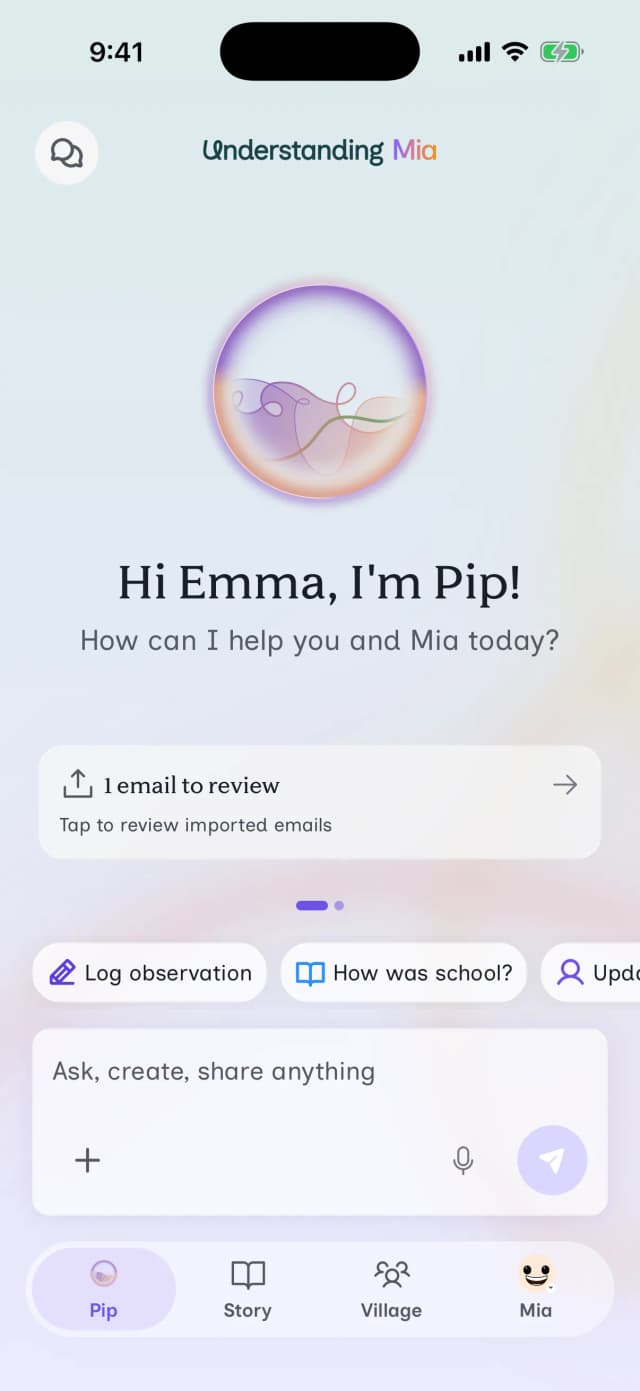
Pip* is your pocket coach. You tell it what you notice, by voice or text, and it keeps your notes. The Story tab lays your notes out over time, in plain language. You can look back on them before an appointment.
The Care Village lets you share chosen documents with family, school or your care team. You decide who sees what.
You can also book an assessment in the app. Registered psychologists offer combined autism and ADHD assessments by telehealth, for adults and young people from 10. Afterwards, you can carry on with sessions with our team. Your report, notes and documents stay in one place, so you tell your story once instead of starting again at every appointment.
Who does the assessing. The app itself does not assess or treat. Assessments and sessions are with registered psychologists and allied health professionals we work with. A psychologist's assessment does not include ADHD medicine, because psychologists cannot prescribe.
Why pictures stay when words vanish, and how they ease the load of a busy day. From episode 15 of The Neurodivergent Pulse.
Read the article
Understanding Zoe is for neurodivergent people and the people who love them, at every age and stage.
Family, teachers and your care team join free when you invite them.
* Pip is the pocket coach in the Understanding Zoe app. It has nothing to do with the UK benefit called PIP, the Personal Independence Payment.
You can book a psychologist without one. Psychiatrists and paediatricians usually need a GP referral for a Medicare rebate. Many will not take a booking without one.
Starting with your GP also means someone checks your general health first. It makes it easier to coordinate medicine later, if you decide you want it.
Usually, yes. Ask the clinic when you book. A partner, parent or friend can take notes, remember examples you forget, and ask the questions that slip away in the room.
For a child, assessors often want some time with the parent alone and some time with the child. Ask how the sessions are split, so you can tell your child what to expect.
Yes. Many clinics in Australia now assess ADHD by video. Check the practitioner on the public register kept by AHPRA, the Australian Health Practitioner Regulation Agency.
Ask how they will work with your GP afterwards. Rules for ADHD medicine differ between states and territories. An interstate clinic may not be able to prescribe where you live.
In the Understanding Zoe app, you can book a combined autism and ADHD assessment by telehealth with a registered psychologist, for adults and young people from 10. As with any psychologist, it does not include ADHD medicine.
Not always. Many ADHDers are also Autistic, which people often call AuDHD. If you wonder about both, say so when you book.
Some assessors look at both together. Others focus on ADHD and refer you on for a separate autism assessment. Knowing which before you start saves time and money.
The report should still describe what the assessor found, and what might help. You can ask questions about it, and you can ask for a second opinion.
What you have been living with is still real. The support you need still matters, whatever name it ends up with.
Understanding Zoe is not a crisis service. In an emergency call 000. Lifeline is 13 11 14. Kids Helpline is 1800 55 1800. 13YARN is 13 92 76.
Nothing on this page is medical advice. It does not assess anyone, and it is not a substitute for care from a professional who knows you. If something here sounds familiar, write it down and take it to your GP.