An autism assessment is how a trained professional finds out whether a person is Autistic. It is a careful look at how someone communicates, connects, plays or works, and experiences the world, now and in early childhood. It ends with a written report that describes what the assessor found and what might help.

This page covers the appointment itself: who is in the room, what happens, what the report says and how to read it. Our page on getting an autism diagnosis in Australia covers the whole pathway, from referral to waiting lists.

Why we say assessment. Many people search for an "autism diagnosis". As an affirming community, we prefer "assessment", because it describes what happens: someone looks carefully and describes what they find, rather than diagnosing something wrong. You will see both words on this page so you can find it.

Who does an autism assessment in Australia

Australia has a national guideline for autism assessment. It describes two ways to do one.

Autism CRC published the National Guideline for the Assessment and Diagnosis of Autism in Australia in 2018, and updated it in 2023. The update asks practitioners to provide care that is strengths-focused, culturally sensitive and neurodiversity-affirming.

One lead practitioner

A single qualified practitioner, such as a paediatrician, psychiatrist or psychologist, leads the assessment and reaches a view. The 2023 guideline calls this a Lead Practitioner Diagnostic Evaluation.

It suits many children and adults where the picture is clear enough for one person to assess well.

A team assessment

Two or more practitioners from different disciplines assess together and agree on a view. A team might include a paediatrician, psychologist and speech pathologist. The guideline calls this a Consensus Team Diagnostic Evaluation.

It is often used when the picture is more complex, or when more than one kind of expertise is needed.

What happens at an autism assessment appointment

There is no single test for autism, and no blood test or brain scan. An assessment is a set of conversations, observations and questionnaires.

Most assessments take more than one session. In practice, they usually include these parts.

  • A conversation about development and history. The assessor asks about early childhood, school and life now. For an adult, a parent or older relative may be asked about the early years, if that is safe and possible.
  • Observation. The assessor spends time with the person, through play for a young child or conversation for an older child or adult. Some use structured tools designed for this.
  • Questionnaires. The person, family members and sometimes teachers or a partner fill in forms about daily life.
  • An assessment of functioning. The guideline recommends looking at how the person manages everyday life, their strengths and where they need support.
  • A look at what else is going on. ADHD, anxiety, learning differences and sensory differences can sit alongside autism. A good assessment considers them together.

If you are being assessed as an adult

Many adults, especially women and gender diverse people, are identified later in life. Masking, meaning hiding Autistic traits to fit in, can make autism harder to see. Our page on autism in women explains why.

Bring examples from childhood if you have them. If no one can speak to your early years, say so. There are other ways to describe your history.

If you are arranging an assessment for your child

Ask how the sessions will run, so you can tell your child what to expect in words they can hold. Bring things that help them feel settled, such as a favourite toy or snack.

Share what school sees, even when it is different from home. Our page on signs of autism in girls covers why girls are often missed.

What assessors are looking for

Assessors use the diagnostic manual, DSM-5. It describes autism in two broad areas.

Social communication and interaction

Differences in back-and-forth conversation, in non-verbal communication such as eye contact or gesture, and in building and keeping relationships the way others expect.

Repetitive patterns and focused interests

Repetitive movements or speech, a strong need for sameness and routine, deep and focused interests, and differences in how sensory input is felt, such as sound, light, touch or taste.

These differences need to have been present from early development, even if they were not noticed until later. They also need to affect daily life in a meaningful way. The manual's language is clinical. Autistic people often describe the same things as a different way of experiencing the world, with real strengths and real needs.

How to read an autism assessment or diagnosis report

A report can be long and full of terms. Most follow a similar shape, and you are allowed to ask what every part means.

  • Background. Why the assessment happened and what the assessor was told.
  • What was assessed and how. The sessions, tools and questionnaires used, and who filled them in.
  • Findings. What the assessor observed, set against the diagnostic criteria. This part often lists strengths as well as differences.
  • Outcome. Whether the person is Autistic, and sometimes a level of support. DSM-5 describes three levels, from Level 1 (requiring support) to Level 3 (requiring very substantial support).
  • Recommendations. Suggested supports, referrals and adjustments at home, school or work.

Questions to ask at the feedback session

  • Can you walk me through the findings in plain words?
  • What did you see as strengths?
  • Why did you choose this support level, and can it change?
  • Which recommendations matter most right now?
  • Who should I share this report with, and is a shorter version available?

A support level describes support needs at the time of the assessment. It is not a fixed label, and needs can change with age, setting and support.

Banner for the Understanding Zoe article on why Autistic women are identified late
From our blog Why so many Autistic women are identified late

Why autism assessment was built around boys, and what Australia's own evidence says about late identification.

Read the article

What happens after an autism assessment

The report is a starting point. What comes next depends on age, needs and what you want.

For a child, that might mean early supports, therapy, changes at school, or an application to the NDIS. Our page on the NDIS and autism explains how the scheme works. For an adult, it might mean understanding yourself better, adjustments at work, or connecting with other Autistic people.

If the assessment does not identify autism, the report should still describe what the assessor found and what might help. You can ask for a second opinion. What you have been living with is still real.

Medicare has four items for a neurodevelopmental assessment. All four are for people under 25, and each can be claimed once in a lifetime. Over 25, a specialist appointment with a GP referral may still attract a rebate, but it will not cover the whole cost.

Autism assessment, diagnosis and self‑identification

Self-identification is valid. You do not need a report for your experience to count.

A formal autism assessment or diagnosis costs money and time that many people do not have. When Autism CRC updated the national guideline in 2023, families and Autistic people told it that timely, affordable assessment is still out of reach for many.

Assessment is not equally fair, either. Many of the tools were built around how autism looks in boys, so girls, women and gender diverse people are often missed or identified later. Our article on why so many Autistic women are identified late explains more.

Some things do need a formal report, such as some NDIS applications and some school or workplace supports. Many things do not. You can read, connect with other Autistic people and try supports whenever you are ready. Our guide to assessment and identity for neurodivergent adults goes further into this choice.

What to bring to an autism assessment

A page of notes says more than you can remember on the day.

Understanding Zoe offers autism assessments by telehealth with registered, neurodiversity-affirming psychologists, for young people from 10 and adults. If you book through the app, you can gather everything on this list there beforehand, and your report joins it afterwards.

Your appointment checklist

Print it, or keep it on your phone.

  • Three or four real examples from daily life, with rough dates.
  • Early childhood details, such as baby books, photos or videos, if you have them.
  • School reports and any letters from teachers.
  • Reports from speech pathologists, occupational therapists or psychologists.
  • Your questions, written down so you do not have to hold them in your head.

Where Understanding Zoe fits

An assessment comes with a lot of paper. Referrals, questionnaires, school reports and the final report all arrive at different times, from different people.

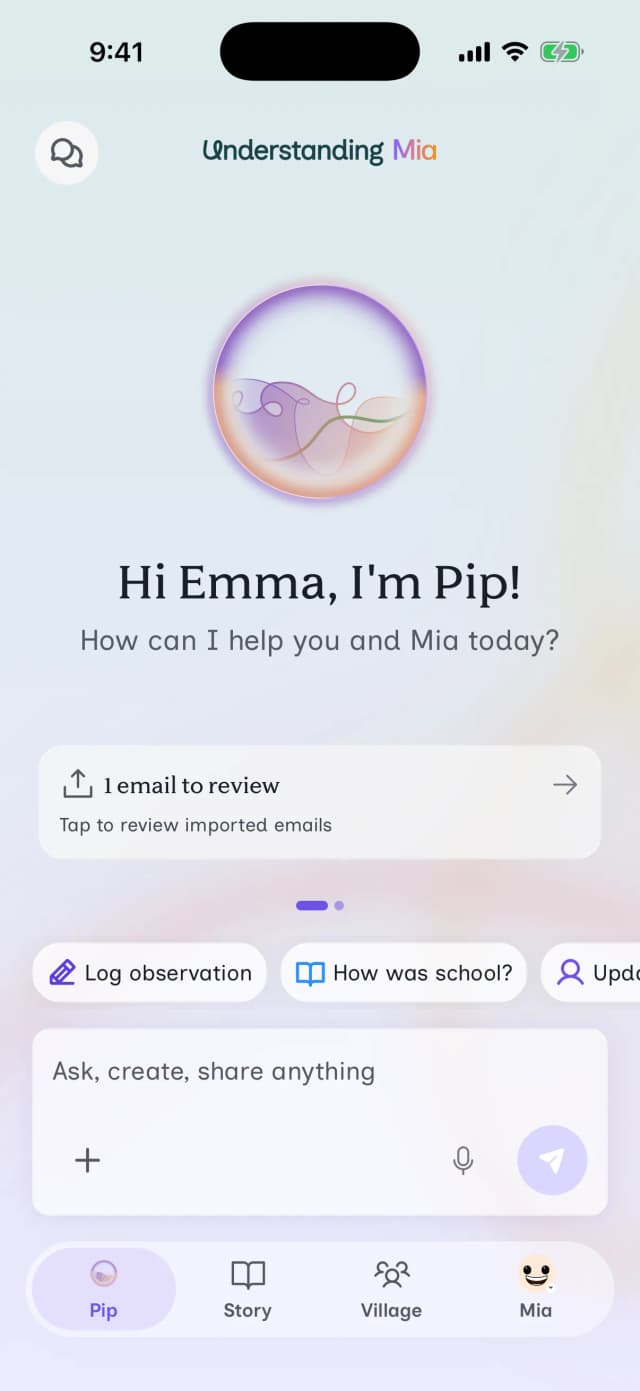
Pip* is your pocket coach. You tell it what you notice, by voice or text, and it keeps your notes. The Story tab lays your notes out over time, in plain language. You can look back on them and prepare questions before an appointment.

You can also book an assessment in the app. Registered, neurodiversity-affirming psychologists offer combined autism and ADHD assessments by telehealth, for adults and young people from 10. It is one option among others. Afterwards, your report, notes and documents stay in one place, so you tell your story once instead of starting again at every appointment.

Who does the assessing. The app itself does not assess or treat. Assessments and sessions are with registered psychologists and allied health professionals we work with. A psychologist's assessment does not include ADHD medicine, because psychologists cannot prescribe.

The Understanding Zoe app open on a phone, showing Pip's home screen

Try Understanding Zoe at your own pace

Understanding Zoe is for neurodivergent people and the people who love them, at every age and stage.

Family, teachers and your care team join free when you invite them.

Start free trial

* Pip is the pocket coach in the Understanding Zoe app. It has nothing to do with the UK benefit called PIP, the Personal Independence Payment.

As featured in

Startup Daily SmartCompany Channel 9 Mums and Co Women's Agenda Education Today ABC

Questions people ask about autism assessment

How long does an autism assessment take?

Most assessments take more than one session, often spread over a few weeks. A team assessment can take longer because several practitioners are involved. The feedback session, where the report is explained, is usually separate.

Ask the clinic when you book how many sessions there will be, how long each one runs, and when you can expect the report.

Can adults get an autism assessment in Australia?

Yes. Psychiatrists and psychologists assess adults, and many adults are identified in their 20s, 30s, 40s and later. Women and gender diverse people are often identified later than men.

Medicare's assessment items are only for people under 25. Ask about fees and any rebate before you book.

Can autism be assessed by telehealth?

Some parts can, and some clinics assess by video for older children and adults. Ask how the clinic will observe and gather information, and whether any part needs to be in person.

In the Understanding Zoe app, you can book a combined autism and ADHD assessment by telehealth with a registered psychologist, for adults and young people from 10.

Will an autism assessment also look at ADHD?

Not always. Many Autistic people are also ADHD, which people often call AuDHD. If you wonder about both, say so when you book.

Some assessors look at both together. Others focus on autism and refer you on for a separate ADHD assessment.

What does Level 1, 2 or 3 mean in an autism report?

DSM-5 describes three levels of support. Level 1 means requiring support, Level 2 requiring substantial support, and Level 3 requiring very substantial support. Not every report gives a level.

A level describes support needs at the time of the assessment, in that setting. It is not a measure of a person's worth or potential, and needs can change over time.

Sources

  1. Autism CRC. A National Guideline for the Assessment and Diagnosis of Autism in Australia: 2023 Update. Autism CRC, 2023.
  2. Trembath D, et al. Update of the National Guideline for Assessment and Diagnosis of Autism in Australia. Autism CRC, 2024.
  3. American Psychiatric Association. Diagnostic and Statistical Manual of Mental Disorders, Fifth Edition, Text Revision (DSM-5-TR), 2022.
  4. Autism CRC. Guideline introduction: update of the Guideline, 2023.
  5. Medicare Benefits Schedule. Items 135, 137, 139 and 289, MBS Online.

If today is a hard day

Understanding Zoe is not a crisis service. In an emergency in Australia call 000. Lifeline is 13 11 14. Kids Helpline is 1800 55 1800. 13YARN is 13 92 76. Outside Australia, contact your local emergency number.

Nothing on this page is medical, legal or financial advice. It does not assess anyone, and it is not a substitute for care from a professional who knows you. If something here sounds familiar, write it down and take it to your GP.

Keep reading