Getting an autism diagnosis in Australia usually starts with a GP and ends with a written report from a paediatrician, psychiatrist, psychologist or a team. In between come referrals, waiting lists and decisions about public or private care. For many families, the waiting is the hardest part.
This page walks through the whole Australian pathway, for children and for adults, and what you can do while you wait. Our page on autism assessment covers the appointment itself and how to read the report.
Why we say assessment. Most people search for an "autism diagnosis". As an affirming community, we prefer "assessment", because it describes what happens: someone looks carefully and describes what they find, rather than diagnosing something wrong. You will see both words on this page so you can find it.
Six steps, from the first question to life after the report. Some families move through them in months. For others it takes years.
Note the moments that made you wonder, at home, at childcare, at school or at work. Real examples help more than a list of words. The checklist below shows what else to gather.
Book a longer appointment if you can, and say you want to talk about autism. Your GP can check hearing, general health and development, then write a referral.
Options include public child development services, private paediatricians, psychiatrists and psychologists, and telehealth providers, including Understanding Zoe. It is fine to join more than one waiting list.
Most assessments mix conversation, observation and questionnaires, over more than one session. Our page on what happens at an autism assessment explains each part.
You receive a written report, and usually a feedback session to go through it. Ask every question you have. The report is yours to keep and share.
That might be early supports, therapy, changes at school or work, an NDIS application, or simply understanding yourself or your child better.
Each route has trade-offs in cost, waiting time and who it is for.
| Route | Who it is for | Cost | Worth knowing |
|---|---|---|---|
| Public services | Mostly children, through state child development or health services. | Free. | Age limits and waiting times vary a lot between states. Few public services assess adults. |
| Private specialist | Children and adults, with a paediatrician, psychiatrist or psychologist. | Often about $1,650 to $3,300 before any rebate, depending on the report and whether ADHD is assessed too. | Paediatricians and psychiatrists usually need a GP referral for a Medicare rebate. |
| Telehealth | Often older children and adults. In the Understanding Zoe app, registered, neurodiversity-affirming psychologists assess young people from 10 and adults. | Varies. | Widens the choice if you live outside a city. Check the practitioner on the AHPRA public register. A psychologist cannot prescribe ADHD medicine. |
The private fees above come from the published fee guide of Aspect, Australia's largest autism-specific service provider. It lists $1,650 for an autism assessment with a summary letter, $2,475 with a full report, and $3,300 for a combined autism and ADHD assessment. Other clinics charge more or less, so ask every clinic for the total fee, including the written report, before you book.
Medicare has four items for a neurodevelopmental assessment. All four are for people under 25, and each can be claimed once in a lifetime. The NDIS does not pay for diagnostic assessments.
Waits are long across Australia, in public and private care. Many families wait more than a year.
In early 2025, Autism Awareness Australia ran a national survey of more than 1,200 parents and carers of Autistic children. About a third of families said they had waited more than two years for their child's diagnosis, a 70% increase since its previous survey in 2014. Only about a quarter had an assessment within six months.
The survey found two waits stacked on top of each other: first to see a GP for a referral, then to see a specialist. A few things can help:
Parents and carers in the 2025 national survey.
Waiting more than two years for an assessment.
Assessed within six months.
Source: Autism Awareness Australia, National Autism Parent/Carer Survey 2025, as published by its CEO Nicole Rogerson in Source Kids. A national survey of families who chose to take part, not a random sample.
You do not need a report to start getting help, especially for a young child.
The NDIS early childhood approach supports children younger than 9 and their families. Children younger than 6 do not need a diagnosis to get early support where there are concerns about their development. Your GP, child health nurse or early childhood educator can connect you with an early childhood partner.
Thriving Kids, a new program for children aged 8 and under with developmental delay or autism and low to moderate support needs, began rolling out from 1 October 2026. Our Thriving Kids guide explains whether your child needs an assessment to use it. Our page on the NDIS and autism explains how the scheme works after a diagnosis.
Why a parent's capacity and needs matter just as much as their child's, especially during a long wait.
Read the articleThe adult pathway is shorter on paper, but there are fewer public options and costs fall on you.
Adults usually start with a GP, who refers them to a psychiatrist or psychologist. Medicare's assessment items stop at 25, so most adult assessments are private. Many adults, especially women and gender diverse people, are identified later in life. Our page on autism in women explains why.
Self-identification is valid. You do not need a report for your experience to count. A formal diagnosis is expensive, and it is not equally fair: many assessment tools were built around how autism looks in boys, so women and gender diverse people are often missed. When Autism CRC updated the national guideline in 2023, it heard that timely, affordable assessment is still out of reach for many. Some things need a formal report, such as some workplace or study supports, and many things do not. Our guide for adults identified late covers what comes next.
A page of notes says more than you can remember in a ten minute appointment.
Print it, or keep it on your phone.
The pathway comes with a lot of paper. Referrals, letters, school reports and the final report arrive at different times, from different people.
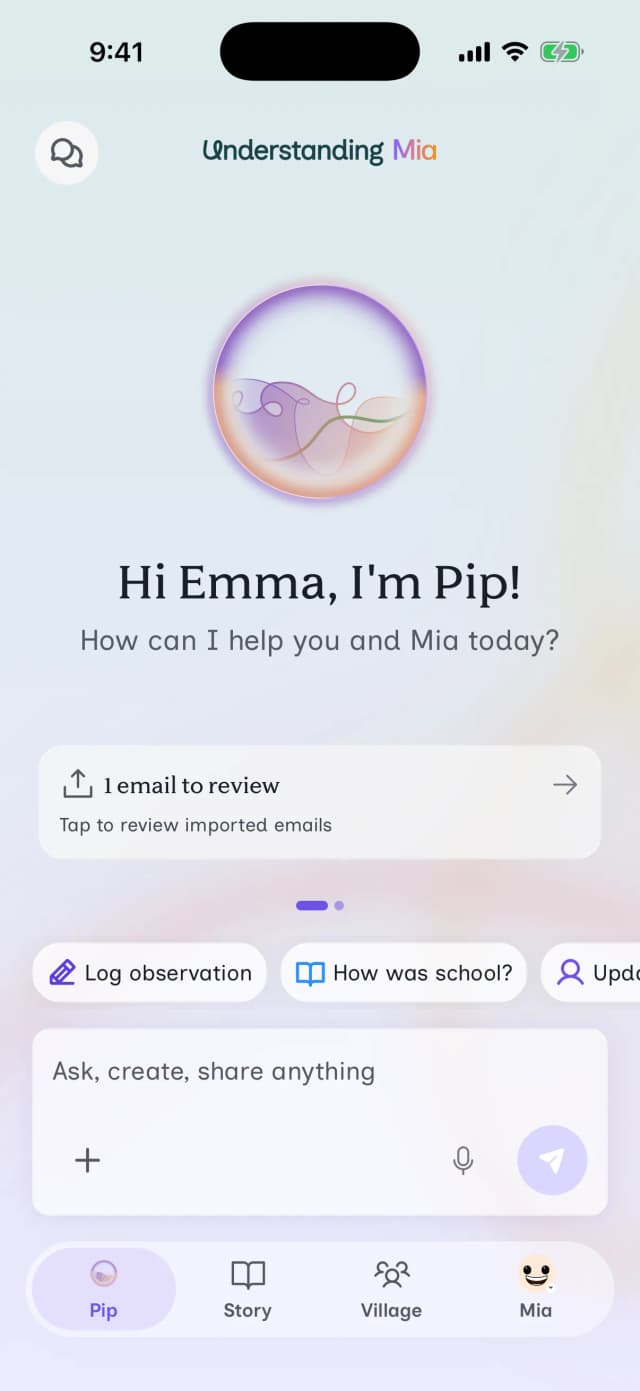
Pip* is your pocket coach. You tell it what you notice, by voice or text, and it keeps your notes. The Story tab lays your notes out over time, in plain language. You can look back on them and prepare questions for your GP or psychologist.
You can also book an assessment in the app. Registered, neurodiversity-affirming psychologists offer combined autism and ADHD assessments by telehealth, for adults and young people from 10. It is one option among others. Afterwards, your report, notes and documents stay in one place, so you tell your story once.
Who does the assessing. The app itself does not assess or treat. Assessments and sessions are with registered psychologists and allied health professionals we work with. A psychologist's assessment does not include ADHD medicine, because psychologists cannot prescribe.
Understanding Zoe is for neurodivergent people and the people who love them, at every age and stage.
Family, teachers and your care team join free when you invite them.
* Pip is the pocket coach in the Understanding Zoe app. It has nothing to do with the UK benefit called PIP, the Personal Independence Payment.
You can book a psychologist without one. Paediatricians and psychiatrists usually need a GP referral for a Medicare rebate, and many will not take a booking without one.
Starting with your GP also means someone checks hearing, general health and development first, which an assessor will want to know about.
Paediatricians, psychiatrists and psychologists can lead an autism assessment. Sometimes a team assesses together, which might include a speech pathologist or occupational therapist.
The national guideline describes both ways: one lead practitioner, or a team that reaches a shared view. Our page on autism assessment explains the difference.
Public services in each state and territory assess children for free, but age limits and waiting times vary a lot. Few public services assess adults.
Medicare items help with some private costs for people under 25. Ask your GP what public options exist where you live.
Yes. Children younger than 6 do not need a diagnosis to get early support through the NDIS early childhood approach where there are concerns about their development.
Our Thriving Kids guide explains the newer program for children aged 8 and under, and whether an assessment is needed for it.
It depends on what you want from it. Some adults want a formal report for workplace or study supports, or for their own understanding. Others decide self-identification is enough.
There is no wrong answer. Our guide for adults identified late covers what a report can and cannot change.
Understanding Zoe is not a crisis service. In an emergency in Australia call 000. Lifeline is 13 11 14. Kids Helpline is 1800 55 1800. 13YARN is 13 92 76. Outside Australia, contact your local emergency number.
Nothing on this page is medical, legal or financial advice. It does not assess anyone, and it is not a substitute for care from a professional who knows you. If something here sounds familiar, write it down and take it to your GP.