ADHD does not end at 18. Many adults have been ADHD all their lives without knowing it, and only recognise themselves after years of being told they were lazy, messy or too much. In adulthood, ADHD often shows up less as running around and more as a busy mind, missed deadlines and the effort it takes to hold everyday life together.
This page explains how ADHD shows up in adults, what late identification changes and what actually helps day to day. Our page on ADHD in women looks at why women and gender diverse people are so often identified later.
The words on this page. We say ADHD, and ADHDer for the person. ADHD is a difference in how a brain handles attention, energy and interest. It brings real strengths, and some things that need support.
The diagnostic manual describes two groups of traits. In adults, they often look different from the childhood picture.
Losing track of time, starting many things and finishing few, forgetting appointments, misplacing keys and phones, and finding it hard to keep attention on tasks that do not interest you. At the same time, deep focus on things that do.
Restlessness, a mind that will not switch off, talking over people, impulsive spending or decisions, and finding it hard to wait. In adults this is often felt inside more than seen from outside.
For an adult to be assessed as ADHD, the manual asks for several of these traits to have been present before age 12, to show up in more than one part of life, and to affect daily life in a meaningful way. Many adults also live with intense emotions and a strong reaction to criticism. Our page on rejection sensitivity explains why.
For many adults, recognising ADHD reframes a whole life story. Old struggles start to make sense.
Some adults feel relief. Others feel grief for the years spent trying harder without knowing why it was so hard. Both are common, and both are valid.
In 2023 a Senate inquiry into ADHD assessment and support heard from hundreds of Australians. It found long waits, high costs and few public services for adults, and examined why women in particular are identified later. Self-identification is valid. You do not need a report for your experience to count.
Laetitia's answer: what an assessment gives you, what it does not, and why "not now" is a real answer.
Read the articleThe most useful supports work with how an ADHD brain runs, not against it.
A page of notes says more than you can remember in a ten minute appointment.
Print it, or keep it on your phone.
Adult life comes with a lot to hold in your head. An assessment adds referrals, questionnaires and reports on top.
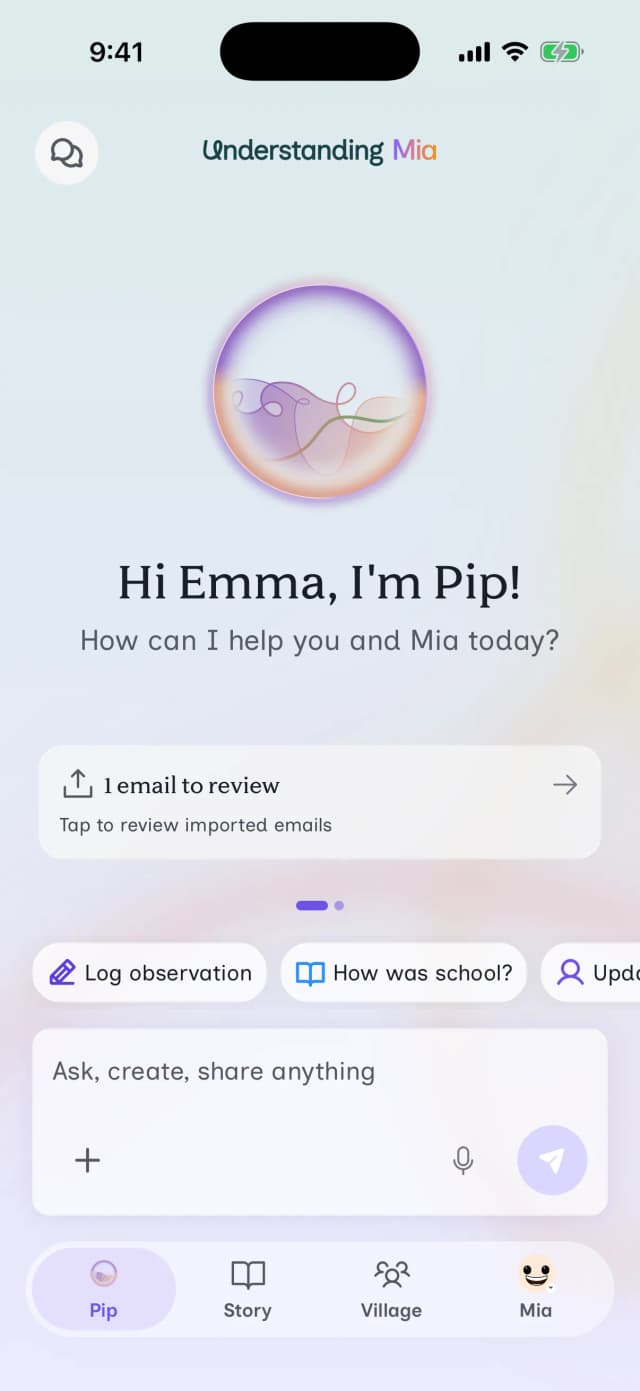
Pip* is your pocket coach. You tell it what you notice, by voice or text, and it keeps your notes. The Story tab lays your notes out over time, in plain language, so you can look back and prepare what to raise with your GP.
In Australia, you can also book an assessment in the app. Registered psychologists offer combined autism and ADHD assessments by telehealth, for adults and young people from 10. It is one option among others. Our page on ADHD assessment in Australia covers them all.
Who does the assessing. The app itself does not assess or treat. Assessments and sessions are with registered psychologists and allied health professionals we work with. A psychologist's assessment does not include ADHD medicine, because psychologists cannot prescribe.
Understanding Zoe is for neurodivergent people and the people who love them, at every age and stage.
Family, teachers and your care team join free when you invite them.
* Pip is the pocket coach in the Understanding Zoe app. It has nothing to do with the UK benefit called PIP, the Personal Independence Payment.
ADHD starts in childhood, but many people are not identified until adulthood. Traits may have been hidden by strong routines, support at home, high ability or sheer effort, and become harder to manage when life gets busier.
An assessor will ask about childhood as well as life now. Having no school records does not stop an assessment.
Many adults describe a busy mind that rarely rests, losing time without noticing, and needing far more effort than others for everyday tasks. Deep focus on interesting things often sits alongside difficulty with dull ones.
Strong emotions and sensitivity to criticism are common too. None of this is a character flaw. It is how an ADHD brain handles attention, energy and interest.
In Australia, the usual first step is your GP, who can refer you to a psychiatrist or psychologist. In some states, GPs with extra training can now assess. Our page on ADHD assessment in Australia covers the steps, the wait and the cost.
In the UK and the US, the route also usually starts with a GP or primary care provider.
It is the same ADHD, but it often looks different. Hyperactivity in children can become inner restlessness in adults. The demands of work, money, relationships and running a home bring new challenges.
Many adults also find strengths become clearer with age, such as creativity, energy in a crisis and the ability to focus deeply on what matters to them.
Yes. Many adults are both ADHD and Autistic, which people often call AuDHD. The two can mask each other, which is one reason some adults are identified later.
If you wonder about both, say so when you book an assessment.
Understanding Zoe is not a crisis service. In an emergency in Australia call 000. Lifeline is 13 11 14. Kids Helpline is 1800 55 1800. 13YARN is 13 92 76. Outside Australia, contact your local emergency number.
Nothing on this page is medical, legal or financial advice. It does not assess anyone, and it is not a substitute for care from a professional who knows you. If something here sounds familiar, write it down and take it to your GP.